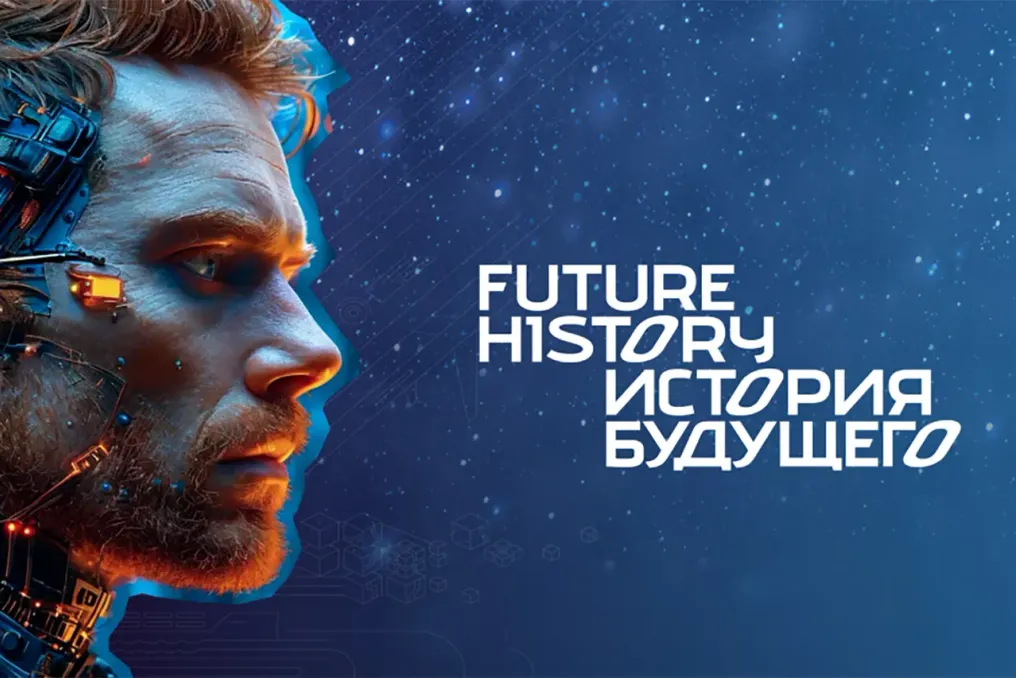
The organizers of the second season of the international science fiction literary competition Future History have published a longlist for the 2026 competition. It features 120 works distributed across four categories. The competition received 1060 short stories from 27 countries.
Thirty works were selected in each of the four categories: Best Short Story, Best Short Story for Children and Youth, Best Short Story in a Foreign Language, and Best Screenplay Idea. The selected works explore the influence of scientific discoveries and technological progress on society, interpersonal relationships, and daily life.
Themes addressed by Russian authors include space exploration, artificial intelligence, unmanned technologies, digital immortality, and digital afterlife. Despite the focus on technology, people remain central in these speculative stories, viewed through the prism of human values, relationships, freedom of choice, and responsibility for the consequences of technological development.
Sergey Shikarev, executive secretary of the award's organizing committee, literary critic, and science fiction researcher, noted that the second season demonstrates the diversity of modern views on the future. He emphasized that Russian authors are actively working with themes of artificial intelligence, space exploration, and digital immortality. In their works, technology serves not merely as a backdrop for science fiction but as a tool for analyzing changes within people themselves—their understanding of life, memory, and the future.
Shikarev added that the diverse perspectives of writers from different countries on the future offer a wide spectrum of possible paths for human development, providing valuable insights for both literature and futurology.
The international scope of the award is particularly evident in the 'Best Short Story in a Foreign Language' category, which includes works by authors from Brazil, India, China, Argentina, Italy, Mexico, South Africa, and other nations. Their stories reflect differences in cultural traditions, social experience, and approaches to scientific and technological development.
The second season also includes the 'Best Screenplay Idea' category, which is open to authors of science fiction concepts with potential for screen adaptation. This category was created in partnership with the Autonomous Non-profit Organization Author and aims to support original Russian stories for film and other audiovisual formats.
Elena Mironenko, CEO of the ATOM Museum and cultural studies expert, stated that it is important to her that the Future History Award is more than just a literary contest; it should be a space for the genesis of ideas capable of inspiring people, scientists, engineers, and creative industries. She believes that science fiction allows people to step outside the familiar and envision developments that seem impossible today but could become reality in the future. Furthermore, the screenplay category gives promising ideas the opportunity to go beyond books and reach audiences on screen.
The next stage will be the selection of finalists, and the longlists will be announced in November 2026. Winners will receive awards at the official ceremony on December 4, 2026.
The Future History International Science Fiction Literary Award was established by the Atom Foundation under the auspices of the State Corporation Rosatom. Its goal is to support contemporary science fiction authors, promote scientific knowledge and technology, and encourage a constructive vision of the future. The first season attracted over 2500 authors from 30 countries. The competition is held for the second time in 2026, with a total prize fund exceeding 6 million rubles. The jury is headed by science fiction writer Sergey Lukyanenko.