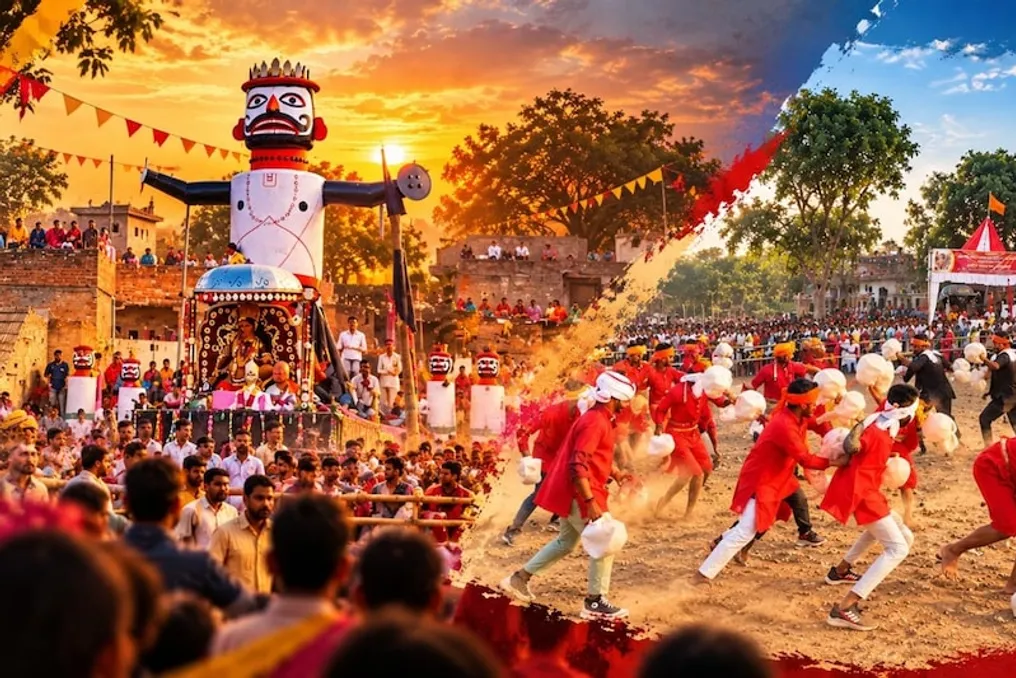
In the Kaushambi region of Uttar Pradesh state, there is a unique tradition of celebrating the battle between Rama and Ravana that attracts people from afar. Unlike typical depictions, the fight here is not waged with swords or bows, but with special plastic cups. This tradition, associated with Ramlila in Darangarh, is approximately 247 years old.
This unusual battle lasts for two days and includes seven duels between soldiers. Notably, instead of burning Ravana's effigy, he is struck by arrows and left untouched.
The Ramlila ground in Darangarh features about 25 soldiers from each side—Rama's and Ravana's. Rama's warriors are dressed in red costumes, while Ravana's soldiers are represented in black attire. The participants use specially made plastic cups weighing about 200 grams. As soon as the fight begins, both armies start throwing cups at each other. The warriors' goal is to defeat the opponent by causing them injury. The battles can be very intense and sometimes dangerous, which forces the police to intervene.
A total of seven matches take place over the two days. The first day includes four rounds, where Ravana's side has the advantage and tries to overcome Rama's army. The second day consists of three duels, and after winning these three battles, Rama's army celebrates the festival of Vijayadashami. Each duel lasts about ten minutes, and numerous spectators watch this spectacle, unable to look away. People travel from neighboring districts because such a cup fight cannot be seen anywhere else.
According to local legends, this tradition dates back to the Treta Yuga. It is recounted that before returning to Ayodhya after conquering Lanka, Lord Rama performed worship in Shringaverpura, near the banks of the Ganges. This story is considered the beginning of this tradition. The organization of the fight is managed by the Ramlila Committee. After the battle concludes, a procession with the deity is taken out in a chariot accompanied by music, accompanied by a grand fair where a large number of people gather.
The most distinctive feature of the Ramlila in Darangarh relates to Ravana's effigy. In most regions of the country, he is burned during Dashahara, but this does not happen here. After the two-day cup battle, Ravana is struck by arrows and left in that state. This tradition, continuing for 247 years, gives the Darangarh Ramlila a unique identity. The battle using plastic cups, seven duels over two days, and the non-burning of Ravana's effigy make this Dashahara special.