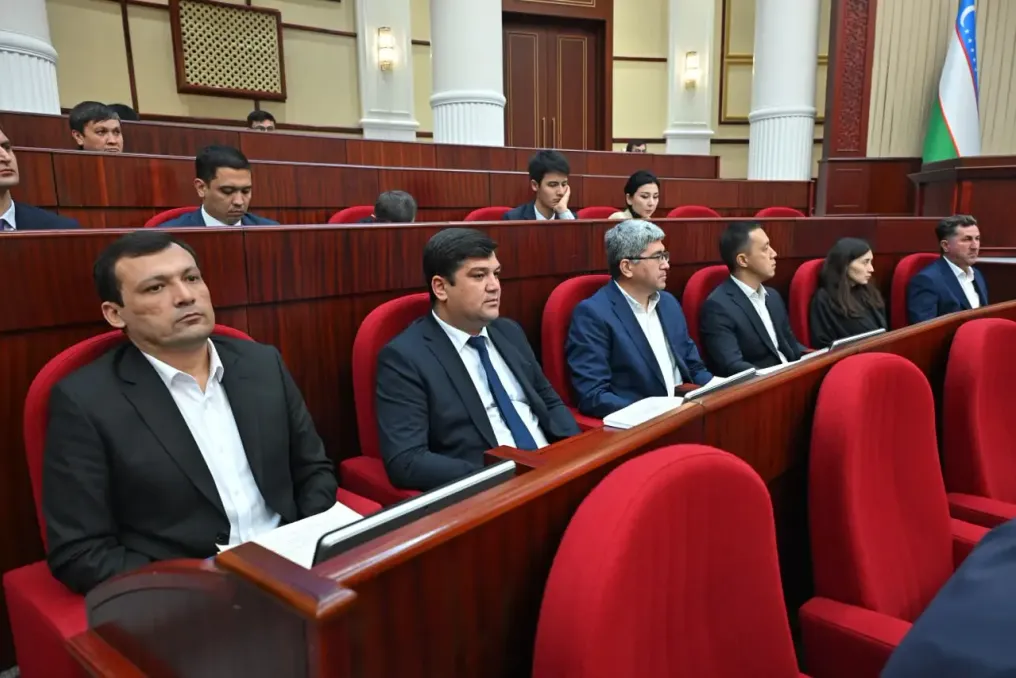
Uzbekistan approves draft law on new waste management legislation
Read more
UzDaily
uzdaily.uz

Uzbekistan approves draft law on new waste management legislation

The legislative body, Oliy Majlis of Uzbekistan, approved the first reading of the draft new law 'On Waste'. The goal of this legislative act is to improve the regulation of waste collection, recycling, and disposal processes.

The need for adopting a new law is due to gaps in current legislation. Specifically, the existing regulatory framework lacks a clear definition of the fundamentals of managing this sector, its key areas of activity, property relations, as well as financing and support mechanisms.

The proposed bill clarifies the powers of authorized state bodies and local authorities in the field of waste management. It also defines the rights and obligations of both individuals and legal entities, as well as the forms of participation available to non-governmental non-profit organizations.

The document provides for the introduction of waste classification and economic incentives for industry development. Special attention is paid to creating systems for collecting, processing, and burying hazardous waste at industrial sites, as well as medical and biological waste.

Furthermore, the bill establishes a legal basis for the reuse of construction waste and the activities of organizations specializing in sanitation and cleaning work. It also proposes defining normative requirements for solid household waste collection points and landfills used for their disposal.

Another innovative measure is the mechanism for compensating damage caused by violations of waste management legislation. The bill aims to create a more comprehensive legal framework for the systematic regulation of relations in this area.

Similar stories

Residents of Chirchik and Navoi must submit annual declarations of income, expenses, and loans
Read more
podrobno.uz

Residents of Chirchik and Navoi must submit annual declarations of income, expenses, and loans

An experimental reporting procedure is being introduced in Navoi and Chirchik for residents, requiring them to annually declare their financial transactions. This new regulation mandates the disclosure not only of earned income but also information on property ownership, outstanding loans, and utility payments.

The adoption of this new procedure was made by a government decree. It applies to all adult citizens permanently registered in Navoi and Chirchik. The declarations that need to be filled out will cover income received in 2026 and 2027.

Declarations can be submitted either through the electronic tax services portal or using the Soliq mobile application. Citizens must send the document to the tax authority at their permanent place of residence no later than April 1st of the following year. The tax service is obliged to notify the population about the approaching deadline at least one month in advance.

The declaration requires reporting salary, income from property, and other receipts. Furthermore, it is necessary to record expenses related to real estate, movable property, paid taxes, utilities, and loans. However, expenses related to the business of individual entrepreneurs and self-employed persons will not be taken into account.

A significant portion of the information will be obtained automatically by the system from various sources, including state databases, receipts registered in the Soliq application, and electronic invoices. If automatic data retrieval proves insufficient, the citizen can supplement the information independently through the application.

The system allows for the amendment of the declaration if errors are found. However, if inaccuracies persist, the document may be rejected upon the citizen's request. In such cases, resubmission of the declaration is possible within three years; refusal to accept the document for other reasons is prohibited.

It is important to note that a simple increase in the difference between income and expenses will not automatically result in the assessment of additional taxes or the application of any sanctions, except in cases stipulated by Article 393 of the Tax Code. Previously, amendments were made to the Criminal Code and the Code of Administrative Liability in Uzbekistan, leading to stricter penalties for tax evasion.

Popular