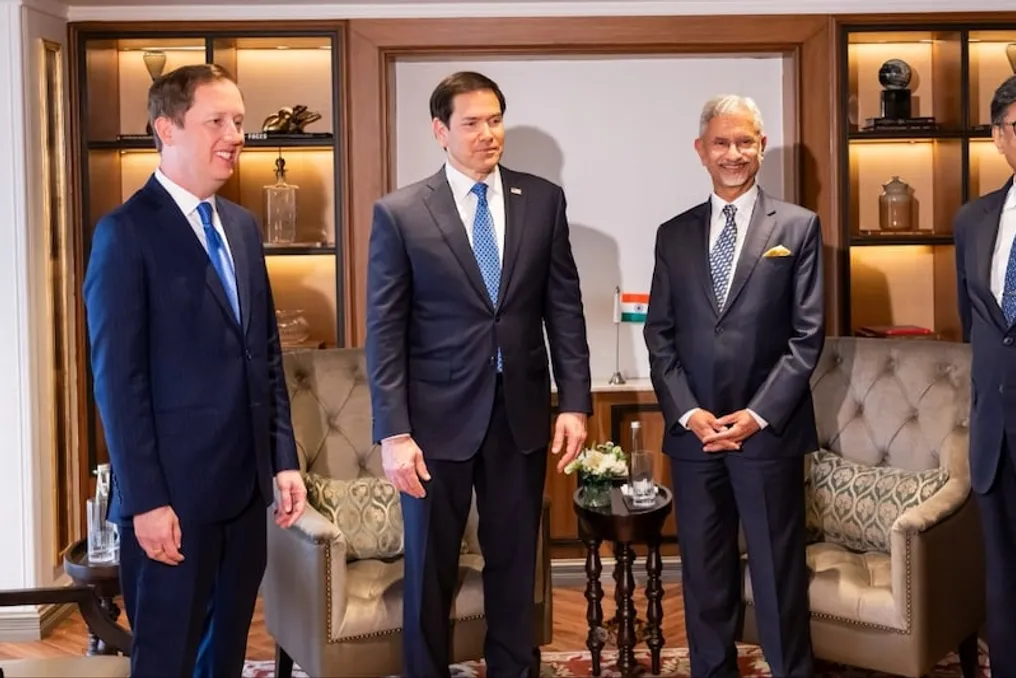
Marco Rubio to visit refinery in Jamnagar, calling India a 'superpower' in fuel refining
Read more
Aaj Tak
www.aajtak.in

Marco Rubio to visit refinery in Jamnagar, calling India a 'superpower' in fuel refining

US Secretary of State Marco Rubio arrived in India during a complex period when America is actively employing the 'diesel diplomacy' tactic amid a global energy crisis. The rise in diesel fuel prices in the US to record levels, caused by disruptions in global supplies and attacks on Russian oil refineries, has exacerbated the situation.

During his visit to Mumbai, Rubio called India a 'superpower in fuel refining.' This occurred in a country that has previously challenged India's energy autonomy through the imposition of tariffs or sanctions.

On October 21, Rubio plans to visit Reliance's largest refinery in the world, located in Jamnagar. This plant processes about 14 million barrels of crude oil daily.

The purpose of Rubio's visit may be to increase supplies to the American market by refining heavy crude oil from Venezuela in India and stimulating the export of Indian diesel fuel. Through negotiations with Reliance, Washington seeks to strengthen energy cooperation and stabilize prices, thereby promoting both trade deals and strategic partnership. Thus, the US has chosen the path of ensuring energy security through practical diplomacy.

'Diesel diplomacy' implies considering the purchase, sale, and supply of oil and its refined products through the lens of diplomatic and strategic interests. India imports crude oil, but thanks to its vast refining capacity, it converts it into products such as diesel fuel, gasoline, and aviation fuel, and sells them on global markets. This capability makes India an important player in global energy. At a time when the US needs diesel fuel now to avoid voter dissatisfaction, including that of President Trump, during midterm elections.

US Secretary of State Marco Rubio stated in Mumbai on Tuesday that India is a 'superpower' in the oil refining sector. He also outlined his intentions. Rubio reported that during the three-day trip, the American delegation will discuss oil extraction in Venezuela with Reliance Industries.

Rubio emphasized that India possesses the experience and capability to refine heavy crude oil. The American official noted that this capability will become even more significant as Venezuelan oil production increases. He stated: 'India is a refining superpower. They have the ability to refine heavy crude oil. They have done it before, and I think that as more oil becomes available from Venezuela, India will be able to do it.'

It should be noted that Venezuela primarily produces heavy and extra-heavy crude oil. It is denser, contains more sulfur, and is more difficult to refine compared to regular crude oil. The refining of this oil can be carried out at the Reliance refinery located in Jamnagar, Gujarat, India.

The main focus of Marco Rubio's visit is on the business of diesel fuel, rather than high diplomatic significance. This is why Rubio is not heading to Delhi. After his stay in Mumbai on Tuesday, he will visit the refinery in Jamnagar, Gujarat, on Wednesday.

Explaining the reason for the trip to Jamnagar, he noted that energy must be refined to be used. He added: 'You have a company with huge refining capacities. I think I should talk to them, especially when different countries are involved.'

Rubio also commented: 'We are going to a company with colossal refining capabilities. It would be perfectly right to talk to them about it.'

For the US, India's refining capacity is important for several reasons. In the context of global conflicts and supply disruptions, the availability of diesel fuel and other petroleum products becomes critically important. Refineries like Jamnagar are capable of processing crude oil of various types and producing large volumes of finished fuel.
Similar stories

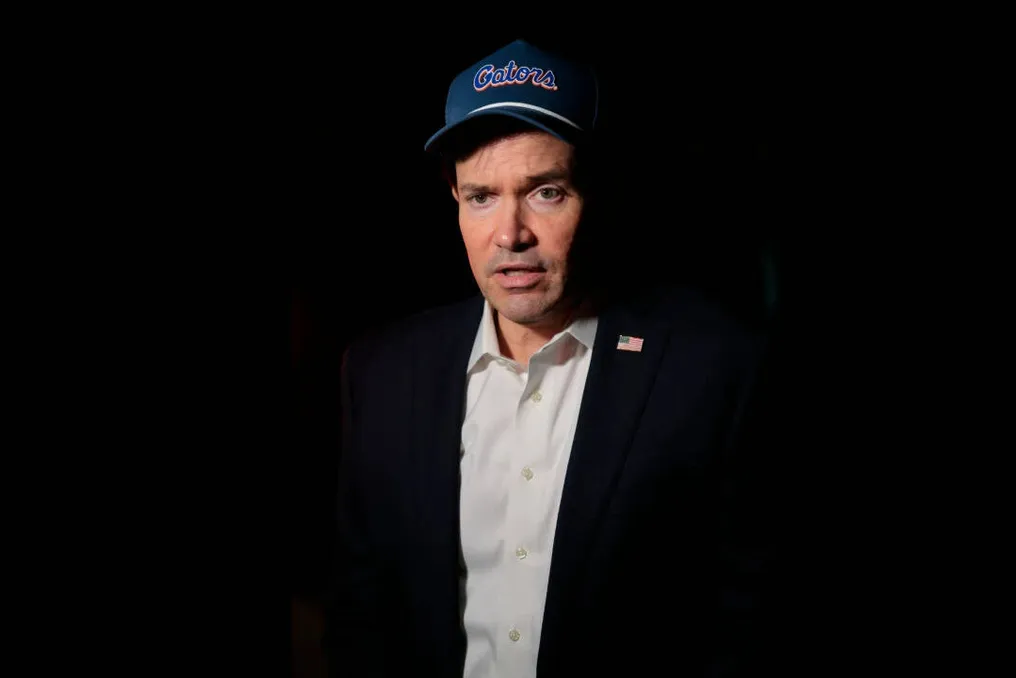
Marco Rubio travels to India amid Trump's threat to impose tariffs on Russian oil
Read more
timesofindia.indiatimes.com

Marco Rubio travels to India amid Trump's threat to impose tariffs on Russian oil

US Secretary of State Marco Rubio flew to India against the backdrop of the temporary suspension of President Donald Trump's threat to impose tariffs on Russian oil purchases. His visit in October will last 20 days, and it is expected that energy cooperation, trade relations, and strategic ties will be discussed during it.

Rubio noted that the president is likely using this 60-day period to analyze the consequences of imposing both sanctions and tariffs on the global economy and even on the US economy.

Former HCL CEO Vinit Nair Comments on Impact of US Green Card Program Restrictions on Work Transfer to India
Read more
www.aajtak.in

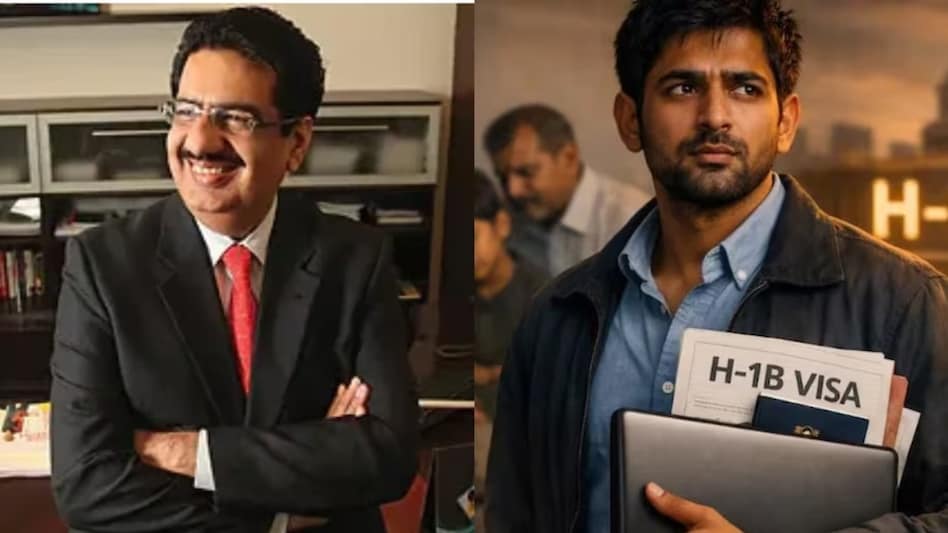
Former HCL CEO Vinit Nair Comments on Impact of US Green Card Program Restrictions on Work Transfer to India

Vinit Nair, former CEO of HCL Technologies, issued a statement regarding the halt of the American Green Card program on Friday. In his social media post, he noted that US President Donald Trump desires fewer Indian technical specialists to come to America. This, in turn, could unintentionally lead to more American technology tasks being transferred to India.

This statement came after US Labor Secretary Kit Sunderling announced on Thursday the suspension of processing applications under the PERM Green Card program for several large IT outsourcing firms.

Nair wrote that Trump aims to reduce the number of Indian technical workers in the US, which could potentially cause a larger volume of American IT work to shift to India. He stated that upon reading reports about US measures restricting the use of PERM by major tech companies, he felt no concern.

He also shared statistics, pointing out that the share of Indian IT companies among the 117,849 PERM certificates issued last year was less than 2%, or fewer than 1,400. Consequently, the direct impact might be smaller than it seems, but according to him, there are other interesting processes hidden behind this.

Nair explained that in the initial IT model, when a client in the US had an important task, India would send its engineers there. Later, it was discovered that much of this work could be done directly from India. This led to the 'on-site-offshore' model. He stated that he personally witnessed this transformation and believes that humanity may be on the threshold of another such change.

Furthermore, Nair pointed out a paradoxical situation: while America makes it difficult to attract Indian talent to its territory, technology simplifies the ability for small teams in India to take responsibility for faster tasks. Thus, America's desire to reduce the staff of Indian employees may accelerate the migration of American work tasks to India.

Nevertheless, he clarified that this is not about a new wave of coding and maintenance work. According to Vinit Nair, the real opportunities lie in architecture, product engineering, cybersecurity, AI, as well as product and intellectual property (IP) ownership.

He advised Indian entrepreneurs collaborating with American clients and companies. Nair suggested that Indian teams should not limit themselves to receiving instructions from New York; they should help define what needs to be created. They should not just support the technical platform of a global bank but participate in its redesign. Instead of simply providing engineers to solve others' problems, they should take ownership of those problems.

He further mentioned that for about three decades, the Indian IT sector grew parallel to the increase in employment in the Indian IT industry. This happened because companies usually hired more engineers as turnover increased. However, now, thanks to improved AI productivity, the advent of artificial intelligence will enable the execution of more complex tasks. Companies will be able to earn more money without increasing headcount proportionally. Warning the industry, Nair emphasized that while the Indian IT sector competed based on the cost of Indian talent for the last 30 years, the next 30 years will depend on the potential of these talents.

Popular