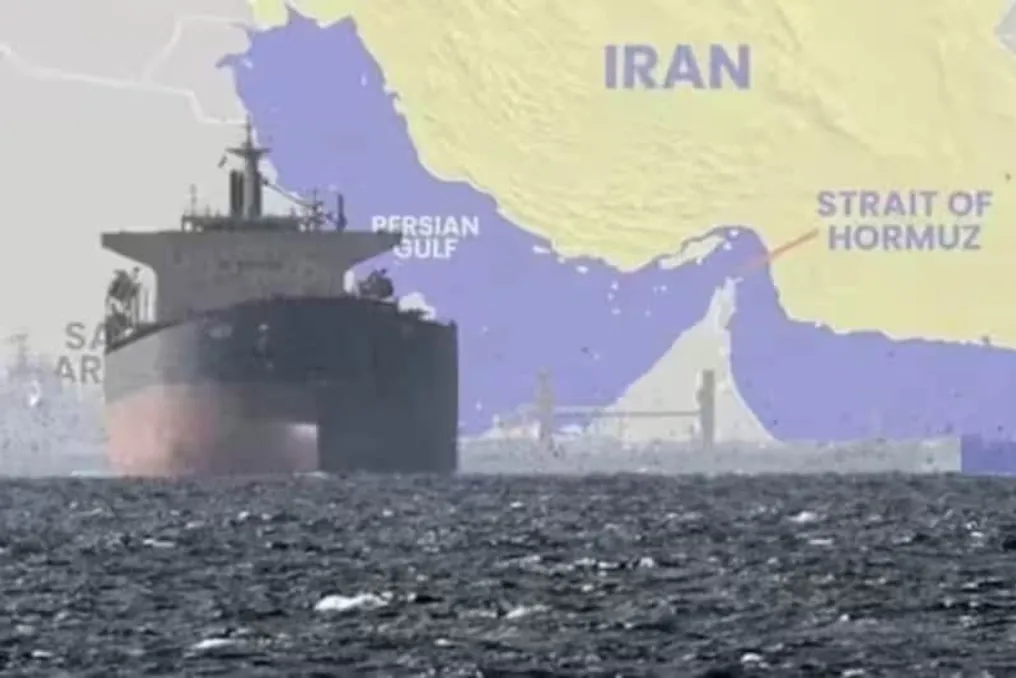
The Strait of Hormuz has long been a subject of active discussion, as this sea route is responsible for supplying about 20% of the world's oil volume. Currently, tensions in the Middle East persist due to the conflict between the US and Iran. Iran refuses to open the strait without meeting its conditions, while the US continues the blockade.
However, the HSBC CEO stated that the Strait of Hormuz may lose its significance in the next five years. If this happens, it will create a serious crisis for the oil-based Iranian economy, which has suffered from US military actions.
HSBC Chief Executive Georges Ledery announced on Tuesday that the Strait of Hormuz could become redundant within five years. He explained this by saying that Gulf countries are investing in alternative logistics routes and pipelines to reduce their dependence on this strategic waterway.
Ledery also mentioned the war between the US and Iran, which has caused disruptions in this key maritime corridor. According to the CEO, the conflict highlighted the world's dependence on Hormuz, through which nearly a fifth of global oil and LNG trade passes. Although he expressed hope for a resolution to the conflict in the Middle East, he believes that the Strait of Hormuz probably will not be critically important in five years.
Speaking at the HSBC Future Forum in Dubai, CEO Ledery noted that investments in pipelines connecting oil-producing areas with ports will help Gulf countries cope with the economic consequences of the conflict. This region is capable of recovering and continuing to develop, although this will require significant funding.
According to an HSBC report, a survey of over 1600 business leaders and about 820 global institutional investors found that the Gulf region is viewed as an attractive center for investment. The HSBC CEO added that within an extensive program of projects worth $1.4 trillion planned for the Middle East, North Africa, and Turkey, there is a package of individual projects worth $872 billion.
While the HSBC CEO makes a bold statement about Hormuz, Iran continues to insist on its demands for opening this sea route. Iran asserts that the resumption of operations in Hormuz and the end of the conflict depend on meeting its conditions.
Iranian Foreign Minister Abbas Araghchi stated on Sunday that Tehran's proposal to reopen the Strait of Hormuz within seven days is still under consideration. Iran submitted this proposal in mid-September after the temporary ceasefire ended, and since then, it has been awaiting a response from the US, which is currently analyzing it.
Iran's conditions include lifting the American blockade on its ports and lifting the oil export embargo, as well as ceasing hostile actions on regional fronts. Abbas Araghchi emphasized that if the US agrees to these conditions, the strait could reopen, and negotiations would resume the next day.
On Tuesday, speaking before Russian Foreign Minister Sergey Lavrov, Araghchi also blamed the US for instability in Hormuz and called for a regional security system without foreign forces.