The recent introduction of Chinese automobiles in Brazil has caused a significant shift in the local market. Plug-in hybrid and electric models have rapidly gained popularity, surprising established manufacturers.
One of the strengths of Chinese companies lies in their agility in developing new vehicles; some models take only two years, which is half the time required by traditional brands. Because of this, certain companies have chosen to adhere to the principle of 'if you cannot compete, join,' to offer consumers the electrified models they are demanding.
The effects of this trend are already visible on the streets, with Chevrolet marketing the Chinese models Spark EV and Captiva EV. Furthermore, Geely acquired a 26% stake in Renault do Brasil, which will involve component swapping during this merger.
In the near future, more cars produced by traditional brands are expected to be launched, but incorporating Chinese design and engineering elements. Some of these vehicles will be manufactured in the country, as detailed below.
Chevrolet
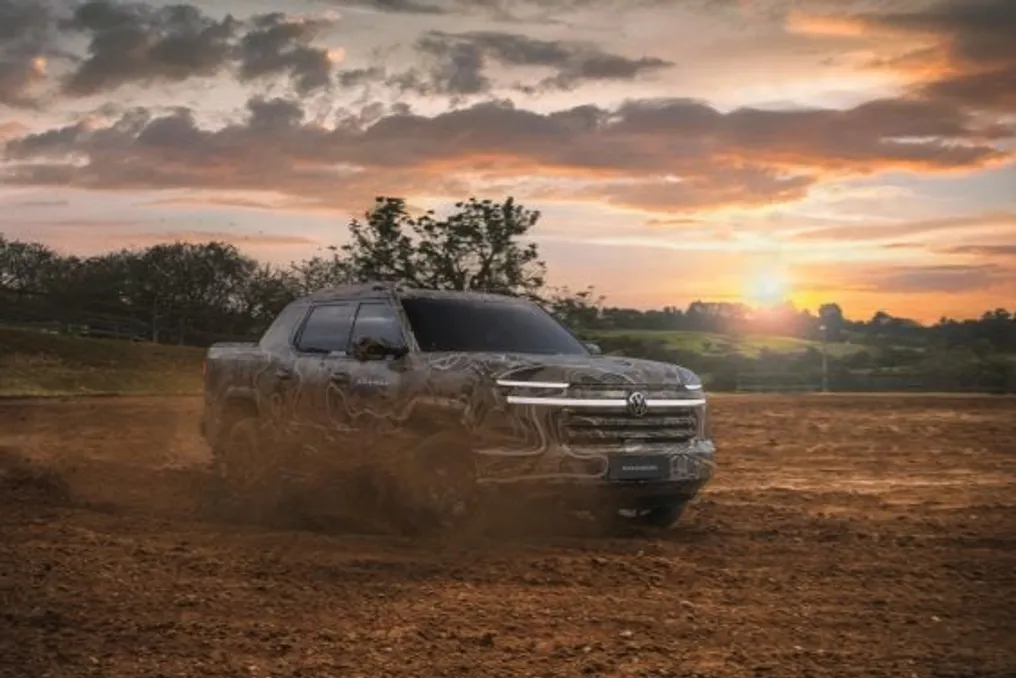
Volkswagen maintains a joint venture in China with the Shanghai Automotive Industry Corporation (SAIC), which is the country's largest state producer. Currently, the German brand is developing the next generation of the Amarok pickup truck in Brazil, using the Chinese Maxus Terron 9 model as a base. This model will serve to expand the Amarok in various aspects. The Maxus has dimensions of 5.5 meters in length, 1.99 meters in width, 1.86 meters in height, and 3.3 meters in length. It will also be available with plug-in hybrid or turbodiesel engine options.
The Amarok project incorporates a separate chassis from the body and an independent rear suspension, keeping the external and cabin design aligned with Volkswagen's visual identity.
Additionally, the German brand will have a van built on the SAIC platform, which will be distributed by its truck division. This vehicle will be derived from the Maxus V90, which is already sold in Europe. The turbodiesel engine of this van is a 2.0 belonging to the same family as the engine used in the Amarok. Although electric versions of this van exist, such propulsion has not yet been confirmed for the Brazilian market.
Renault
Renault do Brasil, in partnership with Geely, confirmed that it will launch a hybrid model in São José dos Pinhais (PR) that will use a Chinese platform. According to the portal Autos Segredos, this car will be the new version of the Arkana coupe SUV, adopting the EX5 EM-i architecture. The national hybrid Arkana will initially be offered with a flex engine, while its counterpart, the EX5 EM-i, will begin production in Brazil with an exclusively gasoline-powered engine. The launch is expected at the end of 2027.
Renault also plans to make electrified versions of the Kardian, Boreal, and Niagara models available, but these systems will come from the French headquarters.
General Motors was the first company to introduce products of Chinese origin in Brazil, with the current generations of the Onix and Tracker. These projects were conceived in China in collaboration with SAIC-GM and involved the Brazilian subsidiary. Currently focused on electric vehicles, GM already markets the Spark EUV and Captiva EV, assembled at the PACE factory in Ceará. Soon, the market will receive a plug-in hybrid version of the Captiva.
The brand also announced that it will have an electric hatchback in Brazil based on the Wuling Bingo Pro, aiming to compete with the Geely EX2 and the BYD Dolphin Mini. According to Auto Esporte magazine, GM plans to bring five more Chinese vehicles, including one from Buick.
Nissan's lineup suffered a considerable reduction in 2026, with the Frontier being discontinued and the new generation of the Sentra not having been launched. Vehicle offerings in Brazil are expected to increase starting in 2027 with the arrival of Chinese models.
This movement will begin with the new Frontier Pro, which is derived from the Dongfeng Z9. Similar to the new Volkswagen Amarok, it is a medium pickup truck with a separate chassis from the body, although it is larger than medium ones. It will be offered as a plug-in hybrid, but in other countries, it also has a turbodiesel engine. This electrified mechanism generates 416 hp. The N7 sedan and the NX8 SUV are also planned, both fully electric and the result of collaboration with Dongfeng. This pair of vehicles has already been seen undergoing tests in Brazilian territory.