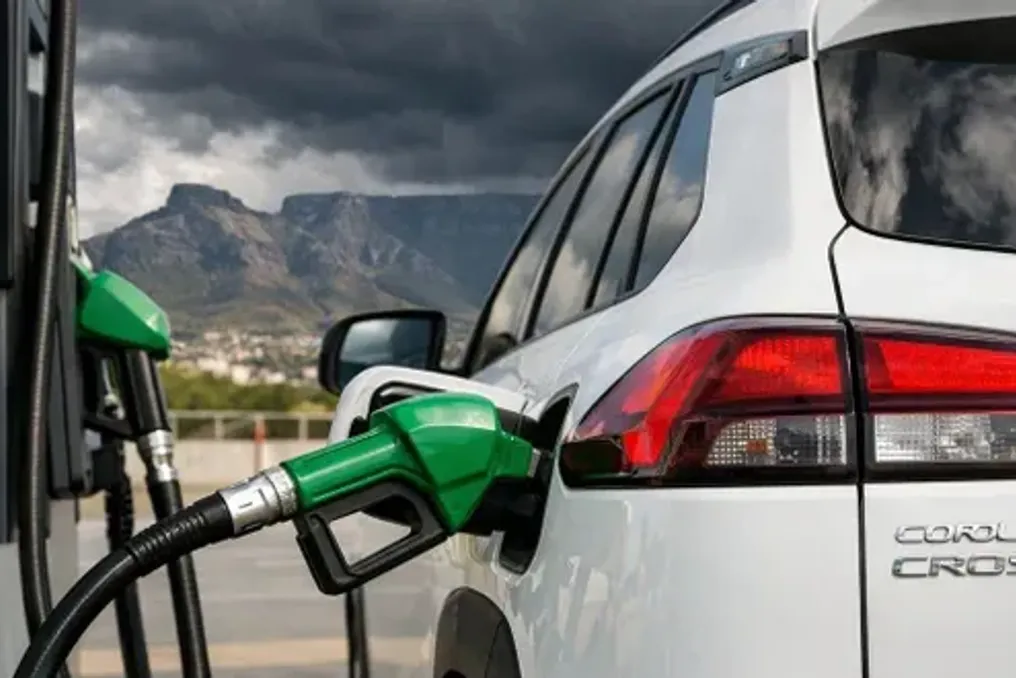
President Cyril Ramaphosa stated that the government is studying the possibility of providing additional assistance due to rising fuel prices, as trade unions insist on using the proposed R10 billion intervention to support households, workers, and businesses.
These calls for price reductions come just before the publication of Finance Minister Enoch Godongwana's Medium-Term Budget Policy Statement on Wednesday. Organized trade unions are demanding urgent measures, while the government weighs the cost of further intervention against other spending priorities.
Speaking to the press at the Bana Pele ECD summit in Sandton yesterday, Ramaphosa announced that the government is considering additional measures to alleviate the burden of rising fuel costs. However, he warned that such interventions come at a cost, noting that the previously provided subsidy required the reallocation of R24 billion from other government programs.
He emphasized that the rise in fuel prices is a global issue affecting not just one country, and the government is seriously evaluating all possible courses of action. Ramaphosa reminded that the government had previously invested about R24 billion in the subsidy system, which now means withdrawing these funds from other programs.
The proposed allocation of R10 billion, included in the Second Special Appropriation Bill, will provide the Department of Mineral Resources and Energy with funding for potential intervention aimed at compensating for the increase in the base fuel price. Although the Parliamentary Standing Committee on Appropriations adopted its report on the bill on October 8, the proposal still needs to pass through parliament.
The Congress of South African Trade Unions (COSATU) strongly urged the government to use the allocated funds as intended, warning that rising fuel prices are putting pressure on employment, small businesses, and the cost of basic goods. Matthew Parks, COSATU's coordinator in parliament, stated that this impact is felt across the economy.
Parks addressed Parliament, stating that the bill represents an extremely necessary and timely measure, as they represent millions of workers across all sectors of the economy—from petrol station attendants and teachers commuting to work, to farmers dependent on diesel, and public transport passengers. He insisted that the funds should not remain unused while households and businesses are forced to accept repeated price hikes.
The proposed intervention has also drawn close attention regarding how the funds will be distributed and whether the aid will reach the most vulnerable segments of the population. Chairperson of the Appropriations Electoral Committee, Tidimalo Legvase, noted that public hearings highlighted the need to balance immediate support measures with transparency. She added that this measure is a temporary emergency, one-off appropriation designed to mitigate external shocks but cannot permanently shield South Africans from oil price fluctuations or replace structural reforms in the fuel and transport pricing system.
Professor Dumisani Jantjgis from the Pan-African Institute of Fiscal and Political Studies warned that the pressure on households could extend beyond fuel and transport expenses. He explained that people are paying twice: first for petrol, and then because of rising interest rates, which increases household debt burdens.
BOSA leader Mmusisi Maimane also called for the R10 billion to be channeled through the Equalisation Fund to reduce fuel taxes and lower pump prices. He argued that reducing fuel costs would have a broader effect on the cost of living, including lowering inflation, improving food accessibility, and reducing loan interest rates.
The Federation of South African Trade Unions (FEDUSA) also renewed calls for reducing fuel levies, asserting that the consequences of high fuel prices extend far beyond motorists. Secretary-General Rifda Adjam stated that the federation demands that the government prioritize workers' livelihoods and the reduction of the cost of living, including reviewing fuel levies and providing targeted support to vulnerable households, and supported a R3 per litre fuel subsidy.
In light of the recent price hike, the United Association of South Africa (UASA) also demanded immediate intervention, warning that rising transport costs undermine workers' disposable income. UASA representative Abigail Moyo stated that workers are struggling with increased expenses amidst general inflation, emphasizing that when commuting becomes unaffordable, it is a clear sign of the need for intervention.