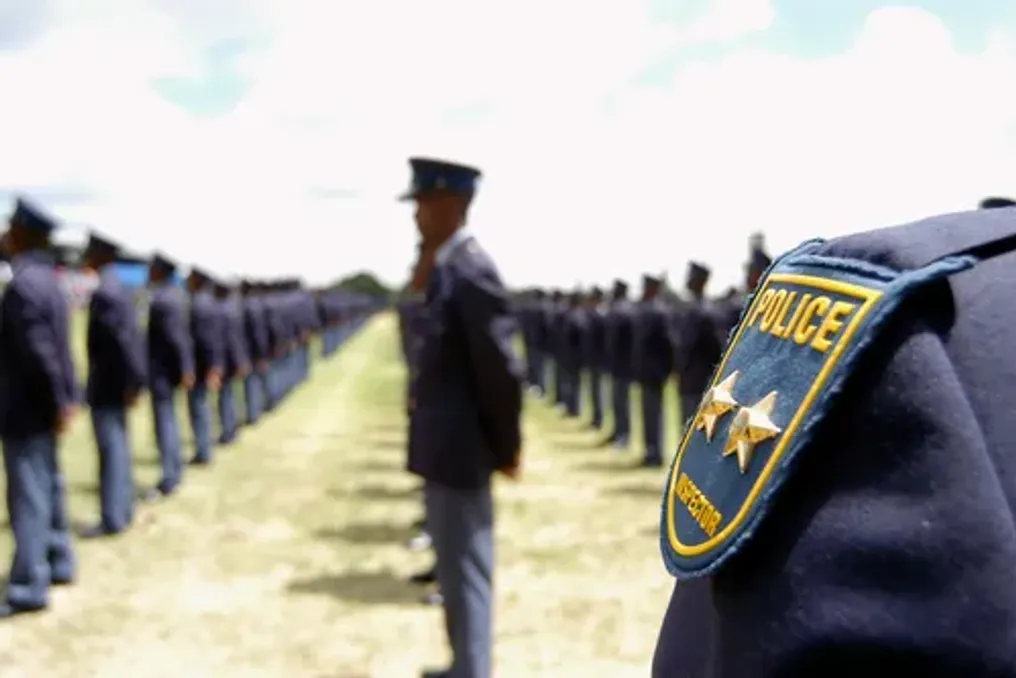
Despite assurances from the South African Police Service (SAPS) that issues with training materials only exist at the SAPS Training Academy in Philippi, the union confirmed that staff and resource shortages affect police academies across the country.
This dispute arose following reports that 560 police recruits in Philippi were undergoing assessment without sufficient instructors or textbooks. Ian Cameron, chairman of the Parliamentary Committee on Police Affairs, wrote to the National Commissioner of Police requesting urgent intervention after complaints from trainees, instructors, and others regarding the academy's conditions.
Instructors moved between academies
According to Cameron, some units reportedly lack assigned instructors, while recruits are forced to share textbooks and study independently. It was stated that one instructor was responsible for 16 units.
However, SAPS national representative, Brigadier General Atlanda Mate, stated that enough training materials were printed for the current intake. She confirmed: 'The South African Police Service (SAPS) can confirm that sufficient training materials have been printed for the current intake at the SAPS Training Academy in Philippi.'
Mate added that instructors rotated between academies according to operational and training requirements for efficient use of available capacity. She also noted that SAPS addresses any arising difficulties.
Union states problems are nationwide
Nevertheless, the Police and Prison Civil Rights Union (POPCRU) stated that the difficulties extend beyond Philippi. Muleleki Mbele, Provincial Secretary of POPCRU Western Cape, reported that the shortage of instructors and training materials impacts police academies nationwide. He emphasized: 'The problem does not exist only at the Philippi Academy, but in all police academies in the country.'
Mbele specified that union investigations into SAPS showed that the promotion of members who applied for instructor positions is still pending processing, while other staff have not yet been released by the respective provinces. He explained that academies managed with limited resources by developing schedules to address staffing issues until additional personnel were allocated. Furthermore, Mbele noted that delays at the Government Printing Office affected the distribution of training materials, although SAPS provided electronic learning resources pending deliveries.
Training conditions remain under scrutiny
POPCRU acknowledged that these difficulties place significant pressure on both instructors and recruits, especially during preparation for scheduled graduation parades. The union reported that it is closely monitoring conditions at three base police colleges in the Western Cape: Philippi, Bishop Lavis, and Oudtshoorn. Mbele clarified that responsibility for resolving many of these issues lies with the centralized Human Resources Development department of SAPS, rather than individual academy heads. He reported that negotiations with this department indicated efforts are being made to eliminate the deficit and restore normal training processes.
Meanwhile, Cameron also expressed concern over alleged delays in filling ten junior constable vacancies, the lack of uniforms and badges, and the potential impact of missed training on assessments. He demanded the development of a recovery plan with clear timelines, qualified instructors, and measures guaranteeing adequate recruit preparation before graduation. Cameron stated: 'The number of graduates cannot be the sole measure of success. SAPS must demonstrate that recruits have received proper training and can apply the knowledge gained.'
POPCRU stated that it will continue to monitor the situation until the problems are resolved. Mbele expressed hope following meetings with the Human Resources Development department, which demonstrated commitment to solving issues across all colleges.