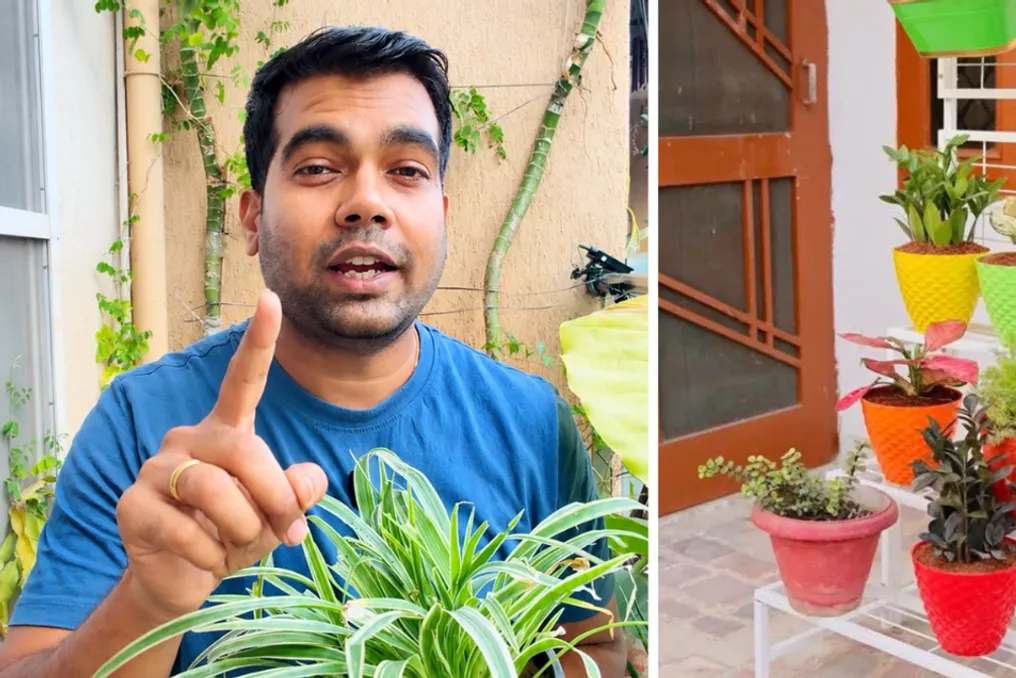
Growing vegetables and herbs on a balcony can be satisfying, but the appearance of a healthy plant does not always guarantee a good harvest. Even with regular watering and sufficient sunlight, tomatoes may produce fewer fruits, herbs may struggle to grow, and vegetables may lack expected flavor. The problem often lies in conditions specific to the balcony.
Dr. Mayur Mandra, a former army major who shares gardening tips on Instagram under the handle @plantwithmayur, has highlighted three common mistakes that can negatively affect the development of edible plants in containers. His recommendations focus on understanding the plants' needs beneath the soil, as well as the growing conditions.
Choosing the Right Potting Mix
Garden soil and specialized potting mix serve different functions. According to Mayur, using regular garden soil in containers can cause problems because it compacts over time. This reduces the amount of air available to the roots, which hinders the plants' ability to absorb necessary nutrients for growth.
He advises using a high-quality potting mix with good drainage. Such a mix helps maintain air circulation around the roots while allowing excess water to drain away.
For balcony gardeners, selecting the correct substrate is an important first step toward healthier plants and a better yield.
Ensuring Sufficient Space for Plant Growth
The size of the pot matters not only in terms of fitting the balcony garden's design. A plant might look healthy above the soil surface, while its roots are struggling for space in a shallow container.
The gardener recommends providing tomatoes with at least 12 inches of soil depth and peppers with no less than 10 inches. Even herbs like basil can benefit from having enough space for their roots to develop.
Before planting, one should check if the container is deep enough for the planned crop. An aesthetically pleasing pot does not necessarily provide the space the plant needs to survive.
Considering Your Balcony's Microclimate
Balconies can expose plants to conditions different from those found in garden beds. Wind can dry out the potting mix faster, while walls and floors accumulate heat during the day and release it later. These changing conditions can stress plants and affect their growth and flavor.
Mayur advises gardeners to spend time observing their balconies at different times of the day. It is necessary to note which areas receive direct sunlight, where the wind is strongest, and which spots become particularly hot.
Based on these observations, pots should be moved to locations that best suit the plants' needs. A little attention to the conditions around the plants will help gardeners make more informed decisions about where to place them.
Start With These Three Changes
A productive balcony garden depends not only on regular watering and sunlight. The soil must support healthy roots, the containers must provide adequate depth, and the plants must be placed where they can cope with the surrounding conditions.
By addressing these three factors, balcony gardeners give their edible plants a better chance to grow well and produce an abundant harvest.