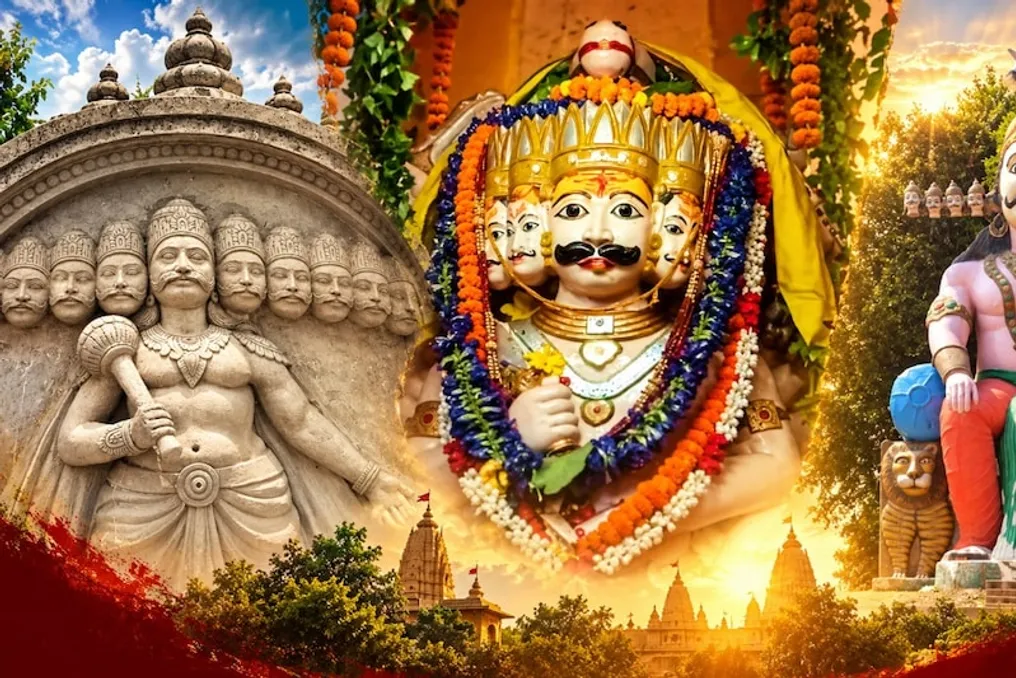
Vijayadashami is currently being celebrated across the country, during which effigies of Ravana, Kumbhakarna, and Meghnada are burned in various regions of India. However, there are places in India where special worship rituals are conducted instead of burning Ravana, due to local historical peculiarities, religious beliefs, and long-standing traditions.
In the village of Bisrah, located in Greater Noida, Uttar Pradesh, the name of the village is associated with Ravana. According to local legends, this place belongs to Ravana's father, Rishi Vishrava. Therefore, the villagers show special reverence to Ravana, and on the day of Dashahara, his veneration takes place instead of burning an effigy. The village also has a temple dedicated to Ravana, where devotees pray according to their faith.
Another such place is Mandsaur in Madhya Pradesh. There is a belief that Ravana's wife, Mandodari, was originally from this region, which is why Mandsaur is called Ravana's mother-in-law. Due to the tradition of honoring the son-in-law, in some areas here, Ravana is worshipped instead of his effigy being burned during Vijayadashami.
In Ravangrama, located about 50 kilometers from Vidisha in Madhya Pradesh, the burning of Ravana effigies is also not practiced; the tradition of worshipping Ravana is maintained there. Local residents attribute special significance to Ravana, and it is said that he has a huge statue in this village. The traditions of Ravangrama demonstrate that religious perceptions of the characters from the Ramayana vary across different regions.
In the city of Kanpur, Uttar Pradesh, the Deshanan Mandir, dedicated to the worship of Ravana, is famous. It is said that the history of this temple spans about 135 years. The temple is not open year-round, and its doors are opened to pilgrims only on the day of Dashahara. On other days, the statue of Ravana remains closed. On this day, followers visit the temple, offer prayers, and light oil lamps, praying to Ravana for wisdom, knowledge, and strength.
In Jodhpur, Rajasthan, some communities consider Ravana to be their ancestor. In their beliefs, Ravana is connected to the lineage, so during the period of Dashahara, they worship Ravana instead of burning his effigy. This belief, prevalent among local communities, differs from the generally accepted tradition of burning Ravana effigies and is part of their cultural identity.
In Kakinada, Andhra Pradesh, there is a temple dedicated to Ravana. Here, he is revered as a powerful ruler and a devoted follower of Lord Shiva. The temple has a tradition of joint worship of Ravana and Shiva. Local beliefs emphasize Shiva's devotion and Ravana's power, distinguishing the view of him from those places where his effigy is burned during Vijayadashami.
In Kangra, Himachal Pradesh district, special religious views on Ravana are also common. In some places, he is revered as a great devotee of Lord Shiva. According to beliefs, Ravana gained Shiva's favor through severe asceticism and received his grace. Some local customs also claim that Ravana attained liberation. Because of this belief, some people worship Ravana instead of burning him on the Day of Dashahara.