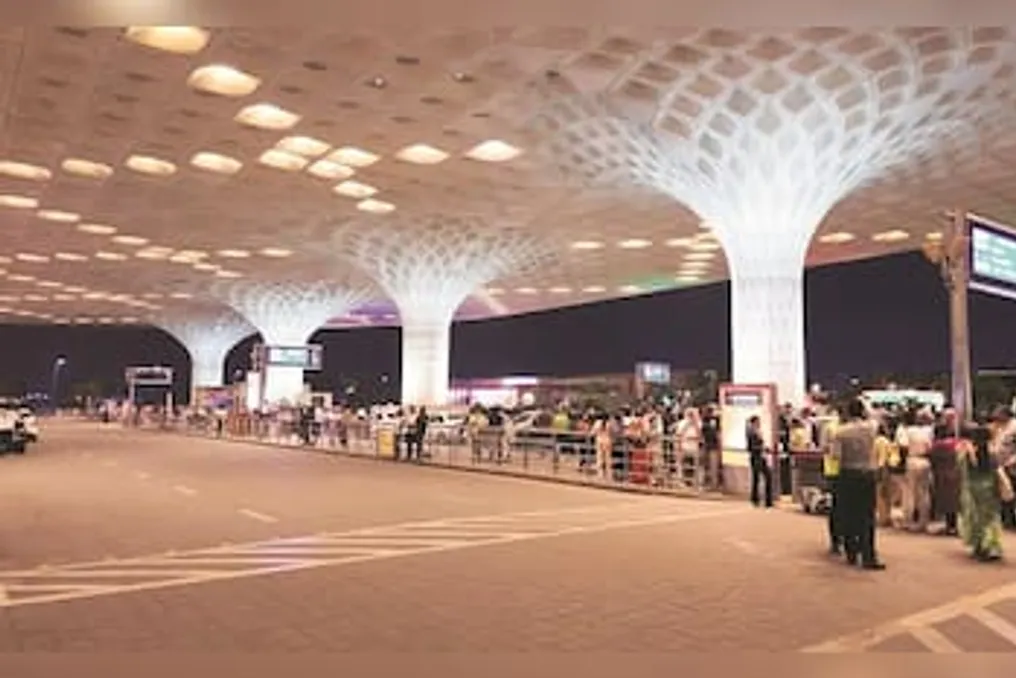
MIAL insists on the plan to shift flights to Summer 2027, despite airline objections
Read more
Business Standard
business-standard.com

MIAL insists on the plan to shift flights to Summer 2027, despite airline objections

Mumbai International Airport Ltd (MIAL), controlled by Adani Group, reiterated on Monday that airlines must independently decide whether to shift their flights to Navi Mumbai airport, temporarily suspend operations in Mumbai, or seek other options within the schedule for Summer 2027.

In its communication to the Airline Operators Committee (AOC), which represents airlines operating at Mumbai airport, MIAL emphasized again that during the summer period of 2027, Mumbai airport will serve approximately 5 million fewer passengers annually due to the closure of Terminal 1 for reconstruction. Both airports, Mumbai and Navi Mumbai, are managed by Adani Group.

MIAL's response to the AOC followed two days after the committee sent a letter to MIAL rejecting any unilateral redistribution of traffic, reduction of slots, or relocation of international operations without proper procedure. The AOC stated that airlines did not agree to transfer international operations to Navi Mumbai or to any reduction or cancellation of existing slots.

In an email to AOC members on Monday, MIAL referred to a meeting held on October 13 with airlines, noting that individual carriers have complete freedom in making decisions regarding their plan for the Summer 2027 schedule. MIAL clarified: 'As we explained at the October 13 meeting, the capacity of Mumbai airport should be limited by approximately 5 million passengers per year according to the S27 schedule.'

S27 is a commonly accepted abbreviation in the aviation industry for the Summer 2027 flight schedule. In aviation, the summer schedule is valid from the last Sunday of March to the last Saturday of October, while the winter schedule runs from the last Sunday of October to the last Saturday of March.

Furthermore, MIAL reported that airlines can choose to shift part or all of their operations to Navi Mumbai, temporarily halt activities at Mumbai airport until Terminal 1 resumes operation, or seek alternative locations. The operator added that the decision to participate in consultations with the Airport Operations Control Centre (AOCC), which coordinates airport operations, remains solely up to each individual airline.

The airport operator also confirmed that it will restore all historical slots at Mumbai airport after the completion of Terminal 1 reconstruction and its commissioning by 2030. A slot is a designated time when an airline can take off or land at the airport.

The dispute began in August when MIAL started discussions about shifting international flights to Navi Mumbai as part of the Terminal 1 reconstruction. Following this, the operator proposed moving 265 out of 770 weekly international flights from Terminal 2 of Mumbai airport to Navi Mumbai during the winter schedule, which begins on October 26.

MIAL's plan is linked to the reconstruction of Terminal 1, which is expected to be closed for restoration. The airport operator stated that the capacity of approximately 5 million passengers should be limited at Mumbai airport during Summer 2027, insisting that the reconstruction is necessary to address the issues of Terminal 1's outdated infrastructure.

Airlines questioned the basis for the proposed shift and requested detailed information on terminal capacity, passenger flow, and usage. The AOC also demanded clarification regarding the methodology used to determine the proposed reduction in international operations, stating that airlines cannot be forced to shift or reduce operations without the necessary data, consultation, and regulatory process.

The Ministry of Civil Aviation intervened in the dispute earlier this month. After a meeting on October 6 involving the ministry, MIAL, and Navi Mumbai International Airport, the airport operator was advised to engage with stakeholders to develop a mutually agreed transition plan instead of following its initial proposal.

At the October 13 meeting, MIAL assured airlines that the historical distribution of slots would not be disrupted during the 2026-27 winter schedule. It also announced that a joint working group would be established to develop a plan for implementing the Terminal 1 reconstruction. The next meeting between the airport operator and airlines is scheduled for October 28.
Similar stories

Emirates reports that Navi Mumbai airport is not ready to accept international flights
Read more
business-standard.com

Emirates reports that Navi Mumbai airport is not ready to accept international flights

Emirates stated that Navi Mumbai airport lacks necessary auxiliary facilities, such as cargo warehouses and catering capabilities. Meanwhile, the operator of Mumbai International Airport (MIAL) assured the airline that international flights will continue to be based in Mumbai at least until the end of March.

Essa Sulaiman Ahmad, Senior Vice President of Commercial Operations (West Asia and Indian Ocean) at Emirates Airline, announced on Wednesday that Navi Mumbai International Airport is not ready to handle international flights due to the absence of support facilities like cargo storage and catering services. He added that it would be difficult for airlines to relocate their operations to this airport until it transforms into a fully functional aviation ecosystem.

A few weeks ago, Mumbai International Airport (MIAL), operated by the Adani group, proposed to airlines to shift 265 out of 770 weekly international flights to Navi Mumbai by October 25, as MIAL was planning the reconstruction of Terminal 1 in Mumbai. Airlines strongly opposed this proposal, and the matter was referred to the Ministry of Civil Aviation.

On Tuesday, MIAL held a meeting with airlines and guaranteed them that no international flights would be transferred before the end of March. When asked if Emirates plans to move 33 percent of its flights from Mumbai to Navi Mumbai if the airport operator resumes its offer, Ahmad replied to journalists: 'The airport is not ready.'

Clarifying his position, Ahmad pointed to the essential elements required for airlines to operate. He noted that the airport requires a catering facility, such as a cargo storage facility, and other similar elements. In his view, until the airport becomes a fully formed ecosystem, it will be difficult for any airline to move there.

Furthermore, on Wednesday, Emirates conducted a static demonstration of its A380 aircraft at Delhi airport ahead of the launch of the Delhi-Dubai route starting October 26. Speaking to journalists at the event, Ahmad emphasized that Delhi is an important market for the airline, and it will continue to operate four daily flights from Dubai to the city. One flight will be on the A380, and the other three on modernized Boeing 777s. He also stated that the updated aircraft will offer classes of service: first class, business class, premium economy, and economy.

Ahmad stated that Emirates is willing to consider operating in new airports, including Navi Mumbai and Noida, provided that additional flight permissions and seat allocations are obtained under the air service agreement between India and the United Arab Emirates. He specified that the airline is operating at full capacity permitted by existing rights. Although Navi Mumbai may provide access to a new market closer to Pune, Emirates will require additional permission before considering operations there.

Bilateral air service rights are agreements between two states that determine the number of flights and seats that designated airlines can offer, as well as the routes and airports they can serve. These restrictions mean that an airline cannot simply add an unlimited number of flights or start operating from a new airport, even with high passenger traffic. Ahmad mentioned that the quota related to Dubai is about 67,000 seats per week in each direction. Any increase would require an agreement between the two governments.

Ahmad also reported that passenger load factors on Indian destinations initially suffered due to the Middle East conflict but are now recovering and approaching pre-conflict levels. He declined to state the exact load factor figure before the announcement of the airline's half-year results in November. Separately, he noted that Emirates is operating at 96 percent of its global network capacity before the conflict, and passenger traffic has recovered to approximately 93 percent of the pre-conflict level globally.

According to the analytical firm Cirium, Emirates operates 167 flights per week to nine Indian destinations from Dubai. Mumbai has the highest frequency with 35 flights per week, followed by Delhi with 28 flights. Bengaluru, Chennai, and Hyderabad have 21 flights per week each, while Kochi has 14, Kolkata has 11, Ahmedabad has 9, and Thiruvananthapuram has 7. The total weekly frequency remains unchanged compared to October 2025.

Civil Aviation Ministry asks MIAL to postpone flight relocation plan to Mumbai and consult with airlines
Read more
business-standard.com

Civil Aviation Ministry asks MIAL to postpone flight relocation plan to Mumbai and consult with airlines

The Ministry of Civil Aviation (MoCA) on Tuesday requested that Mumbai International Airport Ltd (MIAL) suspend the current transition plan. Under this plan, 265 out of 770 weekly international flights were scheduled to be moved from Mumbai airport to Navi Mumbai airport by October 25. Furthermore, sources reported that the airport operator, controlled by the Adani group, was instructed to hold a meeting with all stakeholders to develop a mutually agreed transition plan.

The dispute between airlines and the Adani group regarding the proposed relocation began in August when MIAL started discussing the transfer of international services to Navi Mumbai as part of the reconstruction of Mumbai Airport's Terminal 1. The situation escalated in recent weeks after MIAL requested transition plans from airlines by Tuesday (October 6) and warned that it would proceed with the planned relocation if the airlines did not provide their comments.

Both MIAL and Navi Mumbai International Airport Ltd (NMIAL) are under the control of Adani Airport Holdings Limited (AAHL). Sources clarified that a meeting held on Tuesday in Delhi between MoCA, MIAL, NMIAL, and the airlines resulted in the decision to postpone the current transition plans.

MIAL is now organizing a meeting with all participants to prepare a transition plan that will be approved by the airlines and other involved parties. Sources added that the new plan must also undergo necessary regulatory approvals.

The protocol of the joint stakeholder meeting, demonstrating airline agreement with the transition plan, will be included in the approvals for the Master Development Plan (MDP) for the project. Approval of the MDP for this project must be provided to MoCA.

The process agreed upon on Tuesday will require MIAL to first obtain stakeholder consent on the transition before submitting the plan for regulatory approval.

The meeting in Delhi took place after airlines raised questions about the basis for relocating 33 percent of specific international services from Mumbai Airport to Navi Mumbai. MIAL stated that 265 out of 770 weekly slots at Terminal-2 would be temporarily suspended, and these flights would be relocated to Navi Mumbai.

Currently, all international flights at Mumbai Airport operate from Terminal-2. According to MIAL, approximately 5 million domestic passengers per year need to be transferred from Terminal-1 to Terminal-2 at the old airport, which is why about 33 percent of the international flights currently operating from Terminal-2 must be moved to Navi Mumbai.

The Airline Operators Committee (AOC) demanded an explanation from the airport operator in its Sunday communication to the Adani group regarding how the figure of 33 percent was obtained. It wanted to know whether the calculation was based on terminal capacity, passenger flow, flights, or slots, and requested the methodology and capacity assessment behind this figure.

AOC also asked the Adani group to point to a stakeholder meeting where this proposal was discussed and agreed upon, and whether the proposed reduction or relocation of established slots was taken into account in the IATA World Slot Guidelines (WASG) and World Slot Guidelines (WSG).

On Saturday, AAHL announced in a press release that terminal reconstruction would begin in January due to safety issues in the 60-year-old building. AAHL CEO Arun Bansal stated that extensive consultations with airlines regarding the future of Terminal-1 had been ongoing since 2020, and that the reconstruction plan had also been presented to the Airports Economic Regulatory Authority of India (AERA).

Airlines questioned this statement on Sunday that extensive consultations on Terminal-1 had been taking place since 2020. AOC demanded that the Adani group provide meeting protocols, consultation recordings, and documented results of all consultations conducted since 2020. It noted that 2020 was the Covid period, and Adani only took over the management of Mumbai Airport in mid-2021.

On Sunday, airlines also requested monthly actual data on the utilization of Terminal-1 and Terminal-2 for each month of 2026, as well as the available and claimed capacity of both terminals. AOC stated that this was necessary to understand the justification for the flight relocation, as Terminal-1 currently serves about 10 million passengers annually, with a claimed capacity of 15 million.

The committee separately requested a detailed reconstruction plan for Terminal-1, covering its scope, phases, timelines, as well as the operational and capacity impact at each stage.

AAHL also offered incentives to encourage international airlines to move to Navi Mumbai. These include a 100 percent discount on landing fees for new international flights and cash vouchers to compensate for the difference in user development charges between the two airports.

However, AOC stated on Sunday that such incentives were not its immediate concern. It noted that airlines require transparency regarding the Terminal-1 reconstruction plan, timelines, capacity assessment, and operational transition.

Popular