
ZAP Surgical secures $36 million in funding to expand brain robotics surgery
Read more
Ventureburn
ventureburn.com

ZAP Surgical secures $36 million in funding to expand brain robotics surgery

ZAP Surgical Systems has attracted $36 million in new funding to accelerate its global expansion. The medical technology company, based in California, announced the receipt of funds on October 19, 2026. The financing was led by Catalio Capital Management with support from Baheal, ZAP's strategic partner in China.

The investment reflects confidence in the company's robotic radiosurgery technology and its commercial potential. With the received capital, ZAP plans to deploy its ZAP-X Gyroscopic Radiosurgery platform in academic medical centers, community hospitals, and private physician practices. Furthermore, the company is increasing production to meet growing global demand. To date, ZAP has delivered its fiftieth unit to a client, and approximately 10,000 patients have been treated.

ZAPX is the sixth system developed by ZAP, which was founded in 2014 by the late neurosurgeon John R. Adler. The ZAP-X platform allows radiation delivery from over 1000 beam angles. The system is equipped with integrated shielding, eliminating the need for a radiation bunker in a standard facility, and utilizes a modern linear accelerator instead of radioactive cobalt. These design choices aim to reduce installation costs and simplify procedures, potentially making treatment accessible to hospitals and outpatient providers with limited infrastructure. The company works with both traditional healthcare providers and underserved markets.

Regarding its growth model, the company intends to strengthen its position in the United States and deepen cooperation with Baheal in China. Nicolas von Gionno, a physician and investor at Catalio, noted that this funding demonstrates belief in ZAP's global potential. He will also join the company's board of directors as an observer, adding that intelligent robotics can help reduce healthcare costs while simultaneously improving treatment standards. Catalio specializes in investments in healthcare and artificial intelligence across private, public, and credit markets.

In addition to treating brain tumors, ZAP is exploring neuromodulation—a novel approach involving precisely targeted low-dose ionizing radiation. The company and its partners have investigated the neuromodulatory effects of this approach on various mammalian brain models. ZAP also reported preliminary results from a pilot human study conducted with patients suffering from treatment-resistant depression. This early data has spurred plans for broader multi-center clinical trials, initially focusing on treatment-resistant depression and addiction.

Founder and CEO of ZAP, John R. Adler, stated that neuroscience could undergo significant therapeutic advancements in the next decade. He believes that mission-aligned investment partners will be crucial for expanding access to non-invasive treatment methods. This new funding follows ZAP's $78 million Series E round in November 2024, led by Baheal Medical. The latest investment will boost capital for production growth and further international deployment.

Nevertheless, ZAP competes with established radiosurgery providers, including Elekta's Gamma Knife platform. Transforming installations into recurring sales will remain a key aspect as the company scales. The patient metrics and system deliveries reported by the company demonstrate commercial progress. Further adoption will depend on clinical confidence, economic viability for providers, and the company's ability to deliver systems efficiently. This funding provides ZAP with additional resources to achieve these goals. Its long-term prospects will hinge on expanding the use of existing radiosurgery while carefully evaluating new applications in neuroscience.
Similar stories

Mueon raises $65 million to scale modular AI computing systems
Read more
ventureburn.com

Mueon raises $65 million to scale modular AI computing systems

Mueon Corporation has successfully raised $65 million in a Series A funding round to develop its modular computing platform. The round was led by Maverick Silicon, with participation from Intel Capital and other investors.

Chief Executive Officer and co-founder Wilfred Gomes stated that the funding will enable the company to bring integrated computing and memory systems to market. Additional investors included Geodesic Alliances Fund, Oregon Venture Fund, M-Ventures, Wellington Capital, IQT, and Defined.

As a result, Mueon's total capital raised now exceeds $80 million. Previously, the company secured $15.5 million in seed funding in 2025.

Mueon develops semiconductor systems designed for high-performance computing and artificial intelligence. The company's technology aims to meet the growing infrastructure needs of data centers. The new funds will be used to expand engineering and operations teams.

The financing will also help advance the Cubelets technology from a platform development stage to a broader validation system. The company plans to prepare this technology for production while deepening customer engagement. Gomes added that Mueon's architecture is designed to overcome existing rack-level limitations.

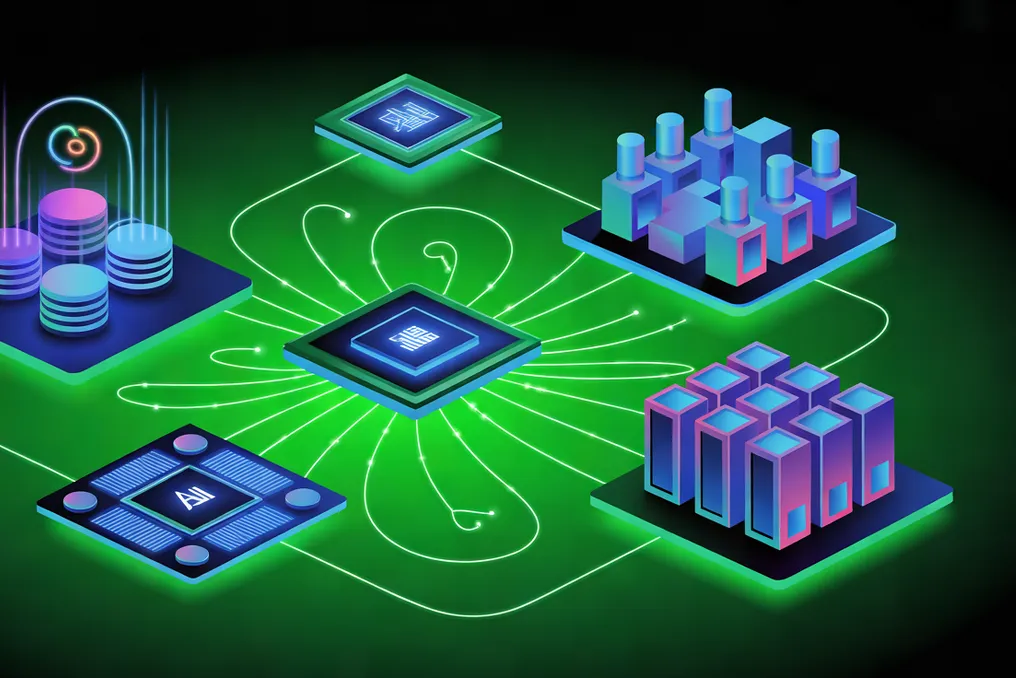
Mueon's core technology, known as Cubelets, consists of modular building blocks for three-dimensional computing and memory. This architecture integrates compute power, memory, interconnects, power delivery, and thermal management. Unlike traditional data center systems that treat these components as separate design tasks, Mueon designs them as parts of a unified system.

This approach is intended to reduce data transmission distances and lower energy consumption. The company aims to achieve a tenfold improvement in energy efficiency and cost within a single rack. Furthermore, the system architecture is designed to scale to megawatt-level density if required by applications, although these figures are company goals and have not yet undergone independent verification.

Key aspects of the work include silicon architecture and design development, advanced integration, and software orchestration and ecosystem validation. These elements cover hardware architecture, thermal design, power optimization, and electrical parameters, as well as compatibility definition with existing AI frameworks.

The investment community also gained representation on Mueon's board of directors. Manish Muthal, Senior Managing Director at Maverick Silicon, will join the board. Srini Ananth, Managing Director at Intel Capital, will also serve as a director. Both investors emphasized the company's systemic approach to data center design.

Industry partners have also shown interest in the platform's potential. d-Matrix sees opportunities in combining modular infrastructure with in-memory computing. Ampere Computing, now part of SoftBank, is also collaborating with Mueon, focusing on mitigating technological risks as the platform moves toward production. Mueon is also working with technology and manufacturing partners.

The increasing demand for AI workloads continues to strain the power and cooling capacity of data centers. Operators require infrastructure capable of scaling with expanding workloads without proportionally increasing overhead. Mueon's methodology seeks to solve this problem through modular system integration.

The next phase of funding will focus on growing engineering capabilities, engagement, and production readiness. It is necessary to demonstrate that Cubelets can achieve the expected efficiency gains at scale. Successful validation could help establish Mueon's architecture as an alternative for future AI infrastructure.

Popular