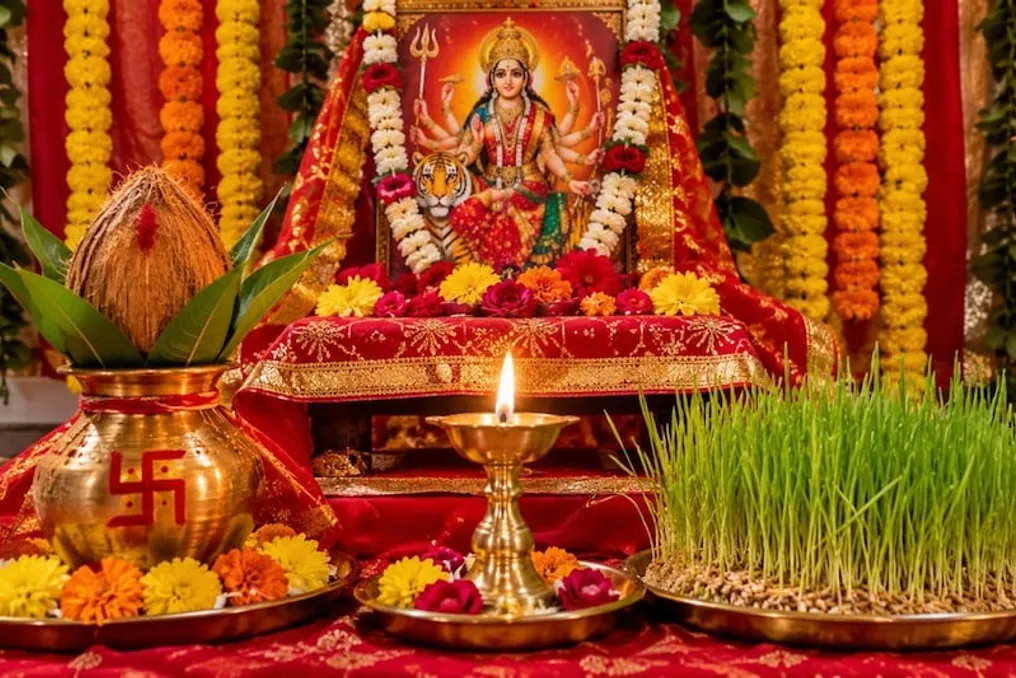
Traditions after Sharadiya Navratri 2026: What to do with vessels, the continuous fire, and objects of worship
Read more
Aaj Tak
www.aajtak.in

Traditions after Sharadiya Navratri 2026: What to do with vessels, the continuous fire, and objects of worship

With the conclusion of Sharadiya Navratri 2026, which ends after the performance of Kujana (worship of girls) on Ashtami and Navami days, the time for Parana (ritual completion) arrives. Many wonder how to dispose of items used during Navratri, such as vessels, utensils, coconuts, or other objects of worship, and how Parana was conducted in the times of grandparents.

Vessel (Kalash)

There is a tradition that after Kujana on Ashtami and Navami days, the vessel set up for Ghatasthapana should be released into a river or pond. If an earthen vessel was used for Ghatasthapana, it can be taken to a sacred river or pond. However, if a vessel made of copper, brass, or other metal was used, it should be cleaned and continued to be used for regular religious rituals.

Coin in the Vessel

During Ghatasthapana, many people place a coin in the vessel before filling it with water. After the worship is complete, the water from the vessel is drained, and the coin is removed. According to beliefs, this coin can be placed in the home's wealth storage area or in a safe. Entrepreneurs also place it in their store's cash register, viewing it as a symbol of prosperity and well-being.

Water from the Vessel

After the religious ritual concludes on Navami and Ashtami days, the water from the vessel can be sprinkled in different parts of the house. It is believed that this promotes positive energy in the home. This water can also be poured onto Tulsi leaves or other plants; if there are no plants in the house, it can be poured at the roots of any nearby tree.

Coconut

The coconut placed on the vessel during Ghatasthapana is distributed among the girls representing the goddess during the Kujana on Ashtami and Navami days. The coconut can be cracked and distributed as prasad to family members and other devotees.

Barley

The barley sown during Ghatasthapana sprouts throughout Navratri. It is considered that this barley is a symbol of happiness and prosperity in the home. After the Kujana on Ashtami and Navami days, there is a tradition to honor the barley and release it. Instead of throwing it in the trash or a dirty place, it should be placed in a clean spot, such as releasing it into any sacred river or pond.

Continuous Fire, Garlands, and Worship Materials

Many Navratri followers maintain a continuous fire throughout all nine days, believing that this fire should never go out. At the end of Navratri, during Parana, the lamp with the continuous fire can be released into a river or pond, but only if the lamp is made of clay. If the lamp is metallic, it can be cleaned and used for daily religious rituals. Flowers or other worship materials brought during the ritual are also released during Parana.
Similar stories

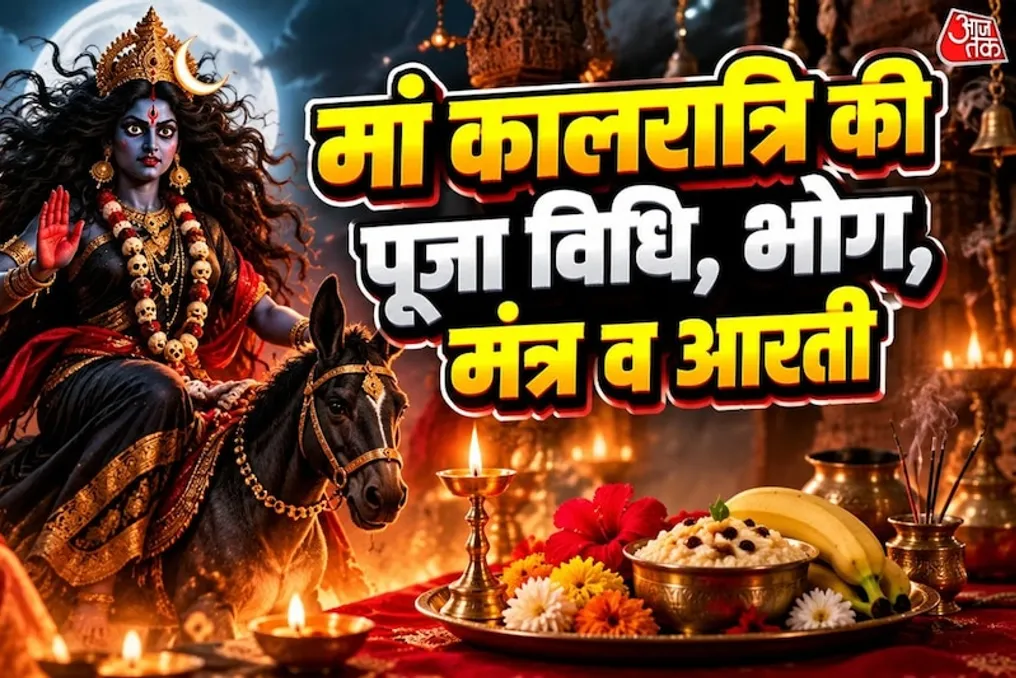
Day 7 of Sharadiya Navratri 2026: How to Worship Goddess Kalratri, What Offerings and Mantras to Use
Read more
www.aajtak.in

Day 7 of Sharadiya Navratri 2026: How to Worship Goddess Kalratri, What Offerings and Mantras to Use

Today is the seventh day of Sharadiya Navratri 2026, dedicated to worshipping the seventh aspect of Goddess Durga—Goddess Kalratri. According to religious beliefs, Kalratri destroys evil forces and frees her devotees from fear. Despite her fearsome appearance, she brings prosperity to her followers. Kalratri's vehicle is a donkey. It is believed that observing rituals in her worship helps rid one of life's adversities. This article presents information on methods of worshipping Kalratri, her favorite offerings, auspicious colors, mantras, and Aarti.

On the seventh day of Navratri, to worship Kalratri, one should take a bath early in the morning and thoroughly cleanse the ritual area. A lamp must be lit before the image or statue of the goddess, and then roli, akshat, flowers, and water should be offered to her. During the worship, one should meditate on the goddess and repeat her mantra. After this, an offering of palm sugar (gurd) should be made, and her Aarti should be sincerely performed. Upon completion of the ritual, the offered prasad should be shared among family members.

On the seventh day of Navratri, it is considered auspicious to wear grey or ash-colored clothing. This shade symbolizes patience and balance. It is believed that it inspires maintaining composure even in difficult times, so devotees may wear grey clothes while worshipping Kalratri.

When worshipping Kalratri, it is favorable to offer palm sugar. On this day, sweets made from palm sugar can also be offered as prasad. Religious beliefs state that sincere devotion to the goddess brings blessings to her devotees.

Om Devi Kalratrye Namah.

Kalratri Jai-Jai-Mahakali.

Savior from the jaws of time,
Your destructive name.
Your incarnation Mahachandi.
All earth and sky are your domain.
You are Mahakali.
She who holds the sword and the bowl.
She who tastes the blood of villains.
Your place is Kolkata.
I see your form everywhere.
All gods and people
sing praises to you.
Krovast and Annapurna.
If you are merciful, no sorrow will afflict.
No anxiety, illness, or heavy calamity.
Misfortune will never fall upon you.
Mahakali, the savior.
Say this with love, O devotee.
Kalratri Ma, glory to you.

Mother Chandraganta will be worshipped on the third day of Navratri 2026: rituals, remedies, and legend
Read more
www.aajtak.in

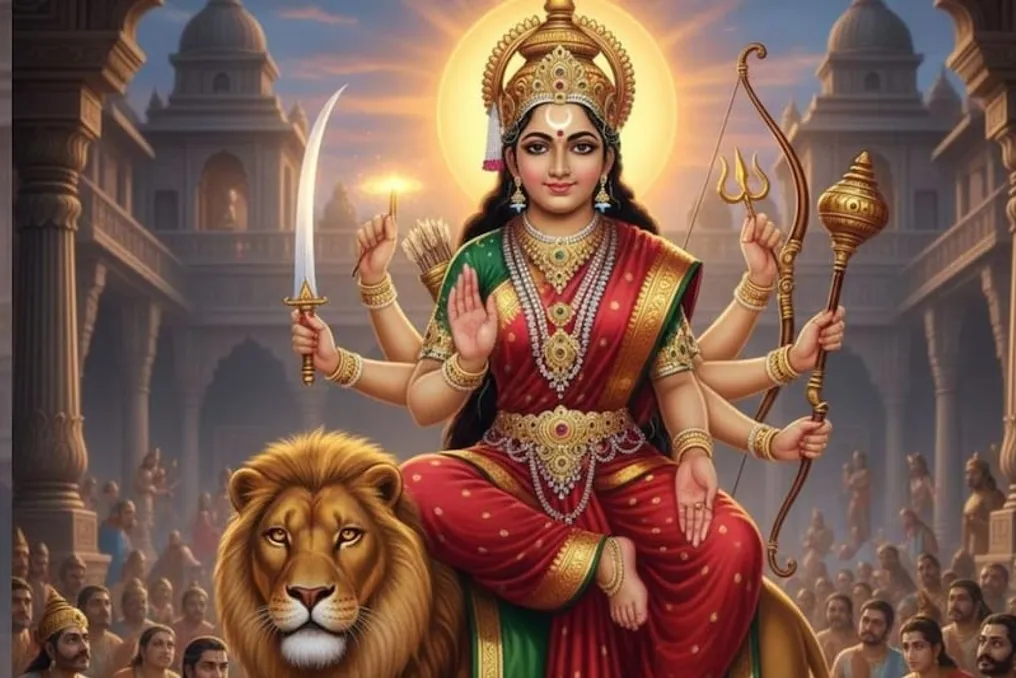
Mother Chandraganta will be worshipped on the third day of Navratri 2026: rituals, remedies, and legend

On the third day of Navratri 2026, which falls on October 13th, worship will be performed to the image of Mother Durga Chandraganta. This name is given to her because of the crescent moon adorning her forehead. Her ten arms are adorned with various weapons. According to beliefs, worshipping Mother Chandraganta promotes courage, self-confidence, and fearlessness. This form of the goddess is considered a symbol of strength and gentleness, inspiring the overcoming of fears and strengthening the spirit.

In astrology, Mother Chandraganta is associated with the planet Mars. Her worship brings great benefit in cases of weak Mars or the presence of Mangal Dosha (Martial affliction).

On the third day of Navratri, it is necessary to take a morning shower and wear clean clothes. It is recommended to wear red garments and observe a vow of fasting and worship. To begin the worship, one should offer red flowers, red sandalwood, and a red shawl to the goddess. After this, one must sincerely worship the goddess and chant mantras. Traditionally, milk or milk-based sweets are offered to Goddess Chandraganta. After completing the ritual, the prasad should be accepted and distributed among family members. Worship performed with devotion and piety is considered a path to receiving the goddess's grace.

According to astrological beliefs, worshipping Mother Chandraganta is considered auspicious if Mars is weak or Mangal Dosha is present in the natal chart. On this day, one can wear red clothing and offer red flowers, as well as a copper coin or any copper object to the goddess. There is also a tradition of offering halwa or nuts to the goddess. After this, one should recite the goddess's mantra, followed by repeating the Mars mantra: 'Om Am Angarakai Namah.'

According to the history described in the Devi Purana, a major battle once took place between the gods and the demon king Mahishasura. In this battle, the gods were defeated, and Mahishasura seized the throne of Indra, establishing his dominion over the universe. At a critical moment, Indra and the other gods had to seek help from Brahma, Vishnu, and Shiva. Moved by their plight, the Trimurti channeled powerful energy that manifested as a majestic goddess. She had ten arms, which were subsequently adorned with divine weapons from various gods, including Shiva's trishula, Vishnu's chakra, and weapons of other deities. Indra himself gifted her his Vajra. The Sun god bestowed upon her his radiant rays, a gleaming sword, and a fierce lion. Armed with these divine gifts, the goddess destroyed Mahishasura and his army. The demon king and his lineage were annihilated, and Goddess Chandraganta freed the gods from fear with her indomitable strength.

Popular