When discussing technological infrastructure, semiconductors, data centers, and artificial intelligence models are usually mentioned. However, according to experts, the underlying array of data that India still needs to create plays a decisive role in the operation of these technologies.
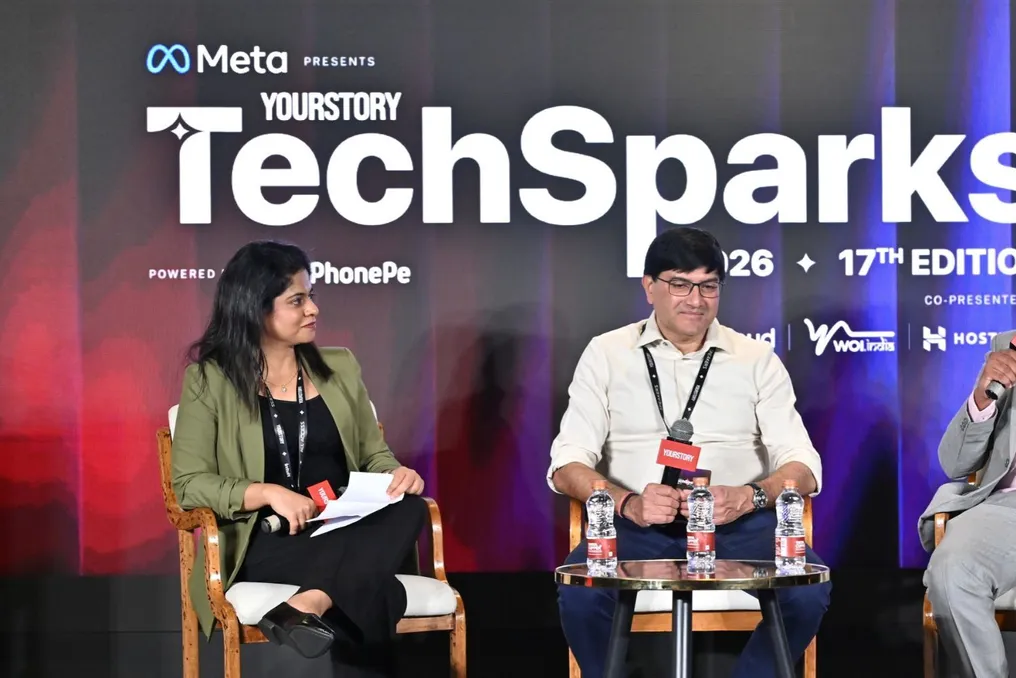
During a panel discussion at the TechSparks 2026 event on the topic 'The Invisible Infrastructure of the New Technological Order,' moderator Chavi Mahajan from YourStory gathered experts. The panelists emphasized that India's advantage will lie in possessing reliable, context-rich data in areas such as language AI and biotechnology.
Arvind Pani, founder of the startup CoreMantle, which specializes in intelligent AI data, stated that data is the part of the technology stack that cannot be replaced. He noted: 'You can keep replacing computing power. You can keep replacing the application, but you cannot replace the data.'
Ankit Bagaria, co-founder and CEO of Loopworm, a company dealing with insect biotechnology, pointed out that the gap is particularly large in biopharmaceuticals, where a significant part of the work is still done through trial and error. According to him, improved data could reduce time-to-market for products.
Bagaria also stressed that biotechnology should receive as much attention as AI, quantum computing, and chips, especially after the COVID-19 pandemic. He highlighted that India imports about 73% of its key materials, including active pharmaceutical ingredients and reagents, from China. Furthermore, despite the country producing a significant share of global vaccines by volume, this accounts for only about 5% of the market by value.
He added that they have long operated in the bio-analogue segment, while others discovered the molecules. Bagaria asserted that India now needs to move towards drug development.
Pani agreed that the need for local context applies to languages as well. The internet in India was initially created for English-speaking users, creating two obstacles for most citizens: they had to learn both the technology itself and a new language. He noted that only about 4–5% of the Indian population feels comfortable using only English.
Moreover, Pani pointed out that even the English language is not a completely solved problem for AI. Models trained predominantly on American English often struggle with Australian or regional accents, and the English spoken in different states of India varies greatly. He concluded: 'These are nuances that no one else will understand, but India will.'
Both speakers agreed that a larger volume of data does not always mean better. Pani explained that AI models built on a smaller amount of enriched, contextual data outperform those trained on large volumes of raw data. He observed that many datasets of Indian languages are recorded in studios from scripts, so models trained on them work well in controlled environments but fail in real conversation.
Bagaria confirmed this point, stating that the principle of 'garbage in, garbage out' applies to biological data.
Loopworm spent approximately 12–13 months cleaning existing data and creating a digital tool that displays the internal workings of silkworms. This work required adaptation to strains of Indian silkworms and the pathogens that affect them. Loopworm uses silkworms to produce sustainable animal feed and high-value recombinant proteins.
Bagaria explained the choice of the silkworm because silk is more than 98% protein, making the insect one of the most efficient converters of plant leaves into protein in nature. The silkworm has been domesticated for about 4000 years, its genome was sequenced in 2007, and about 175 institutions in India teach sericulture and related biotechnologies.
He added that this data-driven approach has already reduced a series of experiments from 10 months and 2.5 million rupees to two and a half months and approximately 4.5 million rupees. 'I am confident that in 10 years we will all say that AI has had the greatest impact on biotechnology.'
Pani noted that proprietary data is becoming a competitive barrier. He cited the law firm Harvey, which changed both its models and its computing power while retaining its domain-specific data as its main advantage.
Regarding what needs to change, Pani stated that India must develop technologies for its own needs. He recalled that his previous company implemented support for Indian languages in Android in 2011 in partnership with Qualcomm, before Google did. 'If we continue to think that someone else will solve our problem, we will always lag behind.'
Bagaria welcomed government initiatives such as the BioE3 policy and the Research, Development, and Innovation Fund. However, he called for increased public and fundamental funding for generating basic data, such as deep sequencing and characterization of Indian organisms, as traditional investors are unlikely to fund fundamental science.