Uzbekistan proposes partnership with the US in critical minerals
Read more
Podrobno.uz [uz]
podrobno.uz

Uzbekistan proposes partnership with the US in critical minerals

Uzbekistan has put forward a proposal to develop strategic cooperation with the United States in the field of critical minerals. This partnership should cover stages from geological exploration and raw material processing to the formation of local industrial clusters.

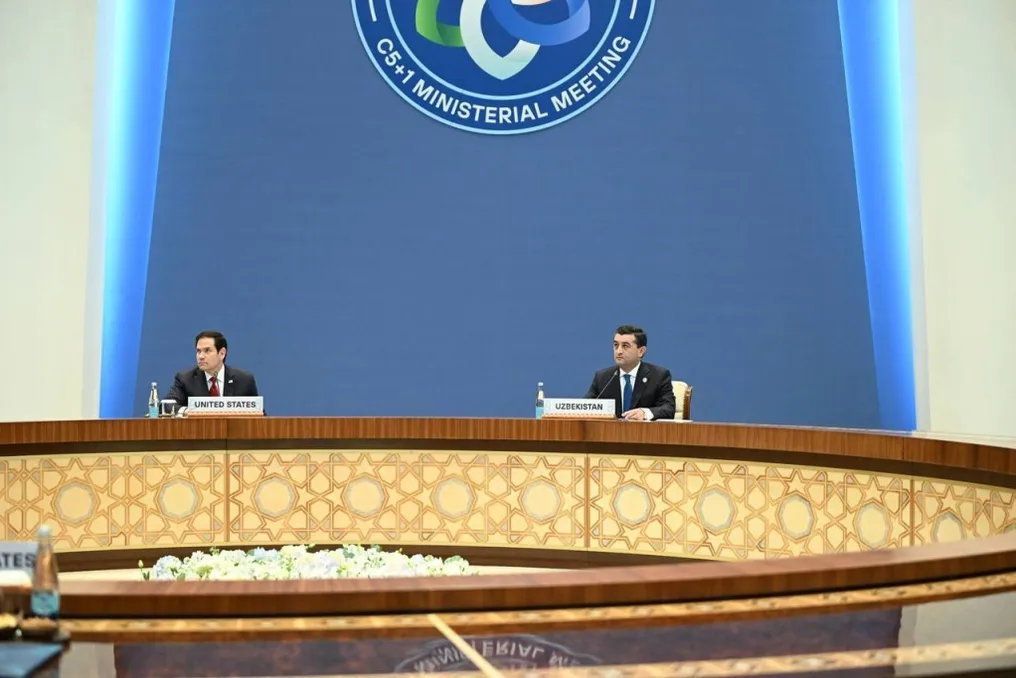
Foreign Minister Bakhtiyor Saidov announced this initiative during a ministerial meeting in the 'C5+1' format held in Samarkand. According to the Foreign Minister, successful implementation of such cooperation requires combining Central Asia's vast natural resources, developing markets, human potential, and favorable geographical location with American investments, technologies, and business experience.

Saidov also emphasized that Central Asia is transforming into a more consolidated region capable of independently shaping its own future and actively participating in global processes. He named strengthening economic ties, implementing advanced technologies, attracting investment, and expanding access to world markets as key areas for further interaction.

Furthermore, the minister highlighted that the stability and prosperity of Central Asia serve the interests of both the countries of the region and their international partners. During this meeting, Uzbekistan assumed co-chairmanship of the 'C5+1' secretariat, and Saidov stated his intention to ensure the continuity of current work and achieve tangible results on previously reached agreements.

The Foreign Minister noted the symbolism of choosing Samarkand for the meeting, as this is where the first 'C5+1' ministerial meeting took place in 2015. Over the past period, the agenda of the format has significantly expanded, and the mechanisms of interaction between the parties have strengthened.

Bakhtiyor Saidov expressed confidence that this meeting will be an important step towards deepening ties between Central Asia and the United States, which will allow mutual advantages to be transformed into long-term partnerships that bring real benefits to the populations of the countries.

It should also be noted that in Samarkand, Bakhtiyor Saidov and US Secretary of State Marco Rubio signed the 'Artemis Accords' regarding peaceful space exploration. Thanks to this, Uzbekistan became the 77th country to adopt this document, which establishes the principles of international cooperation in the study of the Moon, Mars, and other celestial bodies.

Similar stories

Founder claims ability to save 10 million rupees on hiring using AI; met with 11 candidates in a week
Read more
www.aajtak.in

Founder claims ability to save 10 million rupees on hiring using AI; met with 11 candidates in a week

Finding candidates for vacancies and establishing contact with the right specialists is a complex task for companies, especially when dealing with senior management positions such as vice presidents or C-suite roles, as this process can require significant time and financial investment. However, artificial intelligence (AI) is beginning to transform certain aspects of this process and provide support.

An example of this change is actively being discussed on social media: one founder stated that he managed to save about 10 million rupees on hiring by utilizing AI tools. In a post published on the X platform, Aditya Kulkarni shared the experience of a founder who was involved in searching for personnel for senior positions.

According to Kulkarni's message, the founder used tools such as Claude, Apollo, and Instinct to accomplish this task. The first step involved using Claude to analyze public reports from relevant funds over the past five years to identify potential candidates and their professional background.

Subsequently, Apollo was used to gather the candidates' contact information. Then, the process of further interaction and scheduling meetings was carried out using Instinct. Thus, AI tools were engaged at several stages—from candidate sourcing to meeting coordination. According to the post, the founder met with 11 candidates within one week.

Kulkarni explained that the founder was closing three positions, including vice president and C-suite level roles. The post mentioned that traditional recruitment agencies can charge a commission reaching 30 percent of the salary for such positions. According to the statement, the total salary base for these positions exceeded 10 million rupees, which could have led to very high recruitment costs. The founder claimed that AI helped avoid these expenses.

Nevertheless, it should be noted that the figure of 10 million rupees is merely a claim made on social media. Furthermore, the material lacks convincing information regarding the quality of candidates selected using AI and a comparison with candidates found through traditional recruitment agencies.

This case raises the question of whether AI is capable of reducing companies' personnel costs. AI tools can be useful in the initial stages of candidate search, checking public records, gathering contact information, and scheduling meetings. However, assessing a candidate's actual abilities, experience, leadership qualities, and suitability for the role remains critically important. Simply obtaining contact details or scheduling an interview does not guarantee successful hiring.

World Food Programme publishes September activity report in Iran
Read more
www.tehrantimes.com

World Food Programme publishes September activity report in Iran

The World Food Programme (WFP) has released a report detailing its activities in Iran during September. During this month, WFP provided food assistance to 35,739 beneficiaries, including refugees from Afghanistan and Iraq, utilizing a hybrid model combining in-kind food aid and cash transfers (CBT).

Refugees are provided with a basic food package that includes fortified wheat flour (the ration is 9 kg per person, which is less than 12 kg due to funding shortages observed since November 2025). Under the CBT modality, WFP continued to provide financial support to cover essential living expenses for vulnerable refugees. The transfer amount is 8 million Iranian rials ($4.99 USD) for male-headed households and 9 million Iranian rials ($5.6 USD) for female-headed households.

By September, WFP helped alleviate the financial burden related to the needs of 60 celiac patients among WFP beneficiaries in Iran by providing them with an additional sum of 9.7 million Iranian rials ($6 USD) per person instead of the regular ration. Furthermore, WFP supported 411 disabled refugees across eleven settlements, each receiving an additional monthly cash support of 3 million Iranian rials ($1.8 USD) above regular aid.

Initially launched in two provinces, this initiative gradually expanded to cover 11 settlements: Saveh, Semnan, Bani Najjar, Sarvestan, Bezileh, Abazar, Rafsanjan, Barsir, Jahrom, Meybod, and Torbat-e-Jam. School feeding programs and educational incentives remain suspended due to summer holidays and will resume at the start of the new academic year.

In September, WFP also supported 27 income-generating projects in 18 settlements aimed at enhancing the economic resilience and self-sufficiency of 299 refugees. Of these, 38 percent were women, and the remainder were youth. These activities included welding, tailoring, baking, farming, and other crafts, enabling women and youth to develop practical skills, strengthen social ties, and actively participate in their communities' lives.

In response to the recent escalation, WFP began providing cash transfers to affected Iranian households. The first round reached 340 households, 327 of which were male-headed. Fourteen rounds of cash transfers were completed during September for conflict-affected members of the host community across five provinces: Tehran, Alborz, Sistan-Baluchestan, Bushehr, and Hormozgan.

In total, WFP assisted 24,175 people (6,166 households) during the month. Households that passed verification and met criteria received cash assistance based on family size: households with one to three members received 210,000,000 Iranian rials; households with four to five members received 350,000,000 Iranian rials; and households with six or more members received the maximum transfer of 420,000,000 Iranian rials.

Operational needs in Iran remain volatile and require constant adjustment and reassessment of funding requirements. Despite the uncertain scale of the response, driven by ongoing refugee movements and changing local population needs, available resources are insufficient to meet the needs of the affected population under any projected scenario.

In 2025, WFP provided food assistance to approximately 33,300 vulnerable refugees residing in 20 settlements across 13 provinces. Among them, 404 disabled refugees (40 percent women) received monthly cash allowances. About 183 women and 190 men received livelihood support from WFP. WFP doubled the cash transfer amounts starting in January 2025 to ensure food access amid price fluctuations and protect the most vulnerable households.

Assistance remained continuous with targeted adjustments: wheat flour rations were reduced from 12 kg to 9 kg (November-December), and school snacks were suspended (October-December) to stretch limited resources. To promote girls' education and reduce attendance barriers, approximately 2,629 students received cash incentives as part of WFP's commitments to empowering young women. Over 9,261 boys and girls, along with their teachers, benefited from WFP school snacks.

For over four decades, the Islamic Republic of Iran has hosted Afghans fleeing conflict and hardship. In 2025, WFP remained vital in ensuring food security for vulnerable refugees residing in 20 settlements, where households rely on shelter, education, and primary healthcare provided by the Government and other humanitarian actors, supplemented by monthly food aid from WFP (through cash and in-kind forms).

The program's main focus is maintaining a dignified minimum level of basic needs, prioritizing the most vulnerable groups, including female-headed households and persons with disabilities. Operations are implemented in close cooperation and coordination with the Center for Afghan and Immigrant Affairs (CAFIA), WFP's main government partner, as well as with international non-governmental organizations (INGOs) and UN agencies, particularly the United Nations High Commissioner for Refugees (UNHCR), to ensure coordinated support and direction for refugees.

Despite a challenging year marked by economic volatility and temporary operational risks, WFP maintained core assistance to refugee settlers. To protect purchasing power, WFP increased cash transfer values by 100 percent in January 2025 following a recommendation from a settlement-specific minimum basket of goods assessment; this was supplemented by a one-time cash supplement to mitigate the effects of market instability and income reduction after the 12-day conflict between Iran and Israel.

Scania expands Super line with 11-liter engine and power exceeding 400 horsepower
Read more
autopapo.com.br

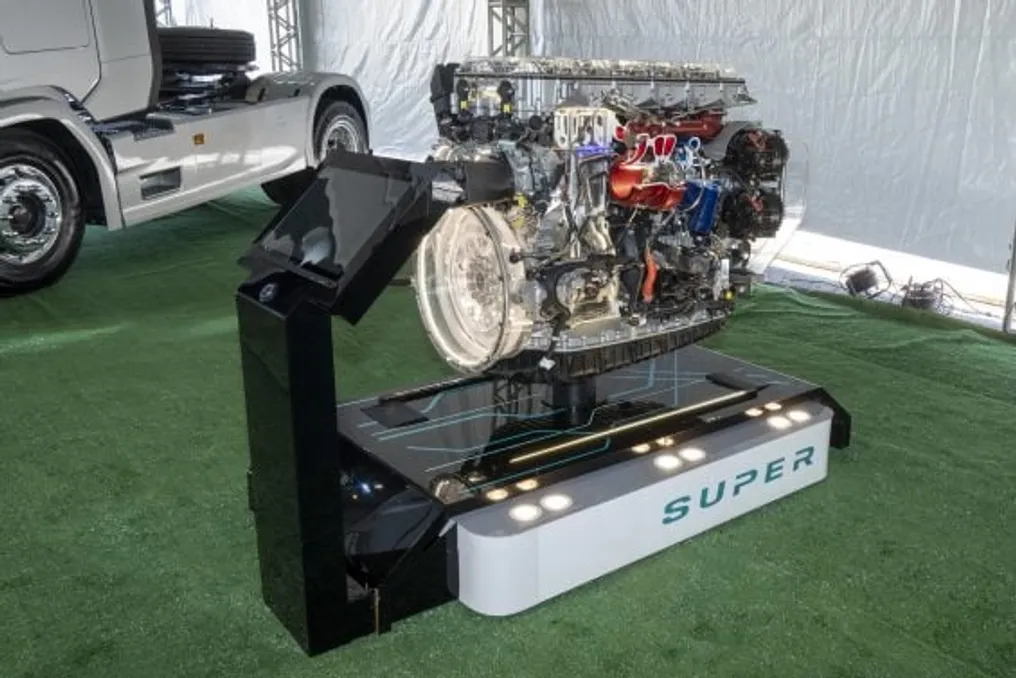
Scania expands Super line with 11-liter engine and power exceeding 400 horsepower

Scania announced the expansion of its heavy truck line with the introduction of the new Scania Super 11-liter range, scheduled to debut at the Fenatran 2026 fair.

The manufacturer's main purpose in launching this novelty is to meet the needs of different segments of the Brazilian transport sector with greater accuracy. These niches seek to combine high operational efficiency, mechanical simplicity, and robustness for daily use on both highways and in urban areas.

With this expansion, the 11-liter engine now offers power options of 390 hp and 430 hp. These new engines will be available in various traction and axle configurations. This includes 4x2 and 6x2 models, aimed at the largest portion of the general cargo and e-commerce market, as well as more specialized options, such as the 6x4, suitable for light civil construction, and the 8x2 version, recommended for the specific transport of horticultural and refrigerated products.

To manage all this power, the Opticruise G25 automated gearbox, which has 14 gears, was selected.

Technologically, the mechanical assembly incorporates significant brand advancements. A notable feature is the variable valve timing (VVT) system, which adjusts valve synchronization in real time to optimize energy consumption and reduce pollutant emissions. Another crucial element is the enhanced regenerative braking system, which acts directly on the engine to safely slow down the vehicle, preserving conventional brakes and minimizing premature part wear.

The manufacturer also placed great importance on simplifying maintenance, with the aim of increasing vehicle availability in customers' fleets. The oil and fuel filters were repositioned side by side in a cooler area of the block, facilitating quick changes without needing to wait for the engine to cool down completely. Additionally, a dedicated fuel optimization unit increases diesel utilization from 87% to 97%, ensuring greater autonomy on long trips or freeing up more space for carrying payload.

Popular