The head of the Agency for State Asset Management (AUGA), Sohibjon Murodov, commented on reports regarding the possible transfer of the Texnopark enterprise to Artel's management. Murodov clarified that Texnopark currently belongs entirely to the Tashkent city hokimiyat, which owns 100% of its shares, and the company has not been transferred to Artel's management.
Information about the alleged transfer of the enterprise to Artel's trust management appeared in the Kun.uz editorial office thanks to journalist Madina Ochilova during a press conference on October 8. She requested clarification regarding the existence of a corresponding agreement, legal grounds for management, and the reasons for the lack of publication of this information.
Answering the questions, the head of AUGA reminded that the functions of an owner of state enterprises in Uzbekistan can be performed not only by AUGA but also by other state structures. He indicated that the management of some facilities is assigned to the Ministry of Economy and Finance, local hokimiyats, and other departments.
Sohibjon Murodov categorically stated: 'Texnopark was directly established by the Tashkent hokimiyat. Therefore, 100% of Texnopark's shares belong to the city hokimiyat. As of today, the company has not been transferred to [Artel]'s management.' He added that measures aimed at improving the enterprise's financial situation are currently being developed.
The head of AUGA announced that information about the financial recovery measures for Texnopark will be presented to the public within a month and a half. These measures include developing strategies for revitalizing the enterprise, launching the production of new goods, and revising outdated areas of activity.
Murodov confirmed that the capital hokimiyat currently manages the company. When the journalist asked about the previous transfer of the enterprise to a private company's trust management, the agency head replied that his conclusions are based on the documents presented to him, and according to these documents, management remains with the Tashkent hokimiyat.
According to him, over the past eight months, all corporate decisions regarding Texnopark requiring approval from AUGA have come from the capital administration. Regarding past cooperation with private companies, Murodov noted that such interaction was possible, but he is personally not aware of it.
Centralization of state assets is planned
Furthermore, AUGA is working on consolidating state shares in those enterprises that are currently under the control of different departments. The goal of this initiative is to ensure greater transparency in the management of state assets and eliminate ambiguity regarding which bodies hold ownership functions.
The agency is studying the possibility of obtaining founder powers over a number of enterprises where state shares are held by other structures. However, the head of AUGA did not disclose specific timelines or decisions regarding changes to Texnopark's ownership structure.
Earlier, Jakhongir Artykhodzhayev, an entrepreneur and former mayor of Tashkent, spoke in early 2024 in an interview with the Lolazor podcast about Artel's involvement in the development of Texnopark. He noted that the territory of the future industrial complex was in a derelict state, and after the president's visit, the task was set to restore production and create 5–6 thousand jobs.
Artykhodzhayev reported that his team proposed 24 projects, 11 of which were approved. Implementing these projects required attracting loans totaling 300–400 million dollars, and the initiators took on the obligation to repay them regardless of the production's financial results. He asserted that by the time of the interview, all 11 projects had been launched, and Texnopark's product exports reached 60 million dollars in 2023.
According to Artykhodzhayev, the Artel company acted as a 'shepherd,' transforming an unattractive, long-unused factory into an attractive facility. He emphasized that the enterprise and all its assets remain state property, and the managing company is responsible for repaying the taken loans. He also stated that the managing company had not made a profit in four years because all income went towards debt servicing.
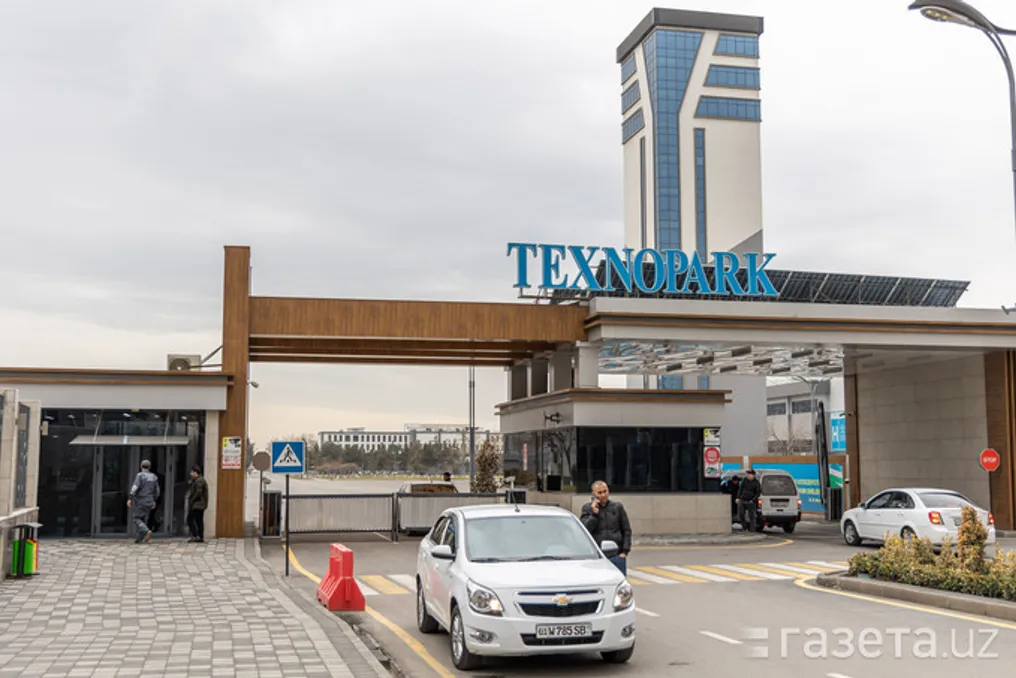
Texnopark is a large industrial complex located in the Yashnabad district of Tashkent. It was established on June 10, 2019, based on the former Chkalov Tashkent Aviation Production Association (later becoming the Tashkent Mechanical Plant). The project was implemented at the instruction of President Shavkat Mirziyoyev with the aim of developing industrial production and producing import-substituting products.
Various products are manufactured at Texnopark sites, including household refrigerators, washing machines, electronic gas meters, elevators and escalators, industrial air conditioners, cooling systems, pumps, and boilers. According to the presidential press service, as of February 2024, the complex included 17 production facilities with a total value of 365 million dollars, and its products were exported to 10 countries, including under foreign brands.