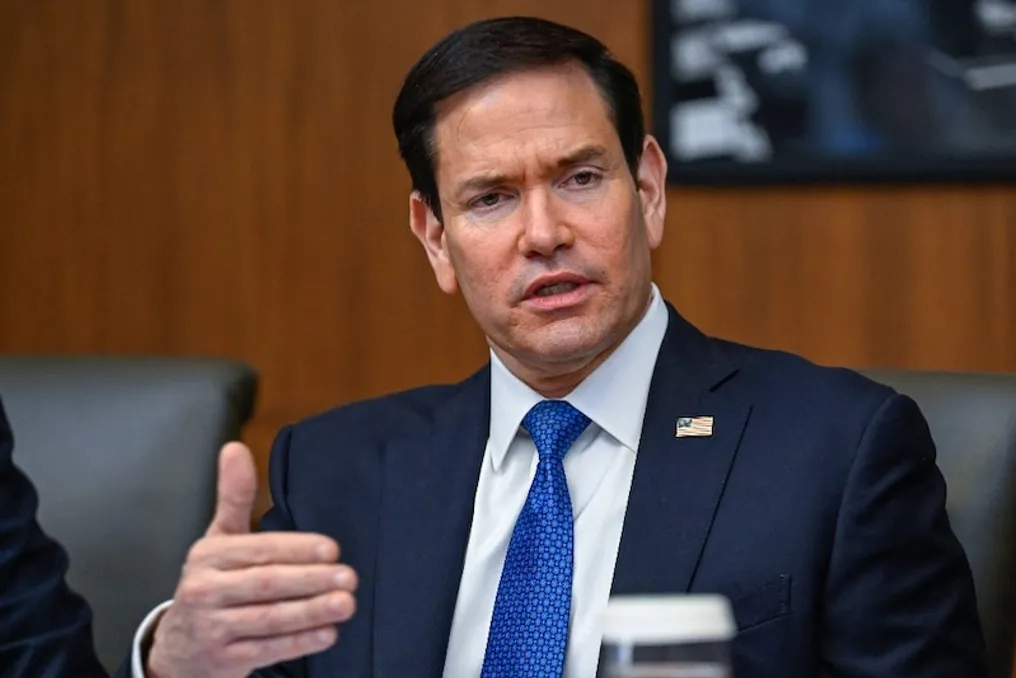
Marco Rubio announced proximity to completion of trade agreement between India and the US ahead of visit to India
Read more
Aaj Tak
www.aajtak.in

Marco Rubio announced proximity to completion of trade agreement between India and the US ahead of visit to India

US Secretary of State Marco Rubio announced that the countries are in the final stages of negotiating a trade agreement between India and the US. This statement was made during a conversation with journalists in Samarkand, Uzbekistan, before his arrival in India.

According to the schedule, Rubio will arrive in Mumbai on Tuesday, where he is scheduled to meet with Foreign Minister S. Jaishankar. Following this, he will visit Jamnagar, known as one of the world's largest oil refineries.

Marco Rubio emphasized that they are actively working to finalize the trade agreement with India and believe it is very close to being concluded. He also noted that US President Donald Trump considers many factors, including global energy supplies, pricing, and the needs of various countries, when making national security decisions.

Rubio added that for some countries, it is not easy to immediately switch to alternative energy sources. He called India an important partner and ally of America, stressing the need to achieve a balance among all these aspects when making foreign policy decisions.

Rubio's statement came against the backdrop of Trump temporarily suspending provisions regarding proposed tariffs for countries purchasing oil from Russia. Previously, a provision under the Lindsey Graham Act stipulated the imposition of up to 100% tariffs on five major importers of Russian crude oil and gas, which included India and China.

Rubio noted the importance of understanding the impact of imposing tariffs on other countries alongside sanctions against Russia. He reported that Trump decided to assess the impact of these measures on the global and American economies over 60 days.

The US Secretary of State also pointed out that although India is making efforts to diversify its energy sources, it still purchases a significant amount of energy from Russia. He explained that changing energy supply sources overnight is not an easy process. Stressing the importance of India as a key US partner, he stated that these circumstances must be taken into account before making decisions on tariffs and sanctions.

Furthermore, Rubio mentioned the growing tensions between Saudi Arabia and the Houthis, issues related to the Strait of Hormuz, and attacks on energy facilities during the Russia-Ukraine war. According to him, these events are affecting global energy prices and supplies.

During his visit to India, Rubio will hold meetings with high-ranking government officials. These negotiations are planned to discuss strengthening the strategic partnership between India and the US, exchanging views on the regional and global situation, and exploring opportunities to expand energy cooperation.
Similar stories

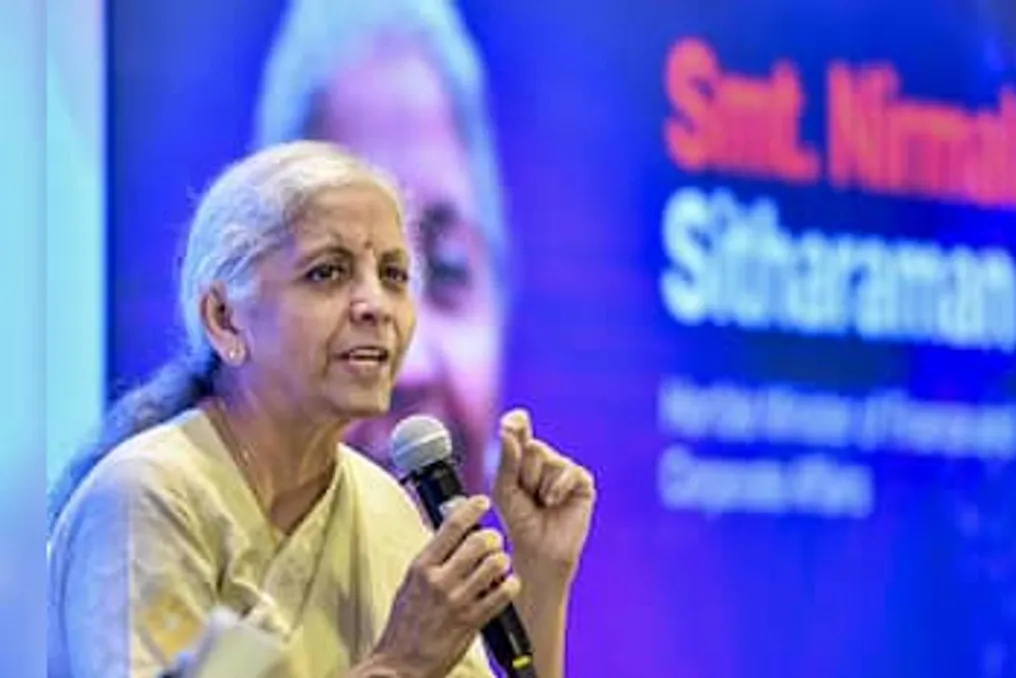
Indian Finance Minister Sitaraman: Trade agreement between India and the US will be concluded soon
Read more
business-standard.com

Indian Finance Minister Sitaraman: Trade agreement between India and the US will be concluded soon

India's Finance Minister Nirmala Sitharaman expressed hope for the swift conclusion of the trade agreement between India and the US, which, in her opinion, serves the interests of world trade and the bilateral economic ties of the two countries.

She noted that recently, India's Commerce Minister had also stated that the signing of this agreement is expected and desired soon. Sitharaman emphasized that negotiations are ongoing, and she hopes the agreement will be concluded as soon as possible in the interest of global trade and partnership between India and the US.

Earlier, Commerce and Industry Minister Piyush Goyal had reported that the first phase of the trade pact between India and the US has been finalized and is currently undergoing legal formalization.

On Trade with China

Regarding trade with China, Sitharaman highlighted the growing trade imbalance and persistent restrictions on Indian products' market access as serious issues, despite years of interaction with Beijing.

According to Sitharaman, during discussions with the Atlantic Council at the annual IMF and World Bank meetings in Bangkok, Thailand, India has consistently sought access to the Chinese market for goods such as generic medicines, beef, vegetables, and other perishable products, but significant progress has not been made despite years of negotiations.

She added that 'non-tariff barriers are the biggest obstacle in trade between India and China,' pointing out that China applies phytosanitary measures and other non-tariff restrictions, even when there is potential to discuss and investigate these issues.

Sitharaman also stated that India prefers to negotiate to correct major trade imbalances rather than impose punitive tariffs on trading partners, even if the process takes a long time.

On BRICS

Concerning the BRICS group, Sitharaman stated that it should be viewed as a partnership aimed at improving citizens' welfare, rather than a platform to counter any country or bloc. She clarified that 'I do not think the goal of BRICS is to oppose others; it is more about strengthening partnership through BRICS.'

She noted that BRICS represents almost 40 percent of the world's population, and cooperation among its members can promote trade development, strengthen mutual understanding, and expand economic opportunities. With the addition of new members, the group actively involves 11-12 countries that together account for about 45 percent of world trade.

On India's Economic Growth

Speaking about India's economic growth, Sitharaman emphasized that the country is demonstrating steady growth despite global turmoil and has been one of the world's fastest-growing economies over the last four to five years, especially after the COVID-19 pandemic.

She attributed India's success to inclusive growth, broader access to resources and skill development among youth, fiscal prudence, and increased public capital expenditure. The Finance Minister pointed out that public investment in infrastructure provided a stronger multiplier effect than directly distributing equivalent sums to the population, while simultaneously creating jobs and supporting economic activity.

In her words, public spending on infrastructure helped channel funds to the population through economic activity without putting as much pressure on the budget deficit as some alternative forms of spending. Sitharaman added that government borrowing generally matched infrastructure spending, asserting that asset creation through debt benefits the economy. She concluded: 'Borrowings are used for asset creation, and as a result, the economy has benefited.'

Popular