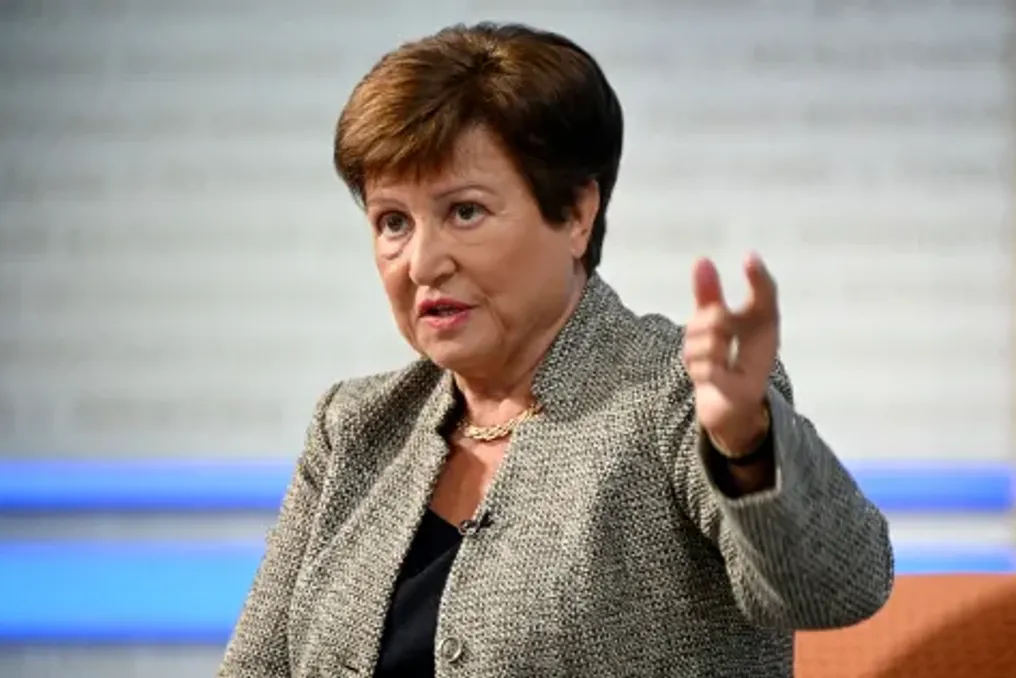
The head of the International Monetary Fund (IMF), Kristalina Georgieva, stated on Saturday that global policymakers expressed both optimism and concern regarding the world economic forecast as the organization's Annual Meetings concluded in Bangkok.
Georgieva also emphasized that her organization is responsible for assisting low-income countries that are struggling due to price shocks resulting from the war between the US and Israel against Iran.
This week, finance ministers, central bank governors, and other high-ranking officials gathered in the Thai capital. Key agenda items included rising inflation, increasing bond yields, and AI-driven economic growth.
During a press briefing held jointly with Saudi Arabian Finance Minister Mohammed Al-Jadaan, Georgieva noted that the meetings were marked by both optimism and apprehension. She pointed to optimism based on the resilience of the global economy, the potential of AI, and the dynamism of Asia. However, AI was also recognized as a source of concern, alongside inflation, high debt levels, wars, and climate risks.
Throughout the week, the IMF warned that high levels of debt and rising bond yields in developed countries are tightening financial conditions at a time when central banks need to focus on curbing inflation, likely through interest rate hikes.
Global energy prices sharply increased since late February, when the United States and Israel began military actions against Iran. Tehran's retaliatory measures targeted Washington's allies in the Persian Gulf, leading to reduced oil and gas supplies. These price surges spread globally, fueling inflation in economies across different income groups.
The IMF stated that low-income, net-oil-importing countries are the most vulnerable to this shock, as they are not benefiting from the AI investment boom supporting growth in many developed economies.
Georgieva said that people everywhere, especially in poorer countries, do not welcome inflation, comparing it to a tax on the poor. She added that such nations must set spending targets to prioritize growth and protect the most vulnerable populations, and the Fund is committed to 'the relentless search for additional resources for low-income countries.'
Nevertheless, higher global interest rates and bond yields increase debt payments for low-income countries. The IMF chief reported that the share of debt service as a percentage of government revenue in low-income countries has risen from eight to fourteen percent in recent years.
She clarified that her organization is responsible for helping countries with debt restructuring when necessary, facilitating domestic resource mobilization, attracting international financing, and creating conditions for private investment. Georgieva concluded that 'when we do everything possible, it leads to a better life for people.'
Regarding the AI investment boom, Georgieva noted that member countries recognize its value in sustaining growth but cautioned that 'when we depend on one specific growth driver, it is like standing on one leg.'
The IMF reported this week that structural reforms in South Africa have contributed to strengthening macroeconomic stability, but warned that the country and other African economies remain susceptible to global shocks, including rising energy prices and potential food inflation. The Fund projected South Africa's economic growth at 1% in 2026, lower than the initial forecast of 1.1%.