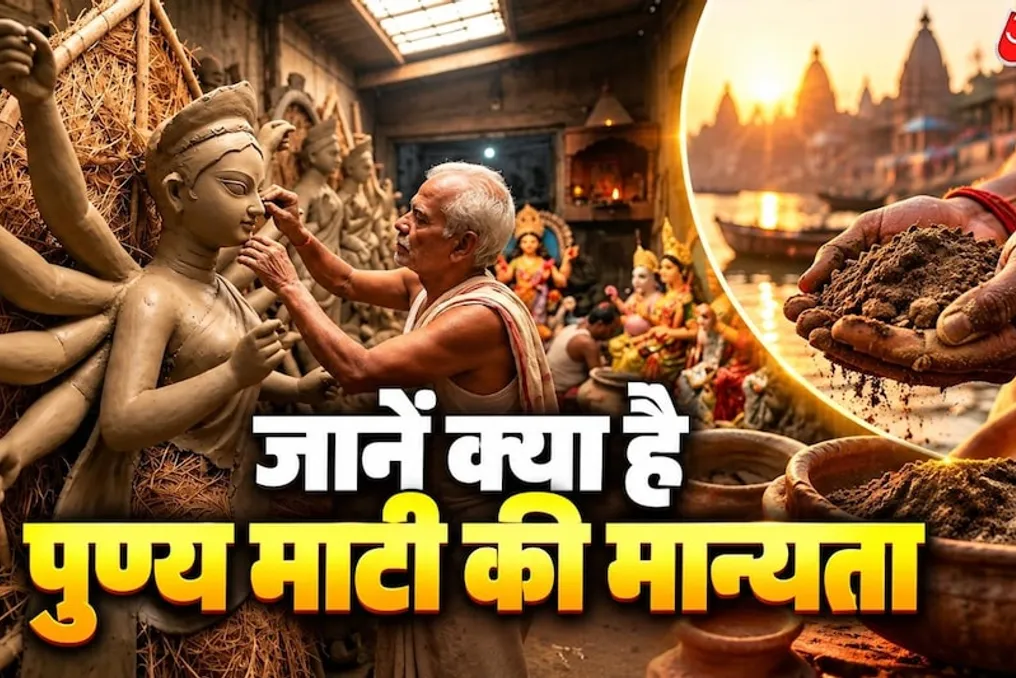
When mentioning Durga Puja, majestic images of Goddess Durga, decorated pavilions, and the atmosphere of Kolkata come to mind. The tradition of creating Goddess Durga statues in West Bengal has a centuries-old history. When preparing these images, sculptors apply their skill and labor, following a series of traditional rituals. One such custom is a practice that often raises questions among people: did you know that in Bengal, earth from the thresholds of houses in red-light districts is used to make Goddess Durga statues?
Furthermore, the special style used to decorate the Goddess Durga statue is connected to the postal service.
The Kumartuli area, the capital of West Bengal, is known for where Goddess Durga statues are created. For generations, sculptors have been making images of Goddess Durga and her family. Work on the statues begins several months before Durga Puja.
Traditionally, the process starts with 'Pata Puja', held on Rath Yatra day. During this ritual, worship is paid to the wooden frame that will be used for the statue. Then, a base made of bamboo is formed, into which straw is packed to give shape to the body.
After this, layers of clay are applied to the frame. Sculptors carefully shape different parts—the face, arms, and body. After drying, the statue is painted, and then clothes, ornaments, and other decorative elements are put on it. This entire procedure combines the craftsmanship of artisans with the special significance of traditional beliefs.
One of the most discussed traditions related to the making of the Goddess Durga statue is the use of earth from brothel doors. In Bengal, this earth is called 'Punya Mati', meaning sacred earth. This clay is usually taken from the threshold of a house in a red-light district and mixed with other clay used to create the statue.
The Sonagachi area in Kolkata is often mentioned in connection with this tradition. However, it is important to understand that the use of this earth is not mandatory for every statue; the methods of following this tradition may vary among different sculptors and depending on local customs.
There are several beliefs and interpretations behind this practice. According to one belief, when a person enters a brothel, they leave their virtues and merits at the doorstep. It is based on this folk belief that the earth there is called 'Punya Mati'.
From a social perspective, this tradition is also viewed differently. Including earth from the homes of women who often face discrimination and scorn in society into the image of the goddess carries a symbolic message. This tradition also prompts reflection on what should be the basis of respect and acceptance of a person in society.
Nevertheless, these interpretations should be considered purely as religious and cultural beliefs, and the stories underlying them cannot be presented as confirmed historical facts.
For creating the Goddess Durga statue, smooth river clay is usually used. Clay from the Ganges-Hooghly river region in Kumartuli holds special significance. Sculptors mix different types of clay as needed to make the statue durable and suitable for molding.
In some traditional methods, a mixture of several types of clay is prepared. Then, a thick layer of clay is applied to the straw frame. When the first layer dries, a second is applied, allowing the correct shape of the statue's body, face, and arms to be given.
Special attention is paid to the fine detailing of the face and hands. After this, an initial white coat of paint is applied to the statue, and then it is decorated with various colors. The ritual of creating the eyes of the statue is called 'Chokkhudan', and it is considered the process of symbolically animating the image of Goddess Durga. In many traditions, the creation of eyes holds special significance on Mahalaya.
Another interesting tradition associated with the Goddess Durga statue is 'Daker Saj'. In Bengal, this traditional style of decorating statues holds a special place. Its name is related to the Bengali word 'dak', which means postal service.
In old times, some materials used to decorate the statues were delivered by mail. That is why this decorating style received the name 'Daker Saj'. It predominantly uses golden sheen and decorative elements such as zari.
Additionally, decorative figures made of sholapith and clay are used to decorate the statues. Sholapith is a light, soft plant material from which very thin and beautiful decorations are created. While in clay decoration, sculptors create figures resembling clothing, ornaments, and other patterns.
Today, modern themes and new technologies are actively used in Durga Puja pavilions, but these traditional decorating styles remain an important part of Bengal's cultural heritage.