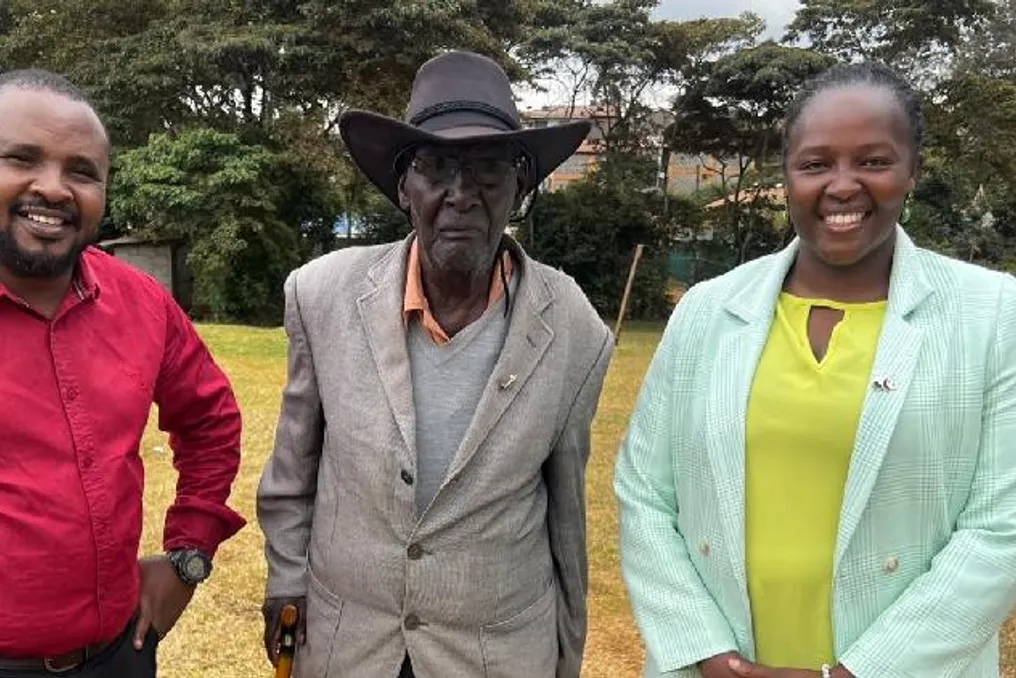
At 96 years old, Ephraim Matindi Hinga has lived through nearly a century of changes. His life reflects the transformation of Kenyan society and the difficulties associated with aging in a rapidly changing world, demonstrating the contribution of a generation that laid the foundations for younger generations.
During a visit to his rural home in Kiambu County with fellow journalist Enok Sikoli, we explored the topic of Kenya's aging population and the growing financial pressure faced by the elderly. However, speaking with Mzee Hinga, a descendant of the great Waiyaki wa Hinga, made the story more personal, showing not only statistics and forecasts but also the dignity that can accompany old age, as well as its vulnerability.
Mzee Hinga continues to advocate for the well-being and dignity of the elderly. His story serves as a reminder that although Africa is often noted as having the youngest population in the world, it needs to prepare for a future where millions of citizens will become elderly.
The main question is not just about longevity, but about the quality of that life when a person can no longer receive a regular income.
The Cost of Aging
For some, retirement means the opportunity to rest after many years of work, while for others, it becomes the start of a difficult struggle to meet basic needs, including food, medical care, and daily expenses.
Mzee Hinga is fortunate because he is supported by his children, who pay for household help to assist him with cooking and laundry, allowing him to maintain some independence. Nevertheless, as he explained during the interview, not all elderly people have such a safety net.
Children's support is vital, but he acknowledges that many families are themselves in financial difficulty. Adult children who are unemployed or earn little may wish to help their aging parents but lack the funds.
His account gave a human face to a problem often discussed in terms of demographics and government spending. For many elderly people, family support remains the first line of defense, but what happens when the family itself is financially insecure?
The situation in Kenya is particularly complex because many people spend their working lives in informal employment. Workers who never had access to a formal pension system may reach old age without sufficient savings to support themselves; for them, retirement is not always a choice.
A Generation Beyond Statistics
According to data from the Kenya National Bureau of Statistics, the number of Kenyans aged 60 and over was approximately 2.7 million in 2020 and is projected to rise to 6.4 million by 2045. This growth will place increasing burdens on healthcare systems, family support, and social protection programs.
Marcy Nyeri, a social worker from Nairobi, highlighted the financial burden of medical care for the elderly, noting that conditions such as diabetes and high blood pressure often require regular monitoring, medication, and frequent hospital visits. Regular medical check-ups and blood sugar tests are part of the daily life of many older adults.
When Social Protection Is Insufficient
The Kenyan government has introduced cash transfers to assist vulnerable elderly people in meeting some of their basic needs. During the interview, Mzee Hinga pointed out the limitations of this aid, explaining that the money received under the program can be quickly spent on medical expenses.
He described how even a consultation fee at a hospital can take up a significant portion of the monthly allowance, leaving little for medicine, food, and other necessities. His experience raises a complex question for policymakers: how to maintain the relevance of social protection when the cost of essential services continues to rise?
The government's cash transfer program for the elderly is an important element of the country's response to the problem of aging and vulnerability. However, the growing number of elderly citizens will require constant attention to funding, selection criteria, accessibility, and adequacy of benefits.
Dominic Mwenga, Chairman of the Central Bank of Kenya Pension Fund, stated that Africa must rethink its preparation of citizens for retirement. He pointed to the need to develop capital and pension accumulation infrastructure capable of supporting people after their working life, especially those who have lived outside formal employment.
Traditional pension systems are often based on regular contributions deducted from wages. But most African workers earn a living in the informal economy, where income can be irregular, and traditional pension arrangements are less accessible. Thus, retirement preparation requires new approaches that consider how people actually work, earn, and save. Without these changes, governments, communities, and families will continue to bear the majority of the responsibility for supporting people who reach old age without adequate financial security.
More Than Just Money
Although the economics of aging became the central theme of our report, meeting with Mzee Hinga brought me back to the broader question of how we value the elderly. Mzee Hinga's connection to Waiyaki wa Hinga places him in a family history linked to an important chapter of Kenya's past. But his significance goes beyond his lineage. Through his consistent advocacy for the rights of the elderly, he reminds us that the elderly are not just recipients of aid. They are citizens with rights, experience, and voices that deserve to be heard.
Our elders helped raise families, preserve traditions, support communities, and overcome periods of deep social and political change. Many made sacrifices that the younger generation may never fully appreciate. However, as society becomes increasingly consumed by the demands of modern life, it is easy to overlook those who no longer participate in the economy as they once did.
Age does not erase dignity, and it should not mean exclusion from public life.
A Responsibility That Cannot Be Postponed
Leaving Mzee Hinga's home, I realized that the duty to honor the elderly cannot be limited to an anniversary or a social media post. It must be reflected in our attitude towards them, in the policies we support, and in the systems we build to protect them.
If you know an elderly man or woman, call them. Visit them. If you can, bring them a bag of maize, some milk, or whatever you can afford. Sometimes the smallest act of kindness can bring the greatest joy.
However, individual kindness must be combined with collective responsibility. Families need support, the elderly need affordable healthcare, and governments need to strengthen social protection systems that allow people to age with dignity. Kenya's aging population is not a distant problem. The people represented in the forecasts are our parents, grandparents, neighbors, and ultimately, ourselves. Mzee Hinga's generation is aging, but it is not disappearing. Its members remain part of our communities, carrying within them memories, lessons, and experience that cannot be easily replaced.
Our visit reminded me that the story of aging is not just about the number of years lived. It is about the quality of those years, the security they enjoy, and whether society recognizes their value. And leaving his home, I recalled this African proverb: The old ones know the way because they have walked this path before us. A society that cares for its elders honors its own roots.