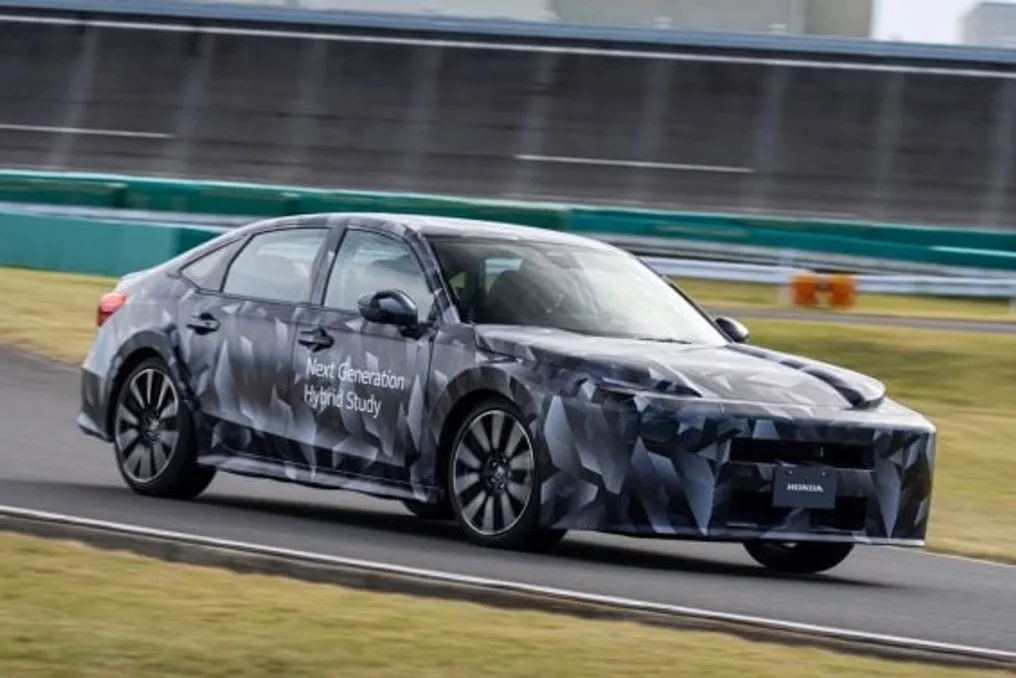
Honda has defined the name for the next line of its hybrid automobiles, opting for the direct term: Honda Hybrid. This new system will be introduced in 2027 and is expected to equip fifteen new models by March 2030, with the majority of these vehicles destined for the North American market.
Honda Hybrid will succeed the e:HEV system, which has been used since 2020 in the Civic, Accord, and CR-V models. In this previous system, the combustion engine predominantly functioned as an energy generator to power the electric motor responsible for moving the vehicle.
According to the manufacturer, this new generation represents an evolution in both the combustion engine and the drivetrain unit and the management software. The established goals are to reduce fuel consumption by more than ten percent and decrease the set cost by thirty percent compared to the hybrid launched in 2023.
The future models will incorporate an unprecedented platform, characterized by being lighter and having different stiffness control; this structure allows the body to behave as if it were flexing during curves, which, according to Honda, helps improve grip. This concept was already presented by the brand in 2024, using the platform of the Series 0 electric vehicles.
Furthermore, there will be a new all-electric four-wheel-drive option called e-AWD and a proprietary system called Motion Management System, which integrates vehicle movement control. This change is part of a revision announced by Honda in May, when the company decided to reallocate development and production resources from electric cars to hybrids.
Acura, the automaker's luxury division, will also adopt this new system. The first Acura model equipped with this technology was previewed through an SUV prototype.
In the Brazilian market, Honda currently sells imported hybrid versions of the Civic, CR-V, and Accord models. Additionally, in Brazil, the brand is developing a flex hybrid, capable of operating exclusively on ethanol, as part of a R$ 4.2 billion investment in the factory located in Itirapina, São Paulo, with a deadline in 2030.