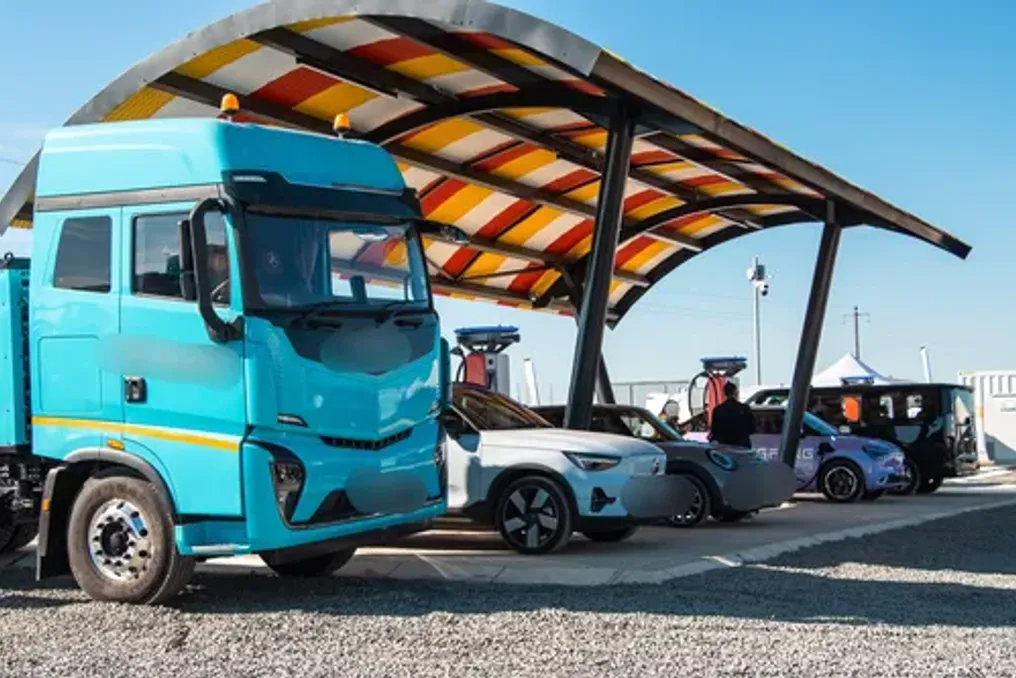
Fernando de Noronha, which is a district of Pernambuco and not a municipality in itself, has the highest proportion of electric cars relative to its population among all Brazilian municipalities. The archipelago registered 78 fully electric vehicles since 2022. Considering its approximately 3,400 inhabitants, this represents one electric car for every 43 people, while the national average is one for every 639 inhabitants, meaning almost 15 times less.
Although there is an environmental justification related to the protection of a Brazilian natural heritage, Noronha's fleet is mostly charged using energy from a thermoelectric plant that consumes fuel. This data was compiled by a survey from AutoPapo, which cross-referenced registration records from ABVE (Brazilian Electric Vehicle Association) from January 2022 to September 2026 with population estimates from IBGE. Vehicle registration considers the owner's address; for companies and public bodies, the headquarters is used.
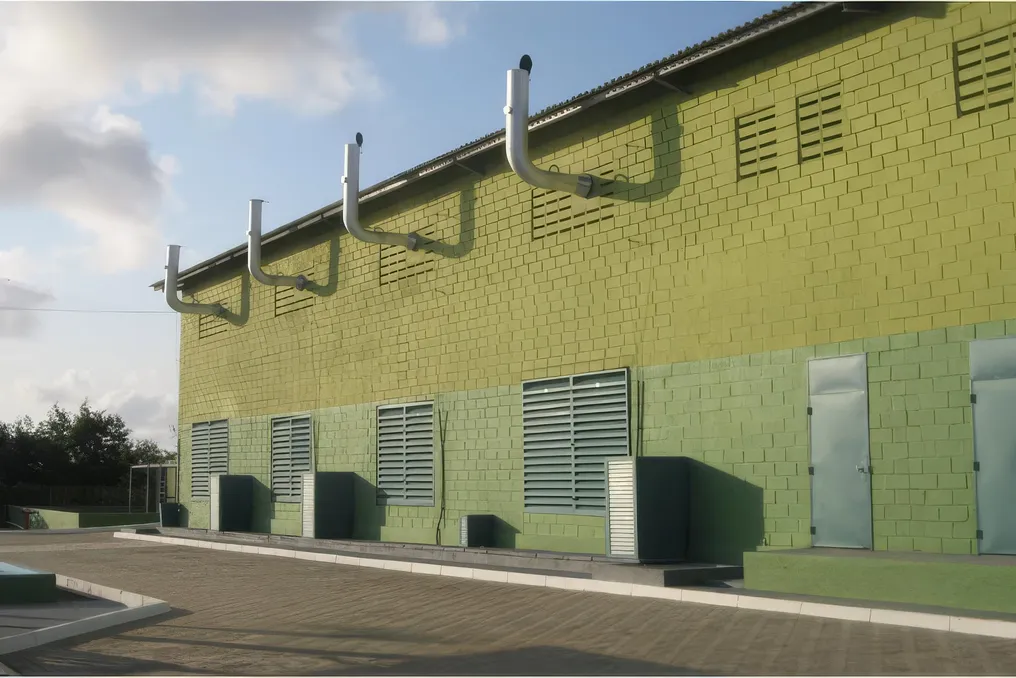
The Tubarão plant, with a capacity of 10 MW, functions as the main electricity supplier for Noronha. The island's two solar plants, Noronha I and Noronha II, inaugurated in 2017 and 2018, generate 950 kW and supplied about 10% of consumption in 2024, according to Canal Solar portal. Thus, most of the charging of the island's electric cars depends on fossil fuels. This contradiction was mentioned by residents during a debate that led the Legislative Assembly of Pernambuco to postpone the ban on combustion vehicles.
For next year, there are plans for a new plant, which will have over 30,000 solar panels, a capacity of 22 MW, and include 49 MWh batteries, representing an investment of R$ 350 million from Neoenergia. A law sanctioned in January 2020 by the then Governor of Pernambuco, Paulo Câmara (PSB), aimed to prohibit the entry of gasoline, ethanol, or diesel-powered cars into Fernando de Noronha starting in August 2022 and remove these vehicles from circulation by 2030.
The central objective of this program, named Noronha Carbon Zero, is to eliminate the island's carbon emissions, which hosts a large part of its territory within a marine national park. Initially, the focus was on tourist rental buggies. Due to the fact that vehicle entry depends on authorization from the local administration, which usually requires replacement with a vehicle already present on the island, the government began issuing licenses for residents to acquire electric cars without this exchange requirement. Additionally, there were IPVA exemptions and assistance with maritime freight, estimated at around R$ 10,000. However, the deadline has been postponed three times, with the current date being August 2029. According to the Legislative Assembly of Pernambuco, there are still pending issues related to charging points and vehicle availability, in addition to the fragility of the local economy.
In June 2019, before the law was enacted, Renault provided the island's administration with three Zoe models, two Twizy, and one electric Kangoo on loan, along with four chargers, intended for official use and to support the Noronha Carbon Zero program. Since these vehicles were delivered before 2022, they were not included in the statistical survey.
The second location with a high proportion is Eusébio (CE). This city, with 84,000 inhabitants, borders Fortaleza and has the highest average income in Ceará, reaching R$ 4,607 per household head, according to Ipece, the state's governmental research institute. A similar pattern is observed in Lauro de Freitas, neighboring Salvador, in Santana de Parnaíba, in Greater São Paulo, and in Cabedelo, adjacent to João Pessoa. Brasília, which ranks third, combines high income with IPVA exemption for electric cars.
Much of this income is concentrated in residential condominiums, facilitating the installation of chargers in garages. In the seven states with the highest per capita household income, according to IBGE, 561 electrified vehicles (fully electric and hybrid) were registered per 100,000 inhabitants since 2022. In contrast, in the seven lowest-income states, all located in the North and Northeast, the number was 217, less than half.
In São Jorge do Patrocínio, a city of 6,700 inhabitants located on the banks of the Paraná River, in northwestern Paraná, the good performance is attributed to the public fleet. The city is the seat of Coripa, a consortium of municipalities established for the environmental conservation of the Paraná River banks, near the Ilha Grande National Park. It appears that the vehicles are registered in the name of this consortium. The two shipments registered in the city—13 BYD Dolphin Mini in February 2025 and 38 Geely EX2 in July 2026—coincide in quantity and date with electric vehicles donated by Itaipu Binacional to the consortium. These vehicles serve municipal departments such as environment, agriculture, social assistance, and health in associated municipalities that have very few other registered electric cars.
According to Itaipu, these donations are part of the Itaipu More Than Energy program, whose purpose is to assist smaller municipalities with limited budgets and difficulty accessing credit, providing many of them with their first electric car. The plant also justifies this investment by the impact of the region's environmental conservation on the hydroelectric reservoir.
Pinhal, in northern Rio Grande do Sul, near Palmeira das Missões, illustrates the impact of reduced numbers. With 3,000 residents, the city entered the top 10 with 20 100% electric cars, eight of which were registered in two batches of four units. In this scenario, each new car raises the index by 33 points per 100,000 inhabitants.
On the other hand, 1,059 Brazilian municipalities (19% of the total) did not register any electrified vehicle in the analyzed period, whether 100% electric or hybrid (excluding mild hybrids). Of those without 100% electric cars, there are 2,133. Among municipalities with fewer than 5,000 inhabitants, 42% have no electrified vehicles. This does not occur among the 338 municipalities with more than 100,000 inhabitants.
The North Region concentrates the highest percentage of cities without registered electrified vehicles (34%), and Pará has the lowest state index, with 51 100% electric cars per 100,000 inhabitants. The largest municipality without any registered vehicle since 2022 is Santo Antônio do Descoberto (GO), with 76,000 inhabitants. This city borders the Federal District, which ranks third in the ranking.
This case is not unique. The eight largest cities in the Entorno region of Goiás, surrounding the Federal District, sum up to 1.2 million inhabitants and registered only 57 electrified cars since 2022, equivalent to less than 5 per 100,000 inhabitants. The other Goian cities with more than 50,000 inhabitants, excluding Goiânia, have 425 vehicles. Indices as low as those in the Entorno, among cities with more than 100,000 inhabitants, are found only in municipalities in the interior of Amazonas and Pará, such as Parintins (AM), which is accessible only by water or air.
One possible explanation lies in the fact that the Federal District is the only federative unit that exempts all electric and hybrid cars from IPVA, without value limits. In Goiás, the Secretariat of Economy has been investigating since 2024 about 700 owners of these vehicles who reside in the state but registered the automobiles with fictitious addresses in the DF or other locations. The estimated loss reaches R$ 10 million. The investigations do not specify the Goian cities where the suspects reside. If part of the electric cars circulating in the Entorno is registered in the DF, the effect is twofold: it raises Brasília's index and nullifies that of neighboring municipalities.