According to the latest report from the International Atomic Energy Agency (IAEA), global constraints on uranium supply could lead to a reduction in mining output of at least 50% by 2040, even though demand for it is projected to double.
This IAEA forecast regarding a deficit in global uranium supply could potentially affect India's plans to increase its nuclear capacity to 100 GW by 2047.
The publication 'Uranium 2024: Resources, Production and Demand,' also known as the 'Red Book,' jointly prepared by the Nuclear Energy Agency of the Organisation for Economic Co-operation and Development and the Agency itself, forecasts that global uranium needs will rise to 90,045 tonnes of uranium (tU) in the low scenario and 142,631 tU in the high scenario by 2050. This represents an increase of 50% to 144% compared to current needs, which amount to about 60,000 tU.
Contrary to the projected doubling of uranium requirements, the report indicates that uranium production at existing mines is predicted to decrease by at least 50% by 2040. The document notes that 'processing capacity is already insufficient and is projected to lag behind demand until 2040, highlighting the need for significant new investments and facility expansion. Although current global enrichment capacity exceeds demand, it is unevenly distributed geographically.'
The report suggests measures such as opening new mines, expanding or extending the life of existing mines, and restarting idle mines, asserting that these steps are necessary to ensure future supply.
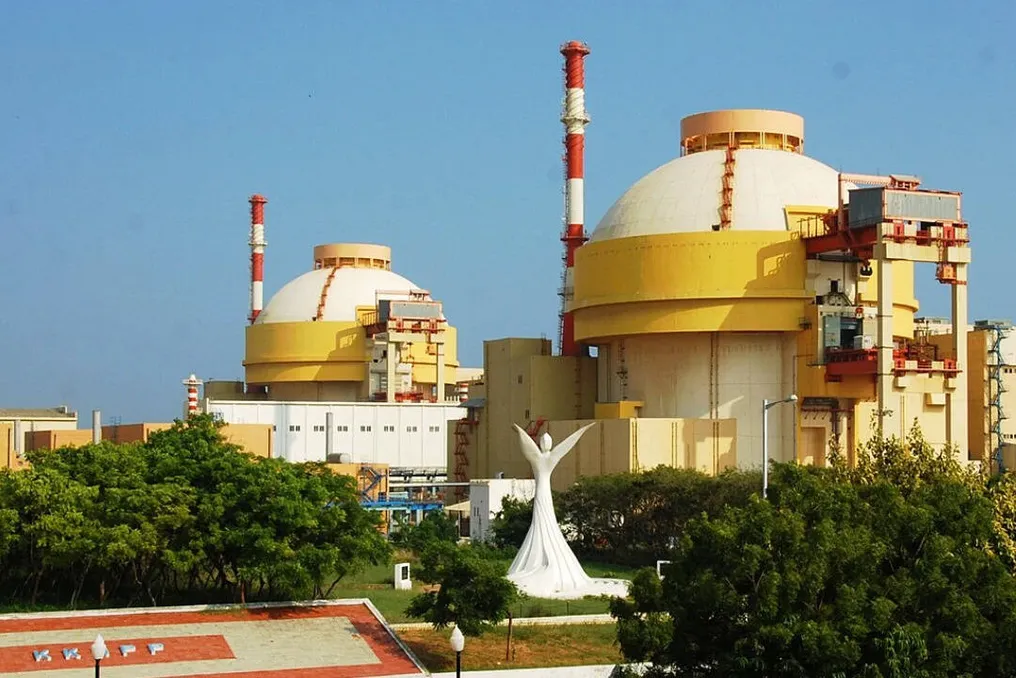
Against the pessimistic scenario predicted by the IAEA, India has begun taking steps to increase its nuclear power capacity from the current 8,180 MW to 22,480 MW by 2031–2032. This expansion plan includes the construction and commissioning of 10 reactors with a total capacity of 8,000 MW in the states of Gujarat, Rajasthan, Tamil Nadu, Haryana, Karnataka, and Madhya Pradesh. Furthermore, preliminary work has started on 10 additional reactors with plans for gradual completion by 2031–2032. Moreover, the Modi government has approved in principle the creation of a nuclear power plant with a capacity of 6 x 1208 MW in collaboration with the USA in the Kovvada area, Srikakulam district, Andhra Pradesh.
India sources uranium from a combination of domestic mining production and international suppliers. Domestic uranium is mined by the Uranium Corporation of India Limited (UCIL) from deposits in Jharkhand, Andhra Pradesh, and Karnataka. The country primarily relies on natural uranium for its pressurized heavy water reactors and is gradually transitioning to a closed fuel cycle using Fast Breeder Reactors (FBRs) with plutonium fuel and eventually thorium. To supplement limited domestic reserves and support its expansion goals under the HANTI Act 2025, India imports uranium and has active supply agreements with Kazakhstan, Russia, Canada, Australia (final agreements under the nuclear cooperation agreement), Uzbekistan, and France. Nevertheless, the IAEA's forecast of uranium shortage, if decisive action is not taken, could negatively impact India as well.
Over the next decade, nuclear fuel production will face growing demand across all segments related to nuclear fuel due to increased construction programs in both established and developing countries. This necessitates the development of new fuel types, including fuel for small modular reactors and advanced reactors.
The report emphasizes that 'increasing uranium production will require sustained investment under positive market conditions, while discovering new deposits will require continuous long-term exploration efforts, considering that developing new uranium mines takes an average of 10–15 years from discovery to the start of mining operations.'
Additionally, significant and timely investment will be required in exploration, mining, and processing technologies, including cost-effective methods for extracting uranium from non-traditional deposit types (such as uranium from phosphate and black shale deposits), some of which may become economically viable with sustained growth in market prices, as suggested.