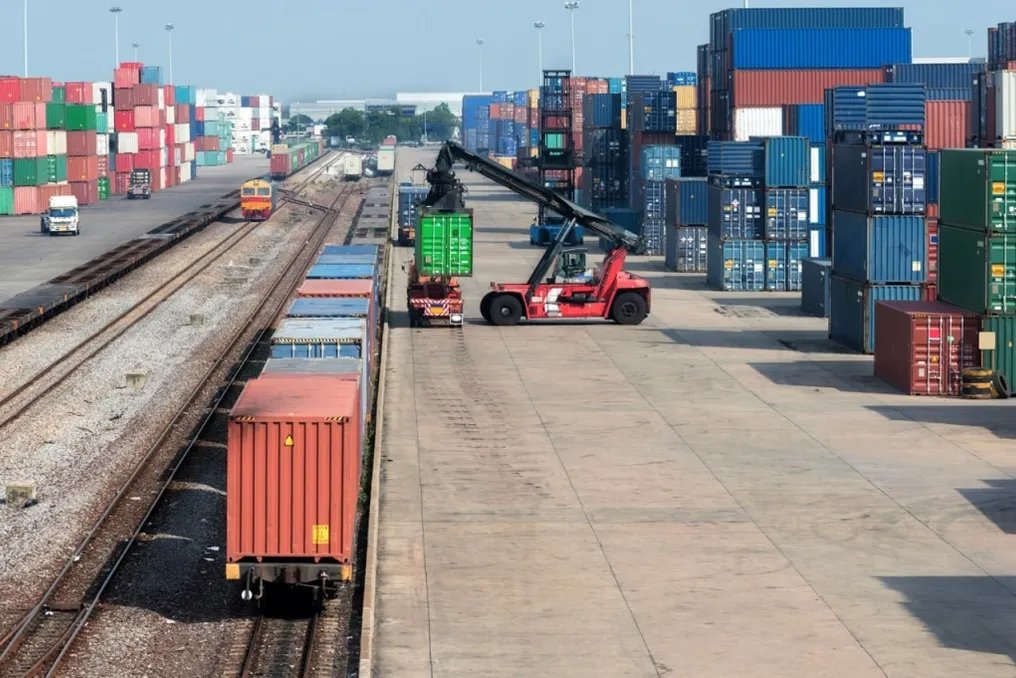
Uzbekistan's textile exports grew by 26.9% to reach $2.1 billion
Read more
UzDaily
uzdaily.uz

Uzbekistan's textile exports grew by 26.9% to reach $2.1 billion

According to data from the National Statistical Committee of Uzbekistan, the volume of textile product exports from Uzbekistan for the period from January to August 2026 amounted to $2.1 billion USD. This figure demonstrates a growth of 26.9% compared to the same period last year.

Textile products accounted for 9.4% of the country's total export volume. Among types of textile products, finished goods occupied the largest share of exports, making up 51% of the total amount.

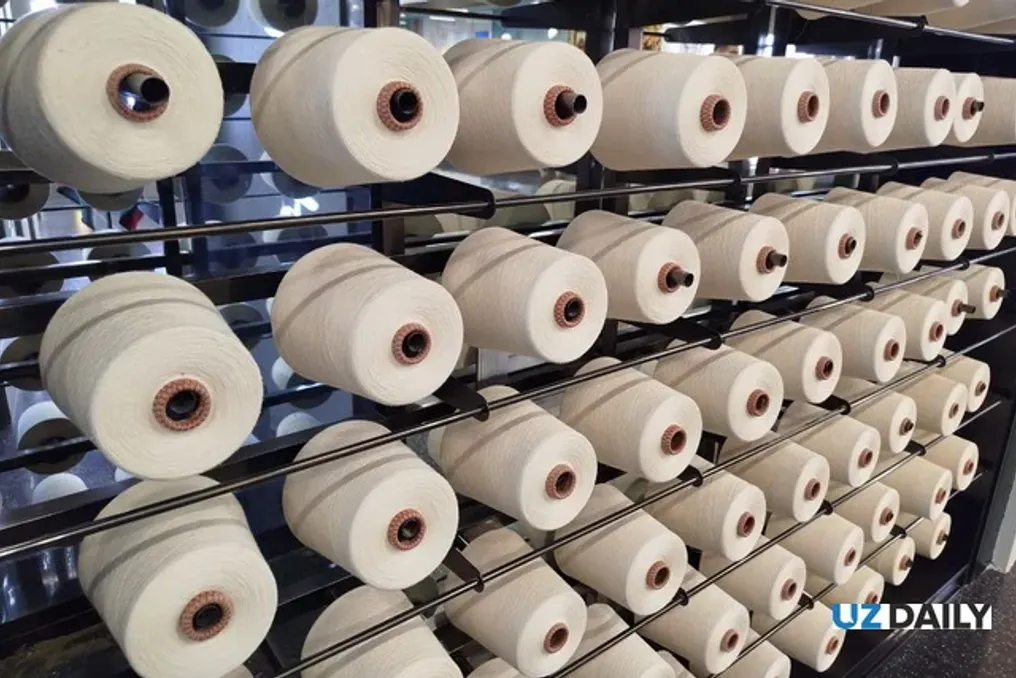
Furthermore, wool yarn contributed 32%, and knitted fabrics provided 8% of the exports. Other categories include woven fabrics, which accounted for 6%, and hosiery products, whose share reached 2%, while carpets accounted for 1% of the total volume.

Similar stories

Uzbekistan expands textile exports through new sales channels
Read more
uzdaily.uz

Uzbekistan expands textile exports through new sales channels

The Uzbekistan Association Uztextileprom is exploring new opportunities to promote the products of Uzbek manufacturers in global markets. These opportunities include retail partnerships, export initiatives, and the use of online marketplaces.

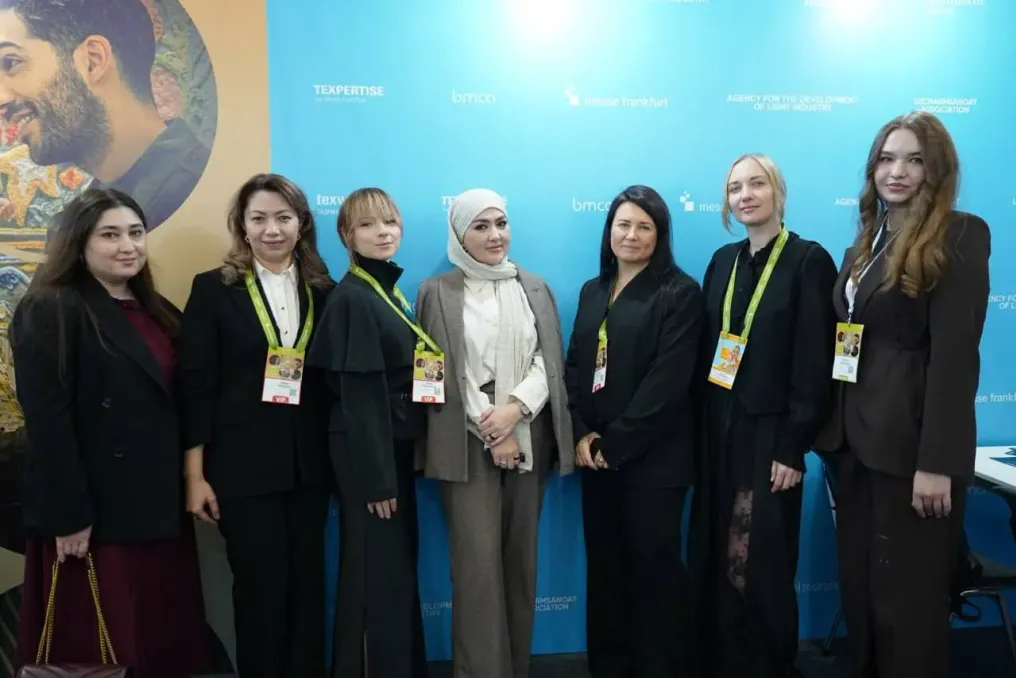
Saida Mirhamidova, Deputy Chairman of the association for international relations and industrial digitalization, held negotiations with representatives of organizations from Russia and Belarus, as well as with the online marketplace Lamoda. The goal of the meetings was to discuss potential areas of cooperation.

Discussion of projects with Russian partners

During the meeting with MODAM Fashion International, based in St. Petersburg, the parties discussed joint fashion projects. The possibility of allocating trade spaces for Uzbek manufacturers in the Gulliver shopping and entertainment complex was also considered. This measure is intended to give local brands the opportunity to offer their products directly to consumers in Russia.

Furthermore, the activities of the Trade House of Uzbekistan in Belarus were discussed, with an emphasis on increasing its efficiency. Priorities named included attracting new buyers, expanding the promotion of goods from Uzbek factories, and increasing the number of concluded export contracts.

Cooperation with Lamoda

Another area of cooperation with Lamoda relates to creating private labels involving Uzbek manufacturing companies. This project involves attracting market analysts, designers, and pattern developers to create collections that meet current consumer demand and ensure higher added value.

Thanks to this approach, factories will be able to gradually transition from contract manufacturing to building their own brands and forming additional sources of income. All these initiatives are aimed at expanding the geographical scope of Uzbekistan's textile exports, strengthening direct links between producers and end consumers, and increasing the added value of textile products.

At the conclusion of the meetings, all parties agreed to continue negotiations and develop mechanisms for implementing joint projects.

Uzbekistan's foreign trade deficit reached $11.7 billion for January-August 2026
Read more
podrobno.uz

Uzbekistan's foreign trade deficit reached $11.7 billion for January-August 2026

The negative balance in Uzbekistan's foreign trade for the period from January to August 2026 amounted to $11.7 billion. This deficit arose against the backdrop of a 16.3% increase in imports and a simultaneous 3.4% decrease in exports compared to the same period last year.

According to data from the National Committee on Statistics, over eight months, the country imported goods and services totaling $34.5 billion. Meanwhile, exports reached $22.9 billion, resulting in a total foreign trade turnover of $57.4 billion, demonstrating a growth of 7.6%.

China remains Uzbekistan's largest trading partner, accounting for $13.2 billion in turnover, which is 23% of the total trade volume. Russia is in second place with a volume of $9.2 billion (16%). Significant trade ties are also maintained with Kazakhstan ($3.7 billion), Turkey ($1.9 billion), and Afghanistan ($1.4 billion).

Structurally, machinery and transport equipment predominantly form Uzbekistan's imports, amounting to $11.3 billion, or 32.3% of the total volume. Among these items, $2.8 billion is allocated to automobiles and auto components.

In January-July, Uzbekistan imported 65.9 thousand passenger cars from 29 different countries worth $920.4 million. Electric vehicles accounted for a significant share of these shipments—46.7 thousand units—with China being the main supplier of cars, from which 63 thousand vehicles were imported.

The breakdown of imports by product type shows that industrial goods totaled $5.1 billion, chemical products amounted to $4.2 billion, and food and live animals accounted for $3.7 billion. Additionally, $2.8 billion was spent on mineral fuels and lubricants, and $4.6 billion was spent on services imports.

China remains the main source of imports, supplying goods worth $11.2 billion (32.4% of the total). Russia contributed $6 billion, and Kazakhstan contributed $2.7 billion.

Reasons for Export Reduction

The reduction in exports was primarily due to a sharp drop in non-monetary gold supplies. For January-August 2026, non-monetary gold exports amounted to $2.8 billion, significantly less than $8.3 billion for the same period in 2025. Thus, gold exports fell by approximately $5.5 billion, or 66.3%.

Nevertheless, if gold is excluded, merchandise exports showed a growth of 28.7%, reaching $11.5 billion. Service exports also increased substantially by 33.8%, rising from $6.4 billion to $8.5 billion. Of this amount, $4.6 billion was for travel, and another $2.6 billion was for transport services.

Among commodity items, textile product exports showed the largest growth, increasing by 26.9% to reach $2.1 billion. 1.44 million tons of fruit and vegetable products were sent abroad worth $1.18 billion. Overall, Uzbekistan maintained trade relations with more than 200 countries from January to August.
Popular