Uzbekistan and Austria plan to expand cooperation in the field of animal husbandry
Read more
UzDaily
uzdaily.uz

Uzbekistan and Austria plan to expand cooperation in the field of animal husbandry

Uzbekistan and Austria intend to deepen interaction in the fields of animal husbandry, veterinary medicine, and trade in animal products.

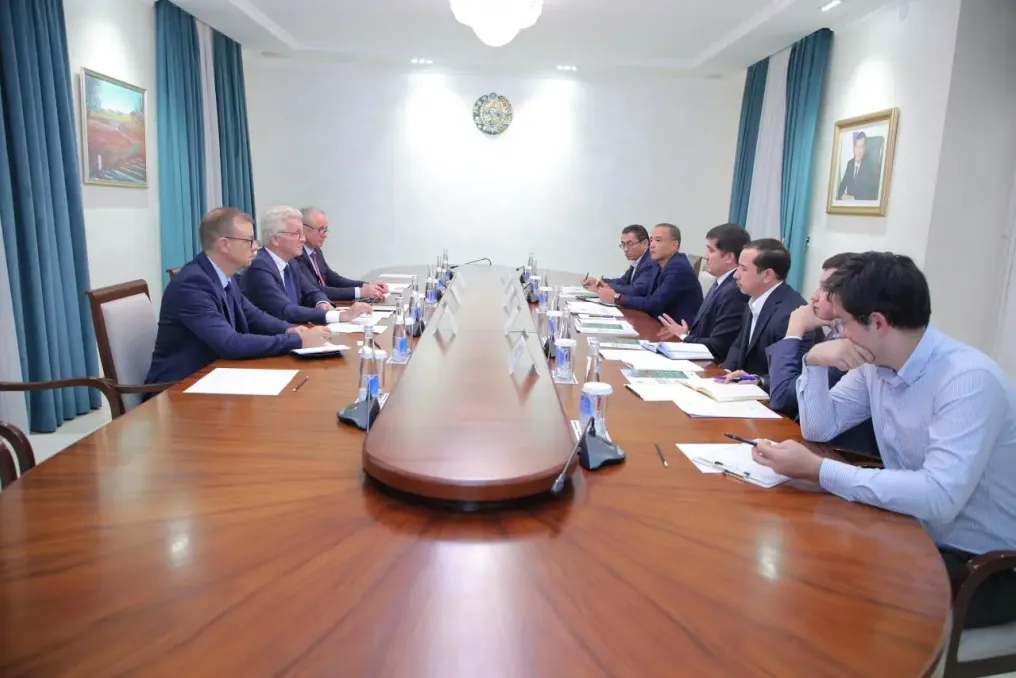
These issues were discussed by Azizbek Urunov, Chairman of the Food Safety Committee of Uzbekistan, with Hermann Wieser, CEO of the Austrian Agricultural Cluster (AAC), and Rudolf Lukacs, Trade Advisor at the Austrian Embassy, according to the committee's report.

The parties reviewed opportunities to increase trade turnover regarding breeding livestock, organize the export of animal products, and exchange experience in the field of veterinary medicine.

Special attention was paid to the implementation of Austrian methods in selective animal husbandry and genetics. During the negotiations, joint projects related to the production and subsequent transplantation of livestock embryos were discussed.

Furthermore, an agreement was reached to provide advanced training in Austria for Uzbek veterinary specialists. Practical seminars and training sessions are also planned in Uzbekistan with the participation of Austrian experts.

According to the committee, by October 2026, Uzbekistan imported 1,500 head of Simmental breed breeding livestock from Austria, as well as 714 tons of veterinary drugs and feed additives and 4.7 tons of dairy products. During the same period, the export of animal products from Uzbekistan to Austria amounted to 34.5 tons.

Similar stories

Saratov Region and Uzbekistan Plan to Expand Economic Cooperation
Read more
uzdaily.uz

Saratov Region and Uzbekistan Plan to Expand Economic Cooperation

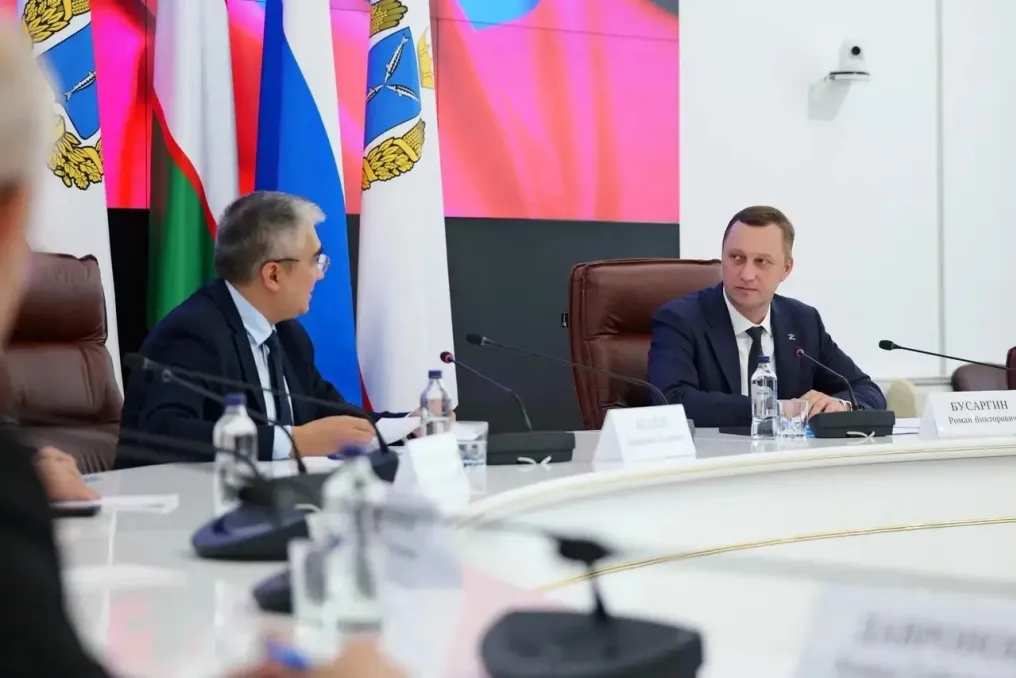
The Governor of the Saratov Region, Roman Busargin, announced plans for Russia and Uzbekistan to increase trade, economic, and humanitarian interaction. These plans were voiced following a meeting with the Ambassador of Uzbekistan to Russia, Botirjon Asadov.

Busargin noted a significant growth in foreign trade turnover between the Saratov Region and Uzbekistan, which increased by 2.4 times in 2025. Furthermore, the region's exports to Uzbekistan grew by 2.3 times this year, and export volumes in the first half of 2026 increased by almost 12%.

The main goods supplied by the Saratov Region to Uzbekistan include cast iron metals, fertilizers, inorganic chemical products, as well as fats and oils. The Governor emphasized the potential for creating new production capacities and implementing joint projects in various industries.

In particular, the opening of a joint enterprise for the production of spare parts for diesel locomotive engines is planned for November-December 2026. The parties are also considering opportunities to deepen partnership in the fields of industry, trade, and agriculture.

Humanitarian cooperation is also viewed as a promising area. Busargin highlighted the possibilities for interaction between major regional universities that have experience working with foreign higher education institutions. The meeting was dedicated to analyzing the results of current cooperation and the prospects for further strengthening ties between the Saratov Region and Uzbekistan.

Uzbekistan and Russia Expand Interregional Cooperation in Trade and Investment
Read more
uzdaily.uz

Uzbekistan and Russia Expand Interregional Cooperation in Trade and Investment

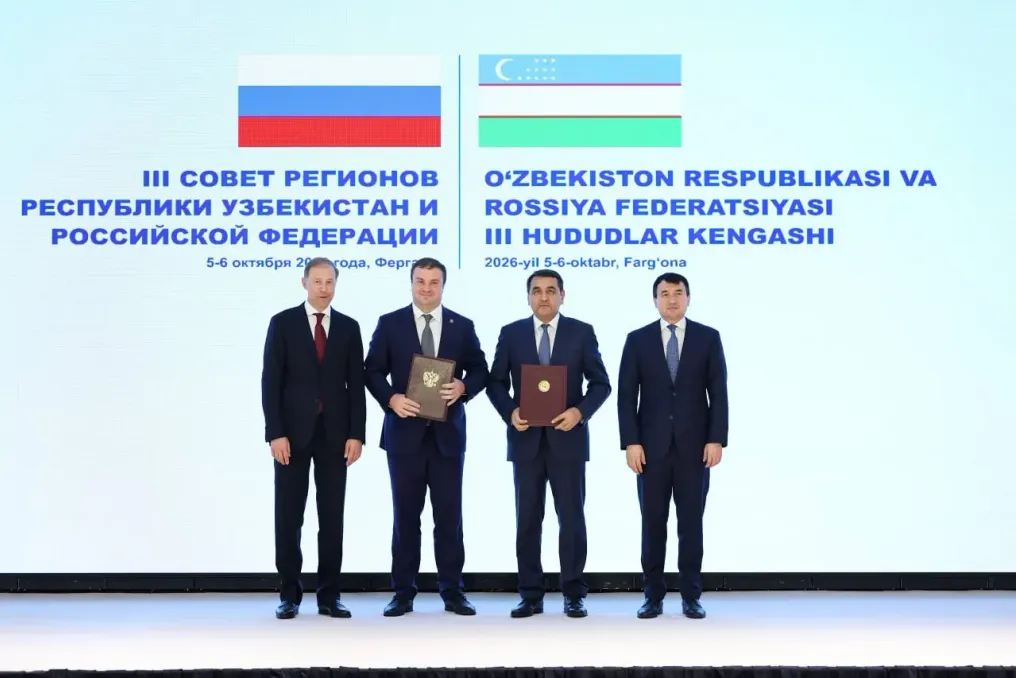
Uzbekistan and Russia intend to deepen direct interaction between their regions, as well as strengthen industrial cooperation, trade, and investment ties. These issues were discussed on October 6th in Fergana during the plenary session of the third Council of Regions of the two countries.

The event began with the reading of messages from the Presidents of Uzbekistan, Shavkat Mirziyoyev, and Russia, Vladimir Putin. The message from the Uzbek leader was presented by the Deputy Prime Minister of Uzbekistan, Jamshid Khodjayev, while the Russian message was delivered by the First Deputy Prime Minister, Denis Manturov.

Khodjayev emphasized that holding the Council in Fergana is of particular importance for developing interregional ties. He noted that the mechanism of cooperation between the regions of the two states has demonstrated practical effectiveness for more than eight years.

The meeting gathered leaders and representatives from 17 Russian regions, representatives from all regions of Uzbekistan, as well as about 400 entrepreneurs from both countries.

According to Khodjayev, all 14 regions of Uzbekistan maintain stable relations with more than 50 subjects of the Russian Federation. The joint portfolio of cooperation projects exceeds 200 initiatives with a total value of almost 6 billion US dollars.

He stated that this confirms that the regions are one of the solid foundations of partnership for achieving strategic goals.

Manturov reported that since the beginning of 2026, the regions of Russia and their Uzbek partners have organized about 100 joint events, including major business forums in both countries. He also invited participants to Omsk, where the fourth Council of Regions is planned.

The plenary discussion included leaders and representatives from the Fergana, Sunikandaryinsk, and Namangan regions of Uzbekistan, as well as the Krasnoyarsk Krai, Altai Krai, Novosibirsk, and Omsk regions of Russia.

One of the practical outcomes of the meeting was the exchange of four documents: three interregional agreements and one commercial agreement. The Fergana region and the Omsk region signed a cooperation agreement in industry. The Sunikandaryinsk region and the Krasnoyarsk Krai agreed on interaction in the fields of trade, economy, science, technology, culture, and humanitarian issues.

The Namangan region and the Republic of Dagestan approved an action plan for implementing the agreement on trade, economic, scientific and technical, and socio-cultural cooperation.

A separate agreement was signed in the investment sector: the Ministry of Investment, Industry, and Trade of Uzbekistan, together with Wildberries, concluded an investment agreement providing for the construction of a Class A logistics complex.

The Council of Regions is considered one of the mechanisms for developing economic interaction between Uzbekistan and Russia. Direct contact between the regions allows the parties to form new business ties and translate interregional agreements into concrete investment and industrial projects.
Popular