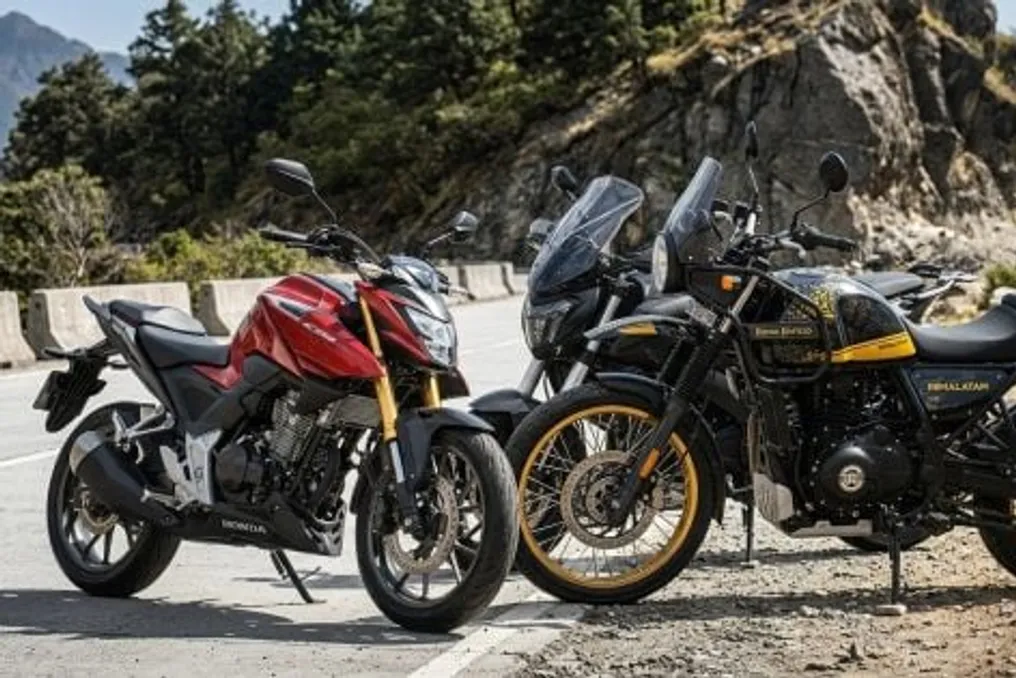
Comparison between Honda CB300F Twister, Indianas 400, and other motorcycles: costs and proposals
Read more
AutoPapo
autopapo.com.br

Comparison between Honda CB300F Twister, Indianas 400, and other motorcycles: costs and proposals

The 2027 Honda CB300F Twister was recently launched with improvements focused on sportiness, including a new variant. Despite having an initial price ranging between R$ 26,880 and R$ 27,680, values close to those of the Indianas motorcycles that entered the market, the debate about the real cost and suitability of each model persists.

Although comparisons arise on social media between the CB300F Twister and models like the Bajaj Dominar 400 and Royal Enfield Himalayan 450 due to the proximity of their initial prices, it is observed that the Indianas are larger and offer more features. However, it is warned that those who prioritize size may end up acquiring a vehicle unsuitable for their needs.

It is important to note that these motorcycles are not direct competitors to the Honda 300; the comparison arose solely because of the price. The closest rival within Royal Enfield would be the Guerrilla 450, a naked version of the Himalayan, but this would be superior, possessing a 452 cm³ engine and a starting price of R$ 28,990.

The true competitors of the CB300F Twister are others, such as the Yamaha FZ25, costing R$ 25,190, and the Bajaj Dominar 250, priced at R$ 23,800. These models share size, engine range, and urban vocation, indicating that the discussion boils down to what the consumer gets for the sticker price.

The decision to buy a motorcycle involves several factors, including acquisition cost, intended use, riding style, maintenance, resale value, and comfort.

Detailed Cost Analysis

Despite the suggested starting price of the Honda CB300F Twister being R$ 26,880, this value does not include shipping or other commercial charges. In practice, the cost of the Japanese motorcycle easily exceeds R$ 30 thousand. According to the Fipe Table, its average price for the brand new standard version reaches R$ 30,233, potentially reaching R$ 31,373 in the 'S' sport version.

In contrast, the Bajaj Dominar 400 and the Royal Enfield Himalayan 450 are marketed with fixed prices of R$ 27,490 and R$ 29,990, respectively. For the price of a Japanese 300, the buyer can opt for two bikes with almost double the power. The Dominar 400 uses a 373.3 cm³ single-cylinder, DOHC, liquid-cooled engine, generating 40 hp at 8,800 rpm and 3.57 kgfm at 6,500 rpm. The Himalayan 450 has the 452 cm³ Sherpa, also DOHC and liquid-cooled, delivering 40.02 hp at 8,000 rpm and 4 kgfm at 5,500 rpm.

The 2027 CB300F Twister produces 24.5 hp with gasoline and 24.7 hp with ethanol at 7,500 rpm, accompanied by 2.61 and 2.67 kgfm at 5,500 rpm, using a 293.5 cm³ air and oil-cooled OHC single-cylinder. This represents a difference of 15 hp compared to the Indianas, and the 2027 line did not receive updates in this aspect, as the engine was only revised to comply with the second phase of Promot 5.

Equipment also shows differences. The Dominar 400 offers four riding modes (Rain, Road, Off-Road, and Sport), while the Himalayan 450 features a 4-inch color TFT display with Google Maps navigation and adjustable seat height. Honda, on the other hand, equips its model with an LCD panel.

Despite this, the 2027 Twister evolved with HSTC traction control (disengageable), 38 mm Showa SFF-BP inverted front suspension, ESS emergency braking signaling, forged aluminum fork mounts, a 10 mm wider handlebar with pads, and dual-wheel ABS in all versions, an unprecedented package in the previous generation.

A unique differential of the Japanese model is the flex engine. Since the Dominar 400 and Himalayan 450 run only on gasoline, this is relevant in a country where ethanol is a common option, being a point where Honda has no direct comparison.

The analysis of cost per kilometer driven reveals that the CB300F Twister undergoes its first service at 1,000 km and subsequent ones every 6,000 km, totaling five services up to 24,000 km. The Indianas require 5,000 km intervals, needing six visits to cover a similar distance.

In this metric, the Twister costs R$ 3,589.23 up to 24,000 km, while the Dominar 400 is at R$ 3,280.74 and the Himalayan 450 at R$ 3,246.38 (Royal Enfield's official value for three years or 25,000 km). When converted to cost per thousand kilometers driven, Honda presents R$ 149.55, Bajaj R$ 131.23, and Royal Enfield R$ 129.85, making the Japanese one the most expensive of the three, even with longer service intervals.

Negative points for Honda include two costly services in the plan, valued at R$ 1,150.30 and R$ 1,438.10. Bajaj distributes costs more uniformly, without exceeding R$ 800 in any service, and Royal Enfield alternates three services of R$ 231.92 (paying only labor) with others reaching R$ 1,130.35.

Recently, there have been improvements in the Indianas scenario. In July 2026, Royal Enfield reformulated its service plan in Brazil, raising the first visit from 500 km/45 days to 1,000 km/six months, and reduced the accumulated cost of the 450 platform (Himalayan and Guerrilla) by 32%, corresponding to savings of R$ 1,527.78, addressing previous criticisms about after-sales service.

Maintenance and Parts

Besides scheduled services, the cost of wear parts such as tires, brake pads, clutch, oil, filter, and drive chain kit is a decisive factor. The CB300F Twister has the simplest set of the three, with an air and oil-cooled engine, no radiator, water pump, or additive, and 17-inch wheels with common tire sizes. The Himalayan 450, conversely, uses a 21-inch front wheel with a 90/90-21 tire and a 140/80 R17 rear tire, more specific sizes and higher cost.

There is also a difference in origin: Honda is manufactured in Manaus and was the seventh best-selling motorcycle in Brazil in 2025, which guarantees scale, an established network of workshops, and a consolidated parallel parts market. Royal Enfield, on the other hand, imports almost all its products, a justification used by the Royal Enfield Latam executive director, Gabriel Patini, to explain its prices.

Data collected by AutoPapo show disparities in parts costs. A drive chain kit for Royal Enfield's more affordable bikes costs R$ 952.84, while the dashboard of a Classic 350 costs R$ 2,170.92; the same item for the CB300F Twister can cost half that amount. At the same establishment, the dashboard of a Himalayan 411 reaches R$ 5,755, reflected in almost all models of the brand.

The availability of Honda parts, whether original or parallel, is easier, allowing the Twister owner to choose where to buy and install. For the owners of the Indianas, this choice is limited in most cities.

The financial scenario reverses over time. Initially, during the warranty period, the 2027 Twister is the most expensive in scheduled services. After this period, or in cases of corrective maintenance, the focus shifts to tires, chain, pads, and accidental damage, items where the Japanese bike offers cheaper parts and greater availability of alternative workshops.

Adding the flex engine and declared consumption of about 28 km/l, the cost per kilometer driven for the Honda tends to decrease. This difference is subtle for someone who changes bikes in two years, but becomes evident for someone who keeps the vehicle for five years.

Intended Use and Ergonomics

When financial aspects do not convince the potential rider, the difference lies in what the bike allows them to do. Being larger, the Indianas are heavier: the Dominar 400 weighs 192 kg ready-to-ride, and the Himalayan 450, 196 kg, compared to the Honda's 142 kg dry (less than 160 kg ready-to-ride).

The Indianas are also wider: the Twister measures 765 mm in width, while the Himalayan measures 852 mm and the Dominar 863 mm. In length, the Japanese model is 2,084 mm, compared to 2,156 mm for the Bajaj and 2,245 mm for Royal Enfield. The wheelbase follows the same order: 1,390 mm, 1,453 mm, and 1,510 mm. The seats vary between 789 mm on the Honda, 800 mm on the Dominar, and 825 mm on the Himalayan (which can reach 845 mm with standard adjustment or drop to 805 mm with optional low seat).

These distinctions, combined with the manufacturer's adjustments in dimensions and weight distribution, define the proposals of each model. The Himalayan 450 is ideal for trails and moderate trips, despite its weight and dimensions hindering urban use (230 mm ground clearance and 21-inch front wheel). The Bajaj Dominar 400 positions itself in the middle, suitable for short trips and urban traffic. The Honda CB300F Twister stands out for those who travel predominantly in the city and occasionally on avenues, being economical, compact, light, and extremely easy to ride.

Comparing these three models only by the sticker price is the fastest way to choose the wrong bike. The 2027 Twister is more expensive at the dealership, delivers half the power, and loses in the initial service count. If the criterion is immediate financial return, it does not win. However, Honda compensates for this difference in use: cheaper parts, accessible workshops, flex engine, and a weight of 142 kg facilitates maneuverability, in addition to its narrow profile allowing access to restricted areas.

The fundamental question is not which is the cheapest, but how many kilometers of trail, road, or lane the buyer intends to cover annually. Those seeking trips and off-road excursions will find something in the Himalayan 450 that the Twister does not offer. Those who commute daily in the city will realize that 50 kg more and 10 cm more width have a high cost in another way.
Similar stories

Voluntary Pension Fund (VPF) as a Savings Option: Comparing Interest Rates with Deposits
Read more
www.aajtak.in

Voluntary Pension Fund (VPF) as a Savings Option: Comparing Interest Rates with Deposits

For working individuals, it is just as important to invest funds correctly as it is to save money for retirement. If you regularly contribute to the Employees Provident Fund (EPF), you can increase your savings through the Voluntary Pension Fund (VPF). Under this program, employees can contribute an amount in addition to the mandatory contribution to the PF. Currently, the EPF yields an annual interest rate of 8.25%. However, before increasing investments in VPF, it is necessary to understand tax issues, withdrawal periods, and whether this option meets your financial needs.

What is VPF and how does it work?

The Voluntary Pension Fund is a voluntary savings scheme linked to the Employees Provident Fund. Employees have the option to contribute more than their standard PF contribution. This allows for an increase in the total amount accumulated for retirement. The advantage is that the money is automatically deducted from the salary and deposited into the PF account, eliminating the need for additional monthly investments. Nevertheless, the main goal of VPF is long-term savings accumulation for retirement, not achieving high profits in a short time. The same interest rate as for EPF, set by the government, is applied.

Who might benefit from VPF?

VPF is particularly useful for employees who aim for regular long-term savings and do not wish to invest a significant portion of their savings in schemes dependent on stock market fluctuations. It may be interesting for employees who hold large sums in Fixed Deposits (FD), as one can compare the potential return of VPF with the return of FD after taxes, while considering the withdrawal conditions and tax rules of both instruments. VPF is also considered by employees approaching retirement, such as those aged 40 or 50, who want to regularly top up their fund, although the decision must be made considering the remaining time until retirement, current savings, and future expenses. Furthermore, for those who find it difficult to manage monthly personal investments, the automatic deduction of funds into VPF can help establish a saving habit. However, it should be remembered that if you have expensive debts, lack an emergency fund, or require large sums in the near future, these more pressing issues must be addressed first.

What does the limit of ₹2.5 lakh mean?

Before making additional contributions to VPF, it is important to understand a key tax rule. If both the employee and the employer contribute to the PF, tax on the interest related to the total annual employee contribution to EPF and VPF may exceed ₹2.5 lakh. This tax is not applied to the entire additional amount but to the interest associated with it according to established rules. It is important to note that the ₹2.5 lakh limit applies only to the employee's contributions and does not include the employer's contributions. If the employer does not make contributions to the employee's PF, a separate limit of ₹5 lakh may apply to the interest on the employee's contributions. The annual limit of ₹2.5 lakh is equivalent to approximately ₹20,833 per month. Nevertheless, the actual calculation must be based on the employee's total contribution for the entire financial year. The mandatory EPF contributions and the amounts contributed to VPF must be summed up to determine if the limit has been exceeded.

How is the tax calculated with an example?

Suppose the employee's total contribution for the financial year was ₹3 lakh, exceeding the ₹2.5 lakh limit by ₹50,000. This does not mean that tax will be levied on the entire ₹50,000. The tax calculation will be done according to the rules, based on the interest related to this additional contribution. Assuming the maximum employee tax rate is 30% and the interest rate is 8.25%, the post-tax return could be around 5.78%. This is an approximate calculation that does not include fees and other applicable factors. The actual tax will depend on the employee's status and prevailing regulations. Therefore, before contributing additional funds to VPF, one should not only look at the announced interest rate; one must understand what amount may be subject to taxation.

Are there tax benefits on funds contributed to VPF?

Automatic tax benefits on funds contributed to VPF are not provided. The benefit in the form of a deduction for the contribution depends on the chosen tax system and the relevant conditions for the employee. Therefore, before increasing investments, it is necessary to find out which tax system you report under and what deductions are available to you. It is important to distinguish between the tax on interest related to contributions and the deductions received at the time of investment; these two aspects should not be confused.

When can funds be withdrawn from VPF?

VPF funds are part of the EPF account, so they cannot be withdrawn at any time, like from a regular savings account. To withdraw funds, one must consider the current EPF rules, eligibility criteria, length of service, and reason for withdrawal. In October 2025, the Central Council of Trustees of the Employees Provident Fund (EPFO) approved a simplification of partial withdrawal rules and set the minimum service period for eligibility at 12 months. This structure provides for various needs, such as illness, education, marriage, housing, and special circumstances.

GIFT Nifty predicts sluggish opening, while Asian markets decline amid falling Brent oil prices
Read more
business-standard.com

GIFT Nifty predicts sluggish opening, while Asian markets decline amid falling Brent oil prices

The GIFT Nifty indicator signaled a possible sluggish opening for the Nifty50 index, while Asian markets traded lower at the start of trading.

According to data from Monday, October 19, 2026, GIFT Nifty futures traded without significant fluctuations but with a negative bias, reaching the level of 23,112.

Asian-Pacific markets showed a sharp decline, reflecting the sentiment observed on Wall Street last Friday. Investors were concerned about the pace of growth in artificial intelligence development. Specifically, the Japanese Nikkei 225 fell by 1.15 percent, and the Korean Kospi fell by 0.12 percent.

Last Friday, the Dow Jones Industrial Average and S&P 500 closed down by 0.34 percent and 1.09 percent, respectively, while the Nasdaq Composite ended the session with a drop of 2.14 percent.

Brent oil decreased during the Asian session after the US lifted sanctions and tariffs on Russian oil, which weakened supply concerns. December futures traded at 108.10, corresponding to a fall of 1.5 percent.

Gold and silver futures rose by 0.26 percent and 0.35 percent, respectively.

Decline in Asia-Pacific Markets

Asia-Pacific markets traded significantly lower, linked to movements on Wall Street last Friday. The main factor influencing investors was concerns about the speed of artificial intelligence infrastructure development. For instance, Japan's Nikkei 225 and South Korea's Kospi showed declines of 1.15% and 0.12%, respectively.

Rise in US Stock Market Futures

US stock market futures showed an increase on Monday morning as oil prices fell after the US eased restrictions on Russian oil. Dow Jones and S&P 500 futures rose by 0.46% and 0.7%, respectively. However, last Friday, the Dow Jones Industrial Average and S&P 500 closed down by 0.34% and 1.09%, and the Nasdaq Composite ended trading with a drop of 2.14%.

Second Quarter Results Update

On Monday, the release of second-quarter results (Q2FY27) is scheduled for companies such as Bajaj Finance, Bhansali Engineering Polymers, Delta Corp, Elevate Campuses, Gallantt Ispat, HFCL, Hindustan Zinc, Indian Renewable Energy Development Agency (IREDA), Jaiprakash Power Ventures, Just Dial, L&T Technology Services, Piramal Finance, SML Mahindra, Sobha, Tatva Chintan Pharma Chem, UltraTech Cement, Union Bank of India, and Waaree Renewable Technologies.

Brookfield's bid for Reliance Worldwide for $2.53 billion passes the competitive review stage
Read more
business-standard.com

Brookfield's bid for Reliance Worldwide for $2.53 billion passes the competitive review stage

Reliance Worldwide announced on Monday that no competing buyers emerged during the 'go shop' process regarding the proposed acquisition of the Australian firm by Brookfield. This led the board of directors to reaffirm its unanimous approval for shareholders to support the deal.

The plumbing supplies company had previously agreed in September to an implementation agreement under which Brookfield Capital Partners and its affiliates would acquire all shares of Reliance Worldwide at a price of $3.38 per share. The total value of the company is estimated at $2.53 billion.

The offer implies a value of approximately A$4.87 per share, based on the exchange rate as of October 16. Last month, Reliance reported that investors would have the option to receive payments in US dollars or Australian dollars if the deal is approved by shareholders and goes through.

The companies agreed to the 'go shop' provision, which is unusual for Australian deals and allowed Reliance Worldwide to seek alternative offers, access due diligence materials, and discuss terms.

In its statement, Reliance noted that despite extensive engagement with potential buyers during the 'Go Shop' period, no offer was received. Following the conclusion of this period, standard restrictions on negotiations, discussions, and due diligence stipulated in the implementation agreement came into effect. The board of directors once again recommended that shareholders vote in favor of the scheme in the absence of a more favorable offer.

Popular