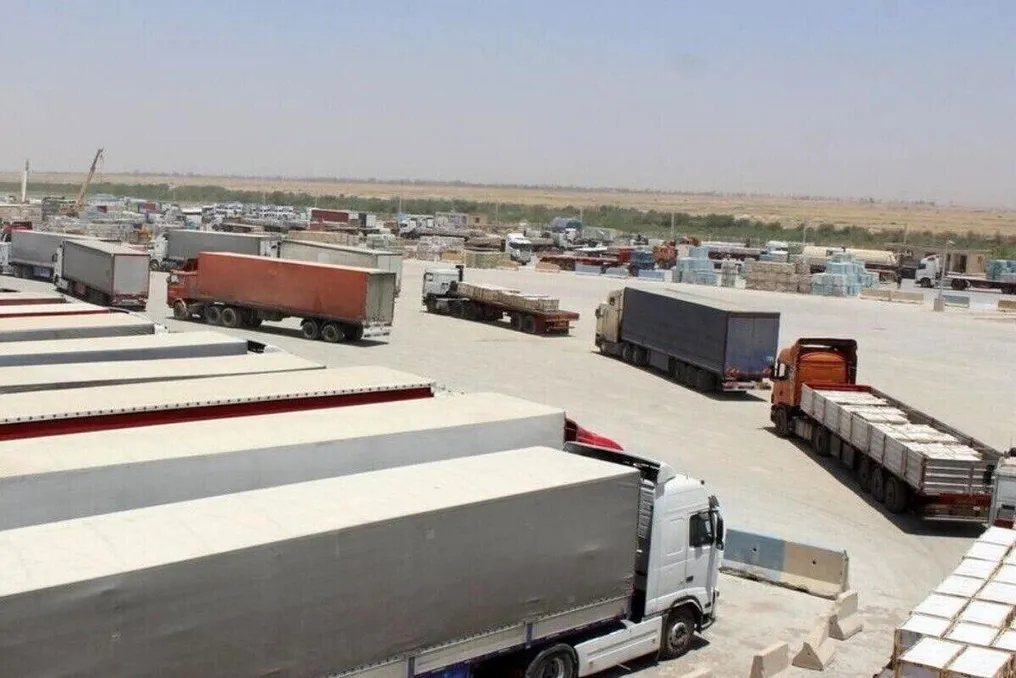
The head of the Iranian Customs Administration announced the preparation of an executive instruction aimed at simplifying customs procedures. The goal of these measures is to accelerate goods processing, eliminate redundant processes, and optimize freight transport movement at the country's borders.
According to Mehr News Agency, Fereydoun Asgari, the head of the Iranian Customs Administration, addressed issues raised by meeting participants while speaking at the Iranian Chamber of Commerce. These issues concerned facilitating the entry and exit of goods, truck traffic at borders, goods valuation, guarantees, and percentage clearance of cargo.
He stated that during the wartime period, customs concessions were obtained from authorized bodies, which were then submitted to and approved by the President of the 16th of March. Currently, an executive instruction is being prepared for the uniform implementation of the provisions of this approval in all customs offices across the country.
Asgari emphasized that the main task of this instruction is to prevent goods from being stopped at the country's entry and exit points. He added that in the export zone, goods will be valued taking into account the capacities of internal customs administrations so that cargo that has undergone the valuation procedure does not stop again at the border.
Explaining the mechanism for controlling batches at the borders, the head of the Customs Administration noted that risk management is applied directly at the entry points. Cargo requiring additional control based on risk assessment is sent to docks for necessary inspections. However, other goods should pass through the 'green corridor' based on mutual trust and the seal of the country of origin's customs, which will avoid unnecessary checks and delays.
Asgari stressed that customs control must be proportional to the risk level of each batch, and goods that do not require re-inspection must cross the border without additional procedures or stops.
Regarding the proposed temporary mechanism in the import zone, he stated that a specific period has been set for various departments involved in the import process. Departments responsible for issuing permits are obliged to complete the relevant documentation within the established deadlines.
The head of the Customs Administration continued that responsible bodies must make decisions on imported goods and related processes within the specified timeframes. If any department fails to fulfill its duties within the established period, it must be held accountable by the relevant authorities.
Asgari also clarified that customs will collect information on the timelines for processes and permit issuance, providing reports on the effectiveness of departmental activities to the country's authorities. This will allow for the identification and elimination of obstacles to customs clearance of goods.
Concerning problems existing in order registration and selective inspection of goods, he noted that special attention was paid to order registration, multiple sampling, and unnecessary measures that caused rework and increased process time during the development of this approval. Attempts have been made to find necessary solutions to eliminate these complexities.
The head of the Customs Administration expressed hope that the introduction of the new instruction will lead to a significant improvement in the process of importing and exporting goods through the country's customs points, allowing economic entities to process their cargo faster and more easily.
In response to the question about delays and truck traffic at borders and measures to solve this problem, Asgari stated that some existing issues must be resolved by Customs itself. In this regard, border meetings were held with the heads of customs administrations of neighboring countries to achieve greater coordination in eliminating obstacles and increasing throughput for truck transit.
He added that meetings were held with the heads of the customs administrations of Armenia and the Republic of Azerbaijan. Furthermore, the head of the Turkmenistan Customs Administration was present in the Islamic Republic of Iran this week, and negotiations were held on this matter. Other parties also expressed readiness to cooperate and increase throughput for truck transit.
Addressing operational visits to important border customs offices in the country, the head of the Customs Administration reported that during these visits, problems related to various departments and obstacles in the transit and customs clearance process were discussed. A large part of these issues was raised last week at a meeting with the Minister of Economic Affairs and Finance, many of which proved solvable, and several have already been resolved.