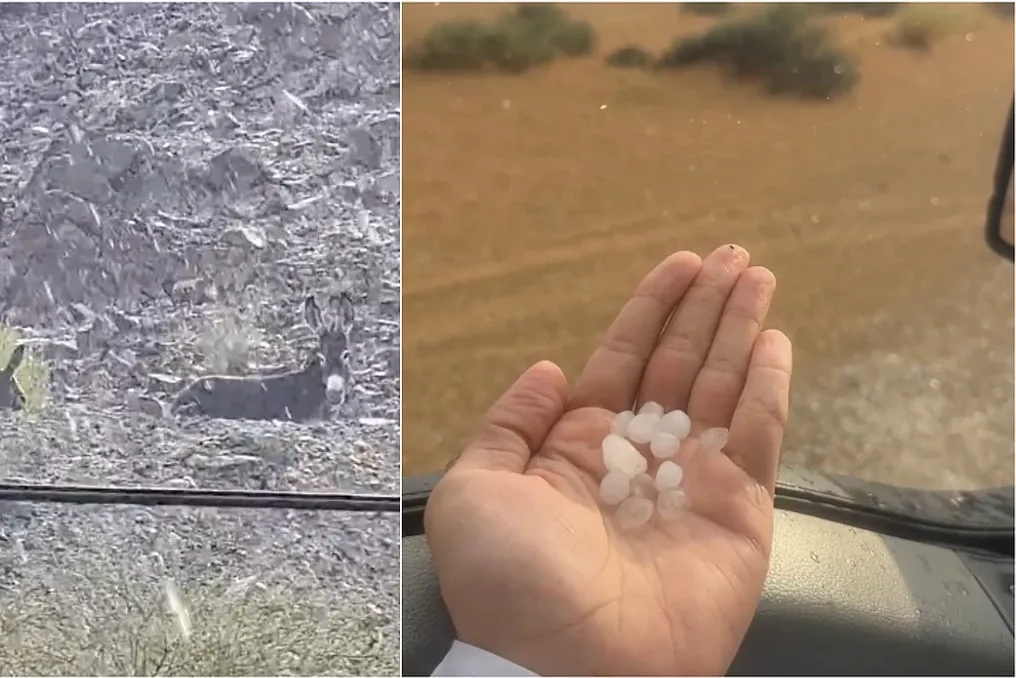
Residents of the UAE are noting a weekend during which some areas of the country experienced rain and hail, indicating a shift in weather towards cooler months.
These precipitation events occurred following a previous forecast of winter clouds approaching in mid-October, with the probability of rain expected to increase after mid-autumn. Increased humidity is also anticipated in the first half of autumn, accompanied by early morning fog formation.
On Sunday, the National Center of Meteorology (NCM) issued orange and yellow warnings for certain areas regarding the formation of convective clouds, informing residents about possible rainfall until 19:00 in the eastern and western zones.
Residents were advised to exercise caution when planning outdoor activities and to follow official instructions. Video footage published by the Storm Centre shows moderate and heavy rains on roads in the eastern region, as well as in Khor Fakkan and Al Ajili, east of Shuqi.
One of the videos also shows goats grazing in the rain against a mountain backdrop, providing relief from the current humid atmosphere. Meanwhile, heavy hail fell in the Margam area of Dubai, covering the light brown sand dunes with a white blanket.
The lowest temperature recorded in the Emirates on that day was 21.2°C, with winds in the Jais mountains in Ras Al Khaimah at 6:15 AM. Amid the ongoing period of rain, residents were advised to observe safety measures while driving and to avoid unnecessary travel, remaining vigilant to ensure the safety of all road users.
Citizens were also urged to use low beam headlights when visibility decreases, and the NCM cautioned the public against spreading rumors, strongly recommending they monitor official sources of information. In such weather conditions, the police typically urge drivers to exercise caution and adhere to variable speed limits indicated on signs and electronic displays.
Authorities emphasized the importance of staying away from dangerous areas, advising residents to avoid valleys, low-lying areas, and flood-prone zones, and not to attempt crossing flooded wadis. Furthermore, it is recommended to stay away from beaches, the sea, and mountainous regions during unstable weather, and to prevent children from playing in standing water.
According to data from the National Center of Meteorology (NCM), the average maximum temperature at the beginning of the autumn season was 39°C and is expected to drop to 26°C. In the middle of the season, around early November, highs of 31°C and lows of 18°C are expected. By the end of the season, temperatures will fall to 25°C, reaching a minimum of 13°C, coinciding with the winter solstice on December 22.