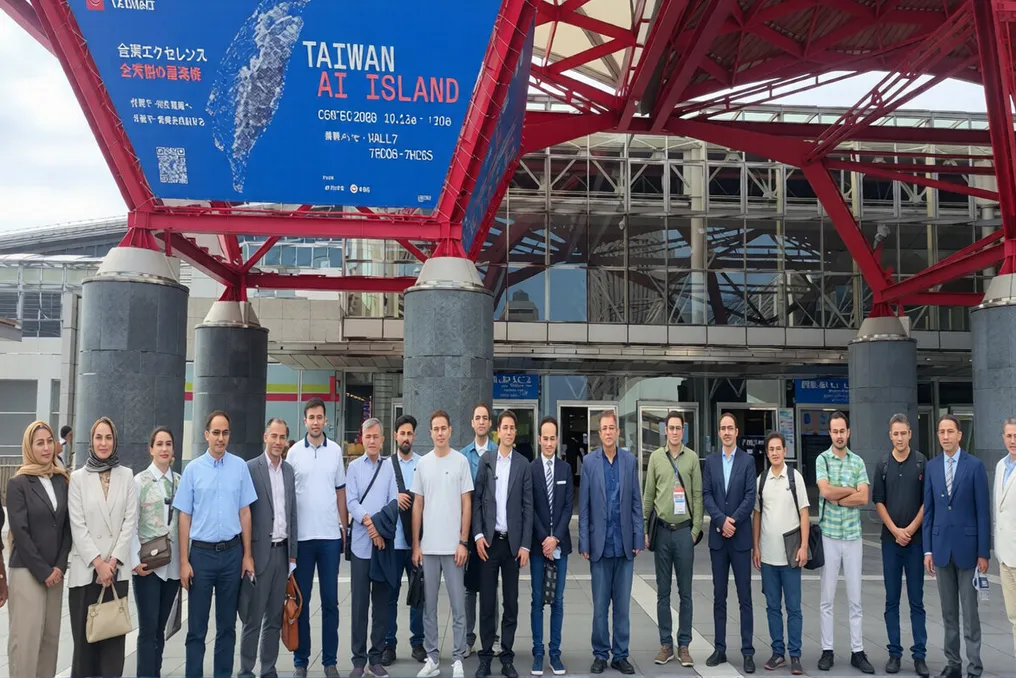
An Iranian delegation, comprising 17 companies engaged in scientific research and development, participated in the Combined Exhibition of Advanced Technologies (CEATEC), which took place from October 13 to 16 at the Nippon Convention Center in Tiba, Japan. The delegation was supported by the Prosperity and Innovation Fund.
The event provided a significant opportunity for technology experts, industrialists, and knowledge-based firms to familiarize themselves with the latest trends, products, and innovations in artificial intelligence, robotics, Internet of Things, and digital transformation, as reported by the IRNA agency.
On October 15, representatives of knowledge-based companies visited the Tokyo Innovation Base (TIB) and participated in networking sessions to establish professional interactions with experts in the innovation ecosystem. During the visit, Iranian and Japanese representatives held bilateral (B2B) meetings, exploring opportunities for joint commercialization of technologies, expanding international markets, and promoting ties between the two countries.
In parallel with the exhibition, the Iranian delegation held a meeting with the Iranian Ambassador to Japan, where potential directions and obstacles for developing scientific and technical and economic cooperation between Iran and Japan were discussed.
CEATEC 2026 showcased a vision of the future society, integrating the newest services and technologies that reflect global changes. Under the slogan 'Transformation,' the exhibition emphasized the new value brought by change through innovative solutions, practical exhibits, and programs.
The main goal of the event was to accelerate the implementation of advanced technologies in the real sector of society, such as AI, and to stimulate inter-industry cooperation to create practical business projects.
In January, Japanese Ambassador Tamaki Tsukada stressed the importance of strengthening scientific ties with Iranian universities across various fields, especially in new technologies, artificial intelligence (AI), and advanced materials. The Ambassador quoted IRNA, stating that science and industry are the main indicators of power in the 21st century and play a crucial role in scientific diplomacy.
These statements were made during a meeting with Mohammad Shokrikh, Rector of the Iran University of Science and Technology (IUST). The Ambassador noted that Iran's scientific capabilities and potential have never been fully presented to Japan, and stated that this is his primary task. He also expressed readiness to facilitate interaction between IUST and Japanese universities.
For his part, Shokrikh detailed the university's achievements in science, research, and industry. He proposed faculty and student exchanges, joint educational courses and scientific projects, the establishment of joint laboratories, and cooperation in science and technology parks.
Referencing a consortium of five leading Iranian technological universities—Tehran University, Tehran Medical University, Amkirab University of Technology, Sharif University of Technology, and Iran Medical University (UT5)—an official representative stated that this consortium could lay the foundation for expanding scientific contacts between top Iranian technological universities and Japanese universities, which was positively received by the Japanese side.