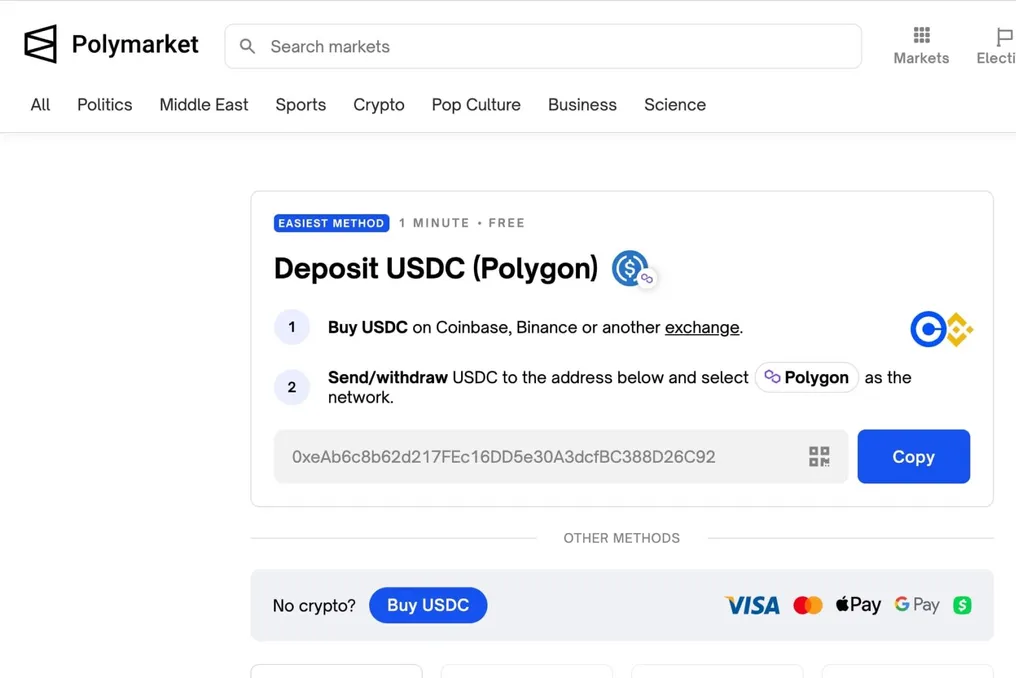
Polymarket is rapidly gaining popularity as one of the most discussed sites in the decentralized prediction market space. This platform is built on blockchain technology and allows users to trade cryptocurrency by betting on real-world events, including economics, sports, politics, and global trends. By enabling the monetization of information, Polymarket offers a unique mechanism for gauging public opinion through financial incentives.
This guide examines all aspects of Polymarket in detail: the project's operating principle, the role of its token, information regarding potential airdrops, and the platform's development plans. For traders, investors, and blockchain enthusiasts, understanding Polymarket can provide an early participant advantage in the rapidly evolving prediction market.
Essentially, Polymarket is a decentralized prediction platform that uses blockchain to bet on the outcomes of real-world events. By creating a transparent and secure environment, the platform allows individuals to predict everything—from political elections to economic shifts. It functions as an information market where users buy and sell shares based on their assumptions, such as the probability of Bitcoin reaching a certain price by a given date.
Polymarket serves as a powerful forecasting tool because it aggregates collective bets and beliefs from users, providing insight into actual human expectations rather than just their statements. The platform's goal is to promote decentralization, accuracy, and transparency in the process of forming and assessing predictions.
The site recently gained notoriety for accurately predicting the results of the 2025 US elections before their official announcement. However, it has also faced legal issues from the CFTC regarding the registration and location of its user base, making Polymarket a testing ground for crypto prediction markets globally.
Polymarket operates as a blockchain-based prediction mechanism built on Polygon. It allows people to buy and sell shares related to the outcome of real-world events (two types of shares are available: 'yes' or 'no'). The price of each share, ranging from 1 cent to 1 dollar, reflects the market's assessment of the probability of that outcome. If a 'Yes' share costs $0.70, it means users believe the probability of that outcome occurring is 70 percent.
The system does not have fixed odds; prices change dynamically based on trader activity. If a prediction is correct, the shares become worth $1, and if incorrect, they become worthless. After an event concludes, Polymarket uses decentralized oracles to verify the results and settle the market.
The platform's operation is dependent on liquidity providers who supply capital to the prediction markets. This liquidity ensures that traders can take and sell positions at any time without causing sharp price fluctuations. Polymarket's infrastructure is governed by smart contracts, which automate transactions and protect against mishandling of funds. The self-executing nature of these contracts eliminates the need for intermediaries, reducing costs and increasing platform trust by removing human error.
When an event ends, Polymarket engages oracles together with the Market Integrity Committee to verify the results. Oracles are decentralized systems that gather real-world data to establish outcomes, ensuring fair and transparent market resolution.