Asian Development Bank may assist Uzbekistan in developing a food safety strategy until 2035
Read more
UzDaily
uzdaily.uz

Asian Development Bank may assist Uzbekistan in developing a food safety strategy until 2035

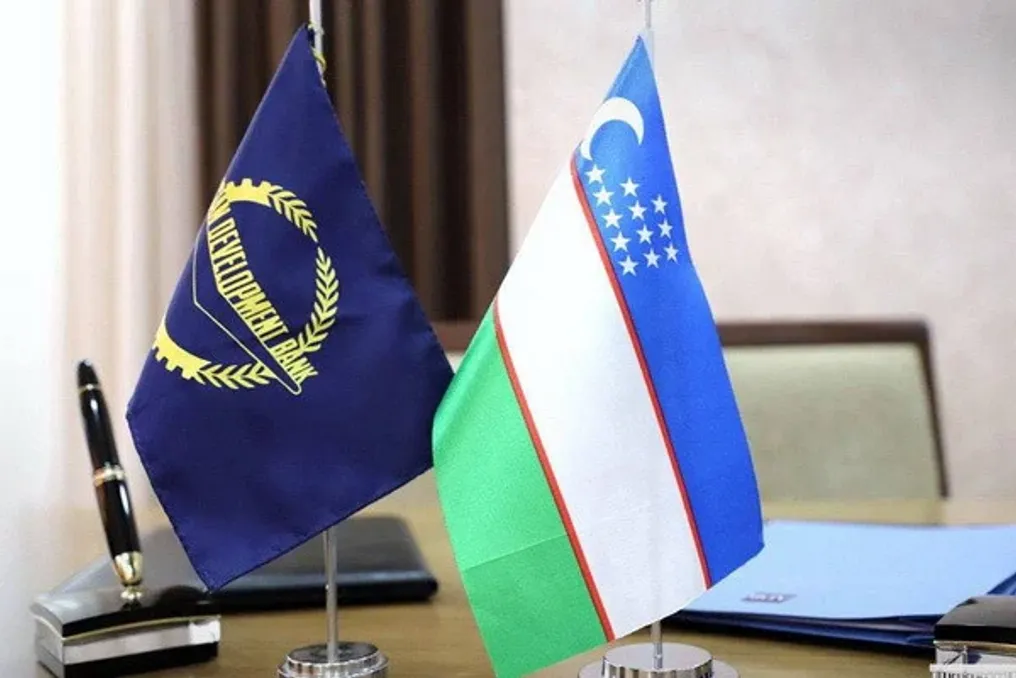
The Asian Development Bank (ADB) could potentially engage its specialists to participate in the development of Uzbekistan's Food Safety Strategy, which is designed until 2035.

This issue was discussed at a meeting dedicated to prospects for cooperation in this sector. The negotiations involved Azizbek Urunov, Chairman of the Uzbekistan Food Safety Committee, and bank representatives.

Furthermore, during the discussions, the question of Uzbekistan's accession to the World Trade Organization (WTO) and the legislative reforms being carried out in connection with this process were reviewed.

It is expected that this strategy will be based on international experience, define priority directions for sector development, strengthen the institutional base, and establish mechanisms for its implementation.

The parties also discussed the possibility of joint projects aimed at enhancing institutional capacity, improving specialist qualifications, implementing modern food safety assurance systems, and expanding international cooperation. At the end of the meeting, participants agreed to continue practical cooperation on the issues raised.

Similar stories

Asian Development Bank provides Uzbekistan with $200 million loan for power grid modernization
Read more
uzdaily.uz

Asian Development Bank provides Uzbekistan with $200 million loan for power grid modernization

The Asian Development Bank (ADB) and Uzbekistan have signed a loan agreement worth 200 million US dollars to upgrade the country's electricity distribution systems. These funds will be used to improve infrastructure, reduce power losses, and increase the reliability of energy supply amid growing demand.

The agreement was signed in Bangkok on October 15 between ADB President Masato Kanda and Deputy Prime Minister and Minister of Economy and Finance of Uzbekistan, Jamshid Kuchkarov.

Modernization Program Details

The program includes the modernization of 60 key distribution substations across the country, as well as the implementation of digital management systems. These infrastructure improvements are expected to help reduce power losses, decrease transformer overload, and enhance the stability of energy supply to households, businesses, and state institutions.

According to ADB data, this program will also create conditions for connecting at least 3.3 GW of new renewable energy capacity. It is projected that greenhouse gas emissions will decrease by nearly 23,000 tons of carbon dioxide equivalent annually.

The need for modernization is driven by economic growth, urbanization, and increased electricity consumption. Outdated equipment and overloaded networks hinder reliable energy supply and the connection of new RES facilities.

Strengthening Operational Capabilities

In addition to equipment replacement, the program will strengthen the operational capabilities of the National Electric Grid of Uzbekistan JSC, improve financial control and management, and enhance personnel qualifications. Special attention will be paid to staff training and increasing the participation of women in the energy sector.

This project marks the first ADB initiative in Uzbekistan's energy sector implemented under the ADB-World Bank Framework of Mutual Trust (FMRF). It will also be the first results-based financing program in the country's energy sector.

ADB is the lead lender for the project. Later in October, the World Bank plans to present a proposal for additional financing of 100 million US dollars to the Executive Directors Board.

The new program continues ADB's long-standing support for Uzbekistan's energy sector. Since 2010, the bank has provided the country with over $3.4 billion in financing and guarantees for this sector.

The project aligns with Uzbekistan's strategy until 2030 for developing renewable energy and improving energy efficiency, as well as ADB's partnership strategy with Uzbekistan for the period 2024–2028.

Uzbekistan plans to introduce an electronic risk assessment system for businesses
Read more
podrobno.uz

Uzbekistan plans to introduce an electronic risk assessment system for businesses

A proposal has been put forward in Uzbekistan to introduce an electronic system called 'Risk Analysis,' which is designed to automatically assess the probability that entrepreneurs will violate current legislation. The results of this assessment will be used to prevent such violations and to plan control measures more effectively.

The Agency for Narcotics and Firearms Control under the Presidential Administration developed the draft regulation on the procedure for implementing this system. This document is already available on the public discussion portal for normative legal acts, and the discussion period has been extended until October 11.

According to the submitted draft, the system will independently determine the level of risk based on pre-established criteria, excluding human involvement in the process. Data obtained through interdepartmental electronic interaction will be used for the analysis. This data includes information on licenses and permits, statistical data, confirmed appeals from citizens and legal entities, media and open-source materials, as well as reports from inspections conducted by other state bodies, including control purchases.

It is important to note that when conducting the analysis, entrepreneurs will not be required to provide any documents or information. Furthermore, the assessment process itself must not create obstacles or slow down commercial activity. However, the system will only assess entrepreneurs whose activities fall under the competence of this agency.

The risk level assigned by the system cannot serve as a legal basis for imposing fines or revoking licenses; its function is strictly limited to preventing violations and planning inspections.

Risk Classification and Inspections

Following the assessment, entrepreneurs will be distributed into three categories: high risk (scoring from 81 to 100 points), medium risk (from 61 to 80 points), and low risk (less than 61 points).

Inspections of enterprises with low risk levels will not be conducted, except in situations explicitly provided for by law as emergencies. Special criteria have been established for entrepreneurs who work with narcotic drugs, psychotropic and potent substances, as well as precursors.

The system will also take into account factors such as the absence of necessary licenses and certificates of conformity to national standards of good practices at pharmacies, wholesale warehouses, and manufacturers, as well as the lack of a medical license for non-state medical organizations. Violations related to the import, export, and transit of substances, operating outside licensed addresses, and selling unregistered substances are also considered.

Separate indicators have been established for transporting these substances by various modes of transport (road, rail, and air). For example, 35 points are proposed for inadequately sealed or damaged packaging, 25 points for transportation without mandatory accompaniment by a responsible person, and 20 points for the absence of an approved consignment note.

Entrepreneurs who disagree with the results of the analysis have the right to appeal them either in court or to a higher authority. If the document is approved, it will come into effect three months after its official publication.

Popular