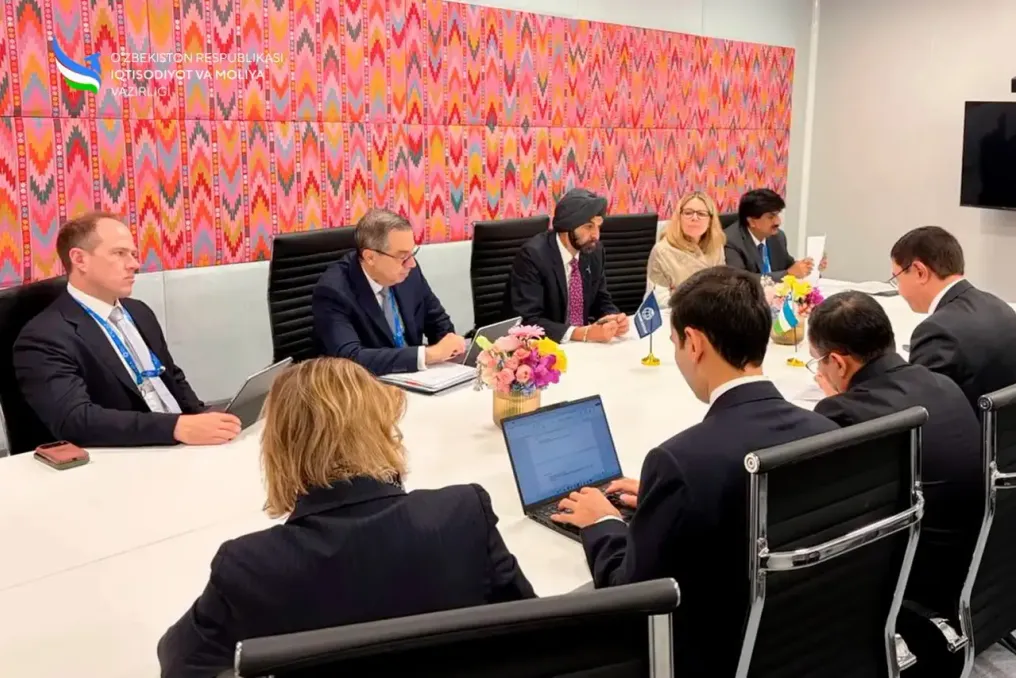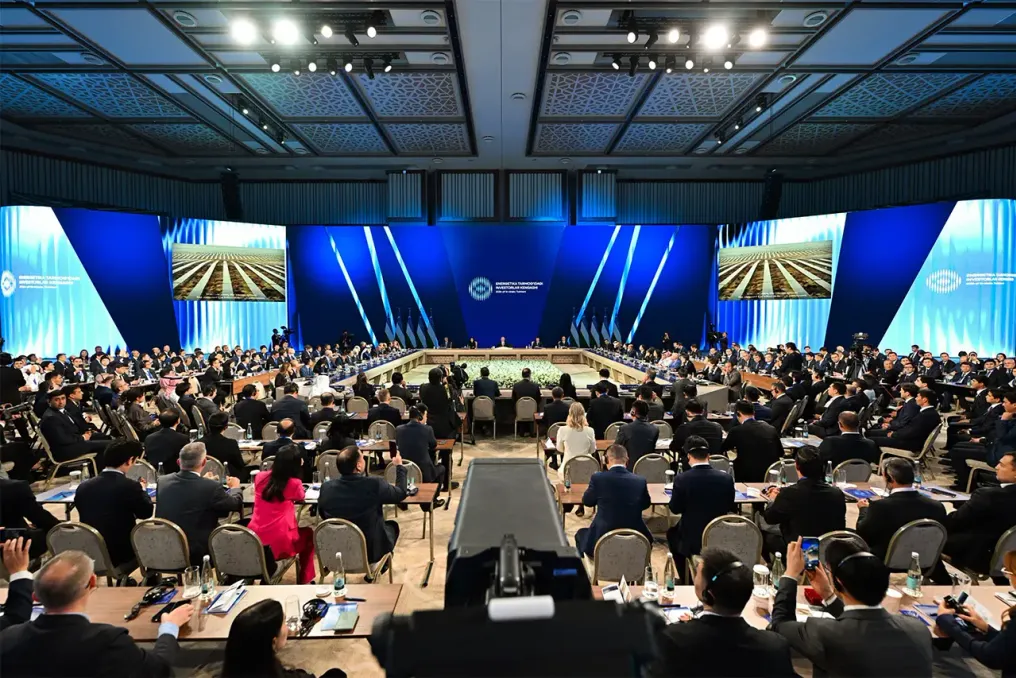
Representatives of international financial organizations and foreign energy companies positively evaluated the new approaches to developing Uzbekistan's energy sector, which were presented at an open dialogue with investors organized by President Shavkat Mirziyoyev on October 16.
Participants in the dialogue highlighted long-term planning, increasing energy efficiency, expanding private investment, establishing an Investors Council, and training local specialists as key priorities.
Naji Benhassine, Regional Director of the World Bank, reported that the World Bank Group's investment portfolio in Uzbekistan's energy sector has reached $1.4 billion USD. He emphasized that the bank has supported industry reforms for many years by providing technical assistance and financing.
Benhassine also noted the reduction in technical and electrical distribution losses, as well as progress in achieving the sector's financial sustainability. He called the first meeting of the Investors Council an important step toward attracting additional private capital, which remains in demand.
Neil McCain, Regional Manager of the International Finance Corporation (IFC), recalled that the organization had no projects in Uzbekistan's energy sector in 2020. Since then, the IFC has invested and attracted funds from other investors totaling over $2 billion for seven projects.
According to McCain, public-private partnership projects have contributed to reducing electricity generation costs. Nevertheless, he pointed out that the country's economy remains extremely energy-intensive. The IFC representative stated that for the sector's further development, Uzbekistan needs to improve energy efficiency, reduce losses, and limit irrational resource consumption. Furthermore, energy resources should be directed towards activities that can contribute most significantly to productivity growth and business development.
Shule Kilich, Director of the Eurasia Department of the European Bank for Reconstruction and Development, highlighted the president's goal of increasing the share of renewable energy in Uzbekistan's energy balance to 54% by 2030 as an important benchmark. She stressed that companies require clear long-term goals and a well-defined strategy for the energy sector to make investment decisions. Such guidance helps investors assess project prospects and decide whether to invest capital.
Kanokpan Lao-Araya, Director of the Asian Development Bank for Uzbekistan, drew attention to the initiative to create a direct interaction mechanism with investors. This mechanism is intended to ensure prompt review and effective resolution of emerging issues. Lao-Araya added that the energy sector is becoming increasingly significant for improving living standards amid rapid economic growth and population increase. She also mentioned that the ADB has allocated significant funding in previous years to support reforms and implement investment projects in the country.
Cedric Leboucher, Vice President of EDF for Europe, the Middle East, and Central Asia, listed the priorities set by the president as continuing the energy transition, conducting tenders, developing hydropower, and modernizing distribution networks. He stated the company's readiness to participate in these areas.
Leboucher reported that EDF is building two combined heat and power plants in Uzbekistan, one of which is already being commissioned. The company has also signed an agreement to develop a wind power plant with an energy storage system in Bukhara region.
Said Ayman Al Busaidi, Chairman of the Board of Directors of Voltamp Energy SAOG, proposed using the Investors Council to solve specific problems arising during the implementation of energy projects. He identified the development of local supply chains and specialist training as priorities. Al Busaidi particularly noted that the company makes investment decisions based on the commercial viability of the projects.
Mahesh Kumar, Head of Special Projects and Global Affairs at Reliance Industries Ltd, noted that the president called for expanding the geography of solar energy and other new energy projects. In Kumar's opinion, energy initiatives should benefit both investors and local communities. At the same time, efforts to attract capital must be accompanied by the development of local potential.
Taro Okamura, Regional President of Sojitz Corporation for the Middle East, Africa, and Central Asia, reported that his company is involved in the construction of the Syrdarya combined thermal power plant with a capacity of 1600 MW and the Navoi wind power plant with a capacity of 1 GW. Okamura added that participation in the Investors Council meeting helped the company better understand global trends that Uzbekistan takes into account when formulating its energy policy.