Sirdarya-2 Thermal Power Plant to Support Uzbekistan's Energy System This Winter
Read more
UzDaily
uzdaily.uz

Sirdarya-2 Thermal Power Plant to Support Uzbekistan's Energy System This Winter

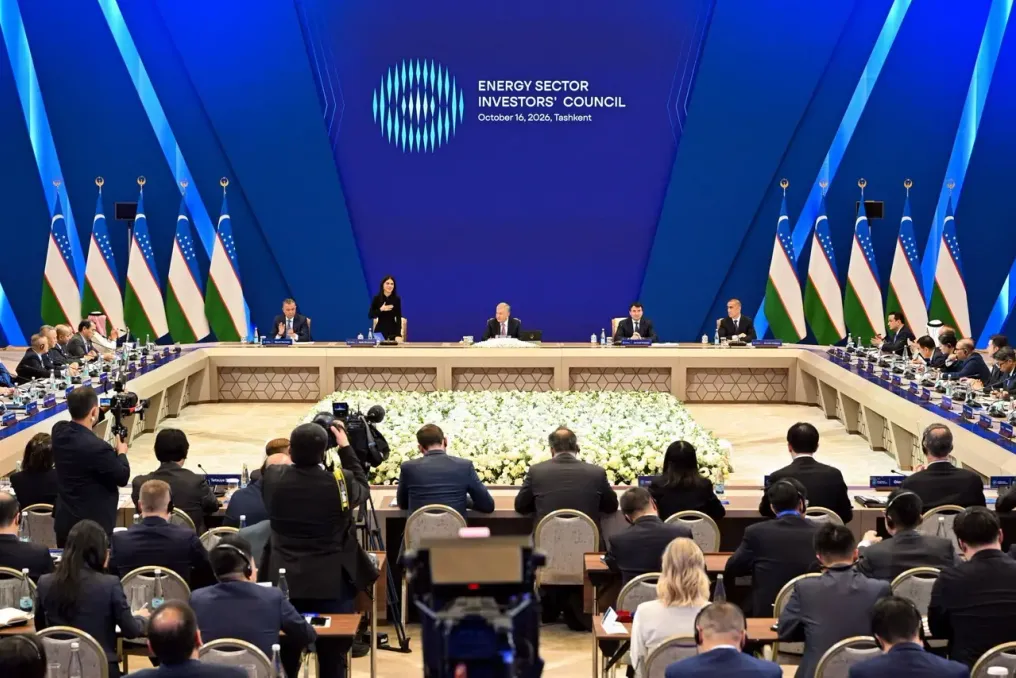
The Sirdarya-2 combined heat and power plant with a capacity of 1600 MW will begin strengthening Uzbekistan's energy system in the upcoming winter period. This was announced by Cedric Leboucher, Executive Vice President of EDF for Europe, the Middle East, and Central Asia, during a meeting between President Shavkat Mirziyoyev and investors in the fuel and energy sector on October 16.

Leboucher stated that the construction of the Sirdarya-2 TPP is nearing completion, and it will start reinforcing the country's energy system during the winter. He also specified that 75% of the construction work for the 1600 MW combined TPP in the Surkhondaryo region has been completed. The project is being implemented in collaboration with the German company Siemens and Qatar's Nebras.

Furthermore, cooperation is expanding into renewable energy. According to Leboucher, EDF signed a memorandum with Eolus to implement a 500 MW wind power plant project in Bukhara region, which also includes an energy storage system.

The French company is interested in modernizing Uzbekistan's electrical grids through public-private partnerships. Leboucher noted that EDF possesses experience in electricity transmission and distribution and is ready to apply its knowledge in Uzbekistan. The company also plans to increase cooperation in training specialists for the energy sector.

The Sirdarya-2 TPP is located in the Baiaut Sirdarya area. The consortium implementing the project includes EDF, Qatar's Nebras Power, Japan's Sojitz, and Kyuden. This consortium won an international tender in November 2021. According to previously published data, the station's capacity is 1573 MW, and the total project cost is estimated at 900 million US dollars.

The station is expected to generate 13 billion kWh of electricity annually. With an efficiency of 61.7%, it should save about 1.1 billion cubic meters of natural gas per year. The facility launch ceremony took place on August 25, 2026.

However, on September 25, during testing and commissioning, a partial equipment shutdown occurred at the 1600 MW plant. A failure in the emergency protection systems caused power outages in several regions. Backup capacity from other power plants and energy storage systems were utilized to restore power supply.

Questions also arose regarding the TPP project in the Surkhondaryo region. At a meeting on July 27, President Shavkat Mirziyoyev criticized the choice of location. He stated that placing the project would require an additional 300 million US dollars to ensure gas supply to the facility. The President also pointed out insufficiently developed contractual terms with the project initiator and instructed officials to review the contract.
Similar stories

Uzbekistan proposes raising the basic electricity consumption norm for areas without gas supply
Read more
uzdaily.uz

Uzbekistan proposes raising the basic electricity consumption norm for areas without gas supply

Uzbekistan has put forward a proposal to increase the basic monthly electricity consumption norm from 200 to 350 kWh for residents in areas lacking gas connection or where natural gas supply is unstable.

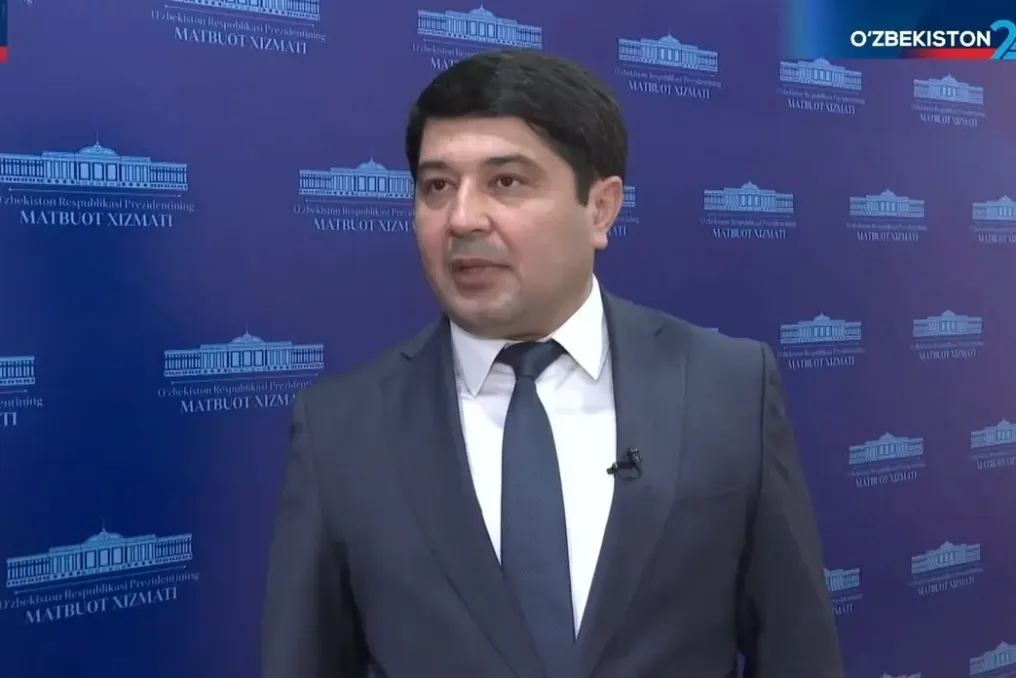
This proposal is based on an analysis of actual electricity consumption during the winter period, as well as existing social support measures. Deputy Minister of Economy and Finance Khurshid Mustafayev presented this initiative at a press conference on October 14 dedicated to planned tariff changes and household support during the autumn-winter period.

Mustafayev noted that two main aspects were taken into account when preparing the proposal. Firstly, the existing mechanism for assisting low-income families was considered. Under this scheme, the Social Protection Agency compensates eligible households for the difference between the basic and increased tariffs for an additional 150 kWh above the current norm of 200 kWh, allowing these families to pay the basic tariff for this extra volume.

Secondly, an analysis of winter electricity consumption in areas without gas connections was conducted. The data presented showed that about 60% of households in such zones consume up to 300 kWh per month in winter. Based on this analysis, the authorities proposed setting the basic norm at 350 kWh.

The Ministry of Economy and Finance reports that approximately 4 million households in Uzbekistan are not connected to gas networks and use alternative sources, including liquefied petroleum gas cylinders. In some other places, centralized gas supply is unreliable due to pressure drops or temporary supply interruptions observed during the heating season.

To identify such zones, the authorities analyzed gas supply data for households from December 2, 2025, to March 13, 2026. The proposed increased norm will apply not only in areas without gas connection but also where there are disruptions in natural gas supply.

A previous option of setting the norm at 500 kWh was discussed, but no separate estimates of potential budgetary expenditures for this level were provided at the press conference.

President Shavkat Mirziyoyev approved this proposal on October 6. The draft government resolution was published for public discussion on October 13. An analysis prepared by the authorities, covering the period from September 2025 to August 2026, showed that during the heating season, the share of consumers without gas supply using more than 200 kWh of electricity per month increases from approximately 25% to 39%. Meanwhile, the share of households consuming up to 200 kWh decreases from 74% to 61%; the share of those consuming from 201 to 350 kWh increases from 17% to 19%, and the share of consumers in the 351–500 kWh range grows from 5% to 9%, while the share of those consuming over 500 kWh increases from 3% to 10%.

The number of households connected to gas networks but experiencing difficulties in receiving gas also varies greatly depending on supply conditions. According to official data, during the period from December 2, 2025, to March 17, 2026, this number fluctuated from about 5,000 on some days to 607,000 on others.

The proposed increase will lead to a reduction in the tariff for monthly consumption in the range of 201 to 350 kWh from 900 soms to 650 soms per kWh, which is a decrease of almost 28%. The authorities predict that the new norm will cover about 80% of consumers in areas without gas connection. Over 1.5 million consumers could save a total of about 171 billion soms during the heating season, with the average savings estimated at approximately 27,500 soms per household per month.

For households consuming 250 kWh per month, bills will decrease by 12,500 soms; for consumption of 300 kWh, savings will reach 25,000 soms; and for consumption of 350 kWh, it will be 37,500 soms.

It is proposed that the increased norm comes into effect on November 1, 2026, for the heating season. In Karakalpakstan and Khorezm region, it will be valid from October to February, and in other regions—from November to February. Regional administrations will approve lists of households facing gas supply problems based on proposals from the Uzenergoinspection, Khududgazt'aminot, and Regional Electric Grids.

Furthermore, the authorities had previously proposed one-time payments of 1 million soms in November to over 1 million needy families. It is also planned to expand the criteria for receiving compensation covering electricity, gas, and coal expenses, as well as extend these payments.

Popular