In a week, shares of companies from TCS to Reliance brought investors a profit of 3.65 lakh crore rupees
Read more
Aaj Tak
www.aajtak.in

In a week, shares of companies from TCS to Reliance brought investors a profit of 3.65 lakh crore rupees

The past week proved to be very successful for investors who invested in the stock market. Both the BSE Sensex and NSE Nifty demonstrated significant growth. Furthermore, nine out of ten companies in the top 10 Sensex provided substantial profits to their shareholders, earning a total of 3.65 lakh crore rupees in just five trading days. Among these companies were both Tata Group's TCS and Mukesh Ambani's Reliance company.

Investors who have long faced significant fluctuations in the stock market received tangible benefits last week. Against the backdrop of overall growth, the Bombay Stock Exchange (BSE) showed an increase in the Sensex index by 2256.94 points, which is 3.11%. At the same time, the National Stock Exchange (NSE) recorded a rise in Nifty by 625.7 points, or 2.77%.

An analysis of the list of the ten most valuable companies in the Sensex revealed that Reliance Industries, Bharti Airtel, HDFC Bank, ICICI Bank, Tata Consultancy Services (TCS), State Bank of India, Bajaj Finance, Life Insurance Corporation of India (LIC), and Infosys benefited their investors. The only company from the top 10 Sensex whose investors incurred losses was Larsen & Toubro.

TCS, belonging to the Tata Group, emerged as the leader in terms of profit volume for its investors. The market capitalization of this company increased to 8,91,134.96 crore, and investors who invested in it over five working days earned 1,08,542.63 crore.

Following TCS, the telecommunications giant Bharti Airtel also showed good results. The company's market capitalization grew to 11,88,815.45 crore rupees, bringing investors 61,406.53 crore rupees. Additionally, the market valuation of Infosys increased from 55,893.05 crore to 4,71,409.41 crore rupees.

As for Mukesh Ambani's Reliance Industries, its market capitalization jumped to 16,37,437.19 crore rupees last week. Investors who bought shares of this company earned 53,047.56 crore rupees in five days. The market capitalization of HDFC Bank was also noted to have grown from 32,379.05 crore to 11,22,628.07 crore rupees, while ICICI Bank increased its capitalization by 30,769.95 crore, reaching 10,02,871.44 crore rupees.

Among other profitable companies is Bajaj Finance. Its market capitalization grew by 14,786.65 crore rupees, reaching 6,11,326.72 crore rupees. As for the country's largest insurance company, LIC, its market capitalization increased from 4,933.5 crore to 5,02,204.82 crore. And the country's largest public bank, SBI, increased its market capitalization from 3,323.07 crore to 8,87,722.84 crore rupees.

Despite the overall boom in the stock market, one company from the top 10 Sensex faced losses. This was Larsen & Toubro, whose market value decreased by 9,232.26 crore rupees in five days, falling to 4,99,725.06 crore rupees.

After a significant jump last week, Reliance Industries' dominance remained unchanged in the list of the country's most expensive companies. Mukesh Ambani's company remained at the top in market value among domestic enterprises. It is followed by Bharti Airtel, HDFC Bank, ICICI Bank, TCS, State Bank of India, Bajaj Finance, LIC, Larsen & Toubro, and Infosys.
Similar stories

Sharp rise in premium on the stock market: an option worth 3 rupees exceeded 115 rupees
Read more
www.aajtak.in

Sharp rise in premium on the stock market: an option worth 3 rupees exceeded 115 rupees

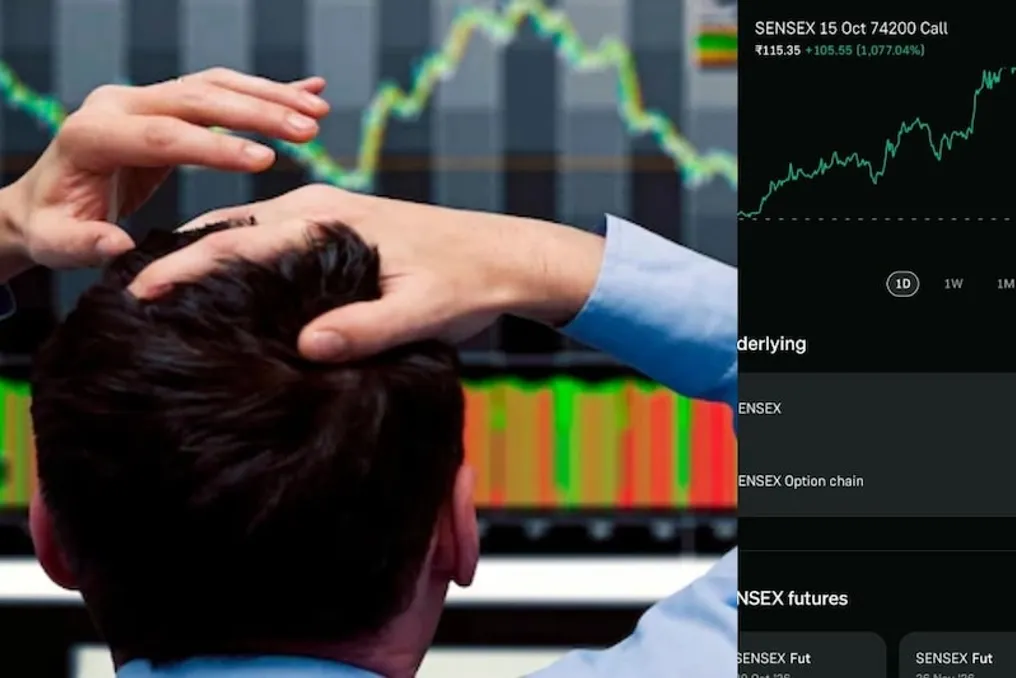
A significant event occurred on the Indian stock market on Thursday: shortly before the close of trading, one of the premium instruments of the Sensex index rose by approximately 35 times. This led to a sharp increase in profits for investors who invested in this option.

The Indian stock market demonstrated impressive growth on Thursday. The Sensex index closed at 74315, showing a rise of 1534 points or 2.11 percent. Simultaneously, Nifty reached the mark of 22,997, increasing by 374 points or 1.66 percent. During this period, strong buying activity was observed in the 74200 Option Call instrument, which suddenly exceeded the mark of 115 rupees.

According to a CNBC report, this call initially cost about 10 rupees, then dropped to 3 rupees, and subsequently surged to 115 rupees. Experts note that such phenomena are rare in the market, but such cases have been observed since the introduction of SEBI's CAS rule.

It is believed that in the last hours of trading, most option premiums are slowing down and beginning to decline. Premiums below 10 rupees are falling particularly fast, and the chances of their recovery are extremely small. Therefore, if any premium instrument demonstrates such a sharp rally at this time, it may indicate the presence of some violations. Similar assumptions are being made regarding this premium instrument.

If someone purchased the 74200 option at a price of about 3 rupees, they could have made a 35-fold profit on each lot. Since one lot in Sensex consists of 20 units, this means that with an investment of 60 rupees per lot, a profit of 2300 rupees could have been made. However, it should be emphasized that this is only an approximate estimate and is not a recommendation to buy such premiums, as such a jump may indicate market irregularities.

A call option within F&O is a contract that allows an investor to bet on an increase in the price of a stock or index without buying them directly. When an investor expects market or stock price growth, they bet on a call option and earn from the increase in premium using margin collateral. Each call option has an expiration date during which the investor can decide whether to purchase it.

Foreign investors have withdrawn 400 billion rupees from the Indian market by 2026 amid stock market decline
Read more
www.aajtak.in

Foreign investors have withdrawn 400 billion rupees from the Indian market by 2026 amid stock market decline

The decline in the American market is causing a decrease in the Indian market, which is an understandable phenomenon; however, even when American markets are rising, the Indian market is showing a downturn, which raises questions. The last ten months have been characterized by this trend in the stock market.

Recalling the budget day, the attention of both local and foreign investors was focused on the government in hopes of saving the market. However, expectations were not met: the tax on futures and options transactions (STT) was increased, leading to market instability. The question arises whether the increase in STT was justified in the current situation.

Even after this, there were hopes that the government would take steps to stabilize the market, but over time, these hopes faded. When there was a significant market slump in March of this year, Finance Minister Nirmala Sitharaman was seen talking with industry experts, instilling hope among investors for a possible easing of capital gains or STT taxes. Unfortunately, this issue was also postponed.

The situation was worsened by expensive crude oil and the constant weakening of the Indian currency.

Everyone knows why the market is falling, and the government is aware of it: the reason lies in the mass selling of assets by foreign investors. These investors are withdrawing huge sums of money from the Indian market daily. By 2026, foreign investors have withdrawn more than 400 billion rupees from the Indian stock market, which is a worrying indicator. In the last nine days alone, foreign investors have withdrawn about 60 billion rupees from Indian markets.

Although the market is being supported by the contribution of domestic retail investors, who have become a force in recent years, and by the trust of ordinary Indians in the index through direct stocks and mutual funds, maintaining the Indian stock market in the long term without the participation of foreign investors is extremely difficult. Under such conditions, the responsibility of the government increases.

In particular, the government needs to take effective measures to prevent the uncontrolled sale of assets by foreign investors. Blaming foreign investors is useless. Investors put money where they see the best risk-to-reward ratio and solid profit. A fundamental question needs to be answered: why does the Indian market no longer seem attractive to them, and a solution must be found. Ignoring this serious situation will not improve the situation but only worsen it. The main index of the Indian stock market, Nifty, has fallen by more than 15% from its peak, which is enough to undermine investors' portfolios.

Experts believe that foreign investors are disappointed due to India's complex taxation system. The Long Term Capital Gains (LTCG) tax is 12.5%, and the Short Term Capital Gains (STCG) tax is 20%, which negatively affects FIIs. Furthermore, the increased STT on F&O reduces the margin of foreign funds. The weak rupee exacerbates the situation.

If the stock market remains stable or falls slightly, but the currency depreciates sharply, foreign investors fear direct losses in dollars. The point is that as long as the currency does not stabilize, foreign investors will be reluctant to make large purchases in the Indian market. Meanwhile, higher interest rates in the US and rising yields on American bonds allow foreign investors to earn safe returns exceeding 5% in dollars without risk. Under such conditions, placing funds in the risky stock market of a developing country with a weakening currency does not look like a profitable deal.

Amidst the market turmoil, the question arises: why is the government so slow in taking measures to gain the trust of foreign investors? First and foremost, the government should deeply study the root causes of why foreign investors are scaling back their activities in the Indian market and what their real problems are. Are they concerned about the LTCG rate, or do the increased STT on F&O and changed share buyback rules reduce their profitability? A political decision must be made immediately to lower or ease the tax structure to retain them.

On the other hand, if retail investors have become a real force in the market under current conditions, why are they remaining in this uncertainty? Over the past two years, the market has been in a limited range and constantly sliding downwards. Moreover, it seems that the tax burden is eroding the profits of small investors on all fronts. Now even retail investors are facing this downturn.

Indian stock market experiences crash: Sensex and Nifty indices fall amid asset decline
Read more
www.aajtak.in

Indian stock market experiences crash: Sensex and Nifty indices fall amid asset decline

A significant downturn occurred in the Indian stock market on Thursday, affecting all sectors—from IT to automotive and consumer goods. The Sensex index fell by 1045.46 points, representing 1.44%, closing at 71,593.24. Simultaneously, the Nifty dropped by 371.25 points or 1.64%, ending trading at 22,231.80. During intraday trading, both indices managed to lose about two percent of their value.

This sharp decline resulted in investors losing 10 lakh crore rupees. If the capitalization on the BSE was 470.98 lakh crore rupees on Wednesday, it decreased by 10 lakh crore rupees on Thursday, reaching 460.97 lakh crore rupees. During intraday trading, the value fell even further, reaching the mark of 12 lakh crore rupees.

Among the 30 largest stocks on the BSE, excluding Tech Mahindra, Infosys, and ICICI Bank, there was a substantial drop. The largest decline was recorded for ITC shares, which fell by 4.24%. This was followed by Indigo, Powergrid, BEL, and Adani Ports shares, which declined by more than 3%.

The BSE Smallcap Index fell by 235.93 points or 2.58%, concluding trading at 8,905.10. A similar strong decline was noted among mid-cap stocks: the Midcap index dropped by 445.47 points or 2.53%, closing at 17,147.95. The metallurgical sector recorded a drop of 3.55%, real estate fell by 3%, the automotive sector by 2.50%, and pharmaceuticals and healthcare by 2.33%.

Nifty approached its 52-week level, surpassing the 22,200 mark. This level is traditionally considered supportive, but the current market decline has breached this support. Although Nifty recovered to 22,231.80 by the time trading closed, it remains very close to this critical level. It will be interesting to observe how long the market can hold this level or whether it can bounce off it.

The significant fall did not occur only in the Indian stock market but also in Asian markets on Thursday. In Japan, the Nikkei Index fell by 1000 points, and the Hong Kong Hang Seng Index fell by 400 points. South Korea's Kospi Index decreased by 200 points. Furthermore, the UK's FTSE-100 showed a decline of about 1%, and a similar decrease was recorded in the CAC and DAX indices.

Popular