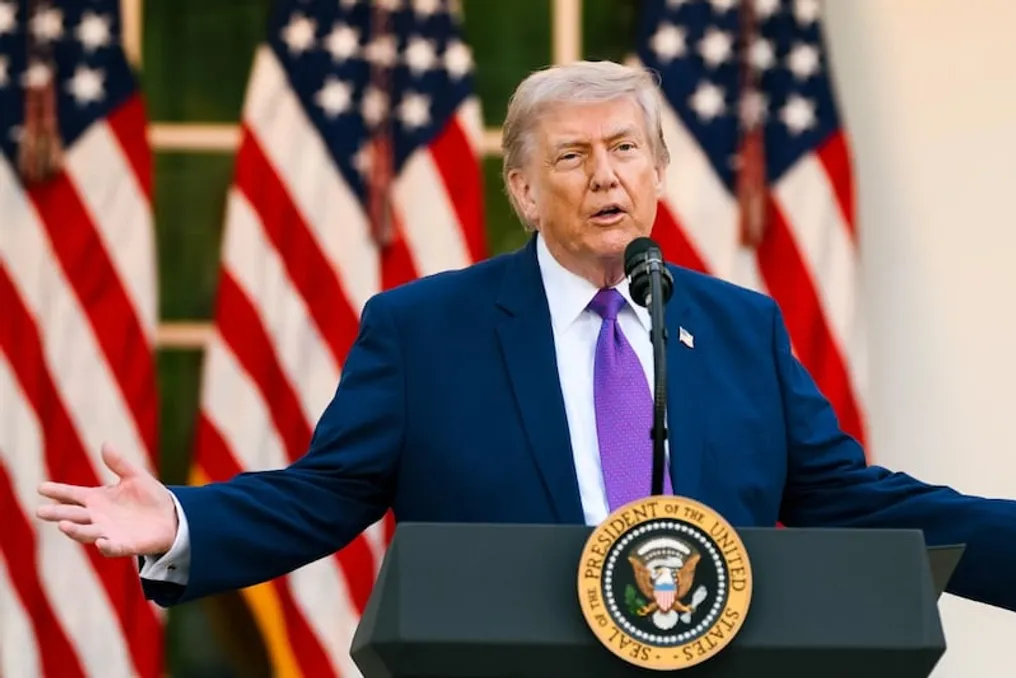
Trump announced tariff exemption for Russian oil and gas for five countries, including India
Read more
Aaj Tak
www.aajtak.in

Trump announced tariff exemption for Russian oil and gas for five countries, including India

American President Donald Trump made a statement that surprised even his supporters regarding the purchase of Russian oil and gas. He announced that the law providing for a 100% tariff for five leading buyers of Russian energy resources would not be applied under current global conditions.

This decision implies that corresponding duties will not be imposed on countries such as India, China, Slovakia, Hungary, and Azerbaijan. This move drew sharp criticism from several senators in the US.

After initial condemnation, Trump defended his decision, calling it a positive step. During a conversation with journalists at the Mar-a-Lago resort in Miami, he stated that many have not yet grasped the true meaning of his decree, but they will.

Trump emphasized that this decision is 'very good' and will benefit not only America but also the entire global community, as it is adopted on the global stage.

Earlier, on Friday, Trump signed an executive order that granted Russia an exception from new sanctions laws known as the 'Graham Act.' The US Congress passed this law last month, and this order lifted the 100% tariff on five major consumers of Russian oil and gas, including China and India.

According to the order, this exemption will remain in effect until a decision is made regarding the necessity of further action after due consultation with the President, the Secretary of State, the Secretary of the Treasury, and the US Trade Representative.

Trump's decision was criticized by both Republicans and Democrats. Last month, legislators from both parties passed the 'Lindsey O. Graham Sanctioning Russia and Iran Act' by a majority vote. South Carolina Senator, Republican Darling Graham, expressed doubt about Trump's actions. She noted that she would personally prefer to choose an option of pressuring Russia to end the war and lower gas prices, as she does not trust either the Russian president or Russia itself.

Donald Trump previously supported Darling Graham in the Senate election after her brother's death.

North Carolina Senator, Republican Thom Tillis, criticized the decision on social media, calling it extremely irresponsible. He questioned why the Trump administration failed to implement the law passed by the Senate by an overwhelming majority (86-11). Tillis stated that this is unforgivable because the Trump administration is yielding to the 'Russian dictator' (Putin), who started the war against Ukraine. He also suggested that to lower energy prices, the problem of the war with Iran should be addressed, which is considered one of the causes of fuel price increases.

Texas Senator, Republican John Cornyn, noted that 'Lindsey would be shocked' by this decision, recalling the work on the bill led by the late Senator Lindsey Graham before his death.

Massachusetts Democrat, Senator Elizabeth Warren, stated that Trump is ignoring the will of Congress and thereby contributing to the continuation of Putin's aggressive war. She called on her colleagues to take steps to overturn this decision.
Similar stories

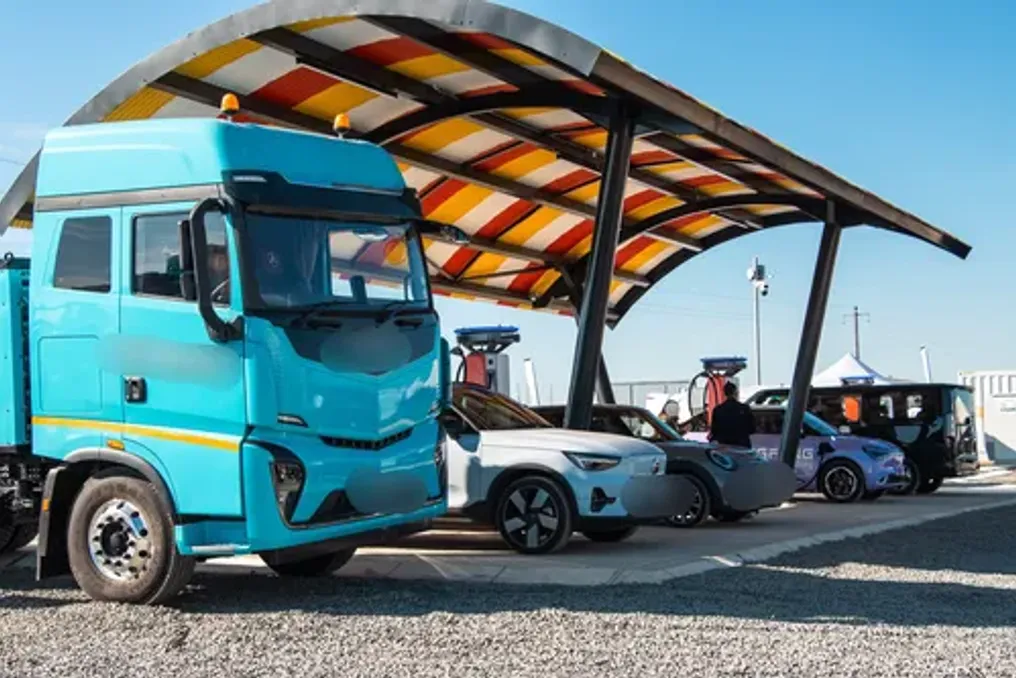
Electric Vehicles in South Africa: Fuel Savings Versus Accessibility and Cost Barriers
Read more
iol.co.za

Electric Vehicles in South Africa: Fuel Savings Versus Accessibility and Cost Barriers

Drivers in South Africa can save thousands of rand annually by switching from gasoline or diesel engines to fully electric vehicles. However, the adoption of electric vehicles is hindered by high purchase costs, uneven access to charging stations, and concerns about energy supply stability.

Electric vehicle sales are showing growth, and new charging stations are being developed to reduce dependence on Eskom. Nevertheless, the financial benefit for drivers will depend on the charging location, distance traveled, and the price of the vehicles themselves.

According to data from the Automotive Business Council (Naamsa), 18,945 new energy vehicles were sold in the first eight months of 2026, exceeding the figure of 16,703 recorded for the entire year of 2025. Most of these, however, were not fully electric.

Conventional hybrids, combining a gasoline engine and an electric motor without the need for external charging, accounted for 49.6% of sales. Plug-in hybrids captured 36.5% of the market, while battery electric vehicles running exclusively on electricity made up 13.8%.

By August, 2,622 fully electric cars were sold, compared to 1,088 units in the previous full year. Over seven months leading up to July, plug-in hybrid sales increased by 432%, reaching 5,851 units from 1,100 in the same period in 2025. Sales of fully electric cars grew by 268%, increasing from 641 to 2,360.

The Council noted that the transition from gasoline and diesel will happen gradually, with the pace determined by factors such as availability, model choice, electricity cost, and charging infrastructure.

Norbert Stahlkamp, Head of Electric Mobility at Black Tower (a joint venture between Red Rocket and RMB), stated that his calculations show that drivers covering 10,000–12,000 km annually can save between 13,000 and 17,000 rand on fuel compared to traditional vehicles. Stahlkamp emphasized: 'The data is clear: charging an electric vehicle is significantly cheaper than fueling a car with gasoline or diesel.'

Black Tower also cited estimates from GAC Group, according to which drivers traveling 15,000–20,000 km can save between 25,000 and 30,000 rand per year. These figures depend on mileage and charging prices and do not account for all vehicle ownership costs.

The CEO of the Automobile Association, Bobby Ramagvede, believes that electric vehicles are becoming a practical option for some drivers, but the possibility of home charging may determine whether the claimed savings materialize. He asked: 'What is the consumer problem: where do I charge this car if I live in an apartment?'

Drivers without dedicated parking or home charging devices may have to use more expensive public fast-charging stations. The Council urged buyers to consider not only fuel savings but also costs for insurance, maintenance, financing, and electricity.

Black Tower reported industry estimates indicating that there are approximately 445 charging points and 650 public charging stations in the country. Stahlkamp noted that their geographical distribution remains a challenge for long-distance travel.

Joubert Roux, co-founder and chairman of CHARGE, stated that satisfying the growing demand for electric charging will require significant investment in South Africa's energy system, as local grids are vulnerable to peak load demands. Roux said: 'We do not believe the grid is stable or reliable enough to meet the growing demand for electric vehicle charging without significant investment.'

CHARGE hubs, located at the intersection of Reitz in Free State and at the intersection of Colenso-Winterton in KwaZulu-Natal along the N3 highway, as well as in Wolmaransstad on the N12, utilize on-site solar energy and battery storage instead of power from Eskom or municipalities. Roux added: 'The sun alone is not enough for continuous charging: output power depends on the weather and stops after sunset.'

He stressed that adequate energy storage, carefully calculated systems, and backup plans are necessary. Broader adoption will also require additional generation sources, grid modernization, and smart charging demand management systems.

The CEO of Trade & Investment KwaZulu-Natal, Sihle Ngakhamu, noted that the Toyota Prospecton factory and local provincial component suppliers position KwaZulu-Natal to benefit from electric vehicle investments. Ngakhamu stated: 'The shift to new energy vehicles is one of the most significant investment opportunities for KwaZulu-Natal.'

However, he clarified that the most advanced investment activity currently focuses on charging infrastructure and the renewable energy that supports it. He cited locally produced Toyota hybrids as evidence of manufacturing capabilities, pointing to potential expansion in batteries, electric powertrains, and charging equipment.

Ngakhamu reported that CHARGE is implementing a deployment plan linked to a promised investment of 9.4 billion rand in KwaZulu-Natal, including one charging station on the N3 in the province, with plans for additional facilities for passenger cars and electric trucks. Roux added that long-haul carriers also need predictable charging points and sufficient power to maintain cargo movement, especially along the heavily trafficked Durban-Gauteng corridor.

As of March 2026, a tax deduction of 150% came into effect for qualified investments in the production of electric and hydrogen vehicles. Ngakhamu noted that this incentive 'significantly improves the economics of investing in local production,' especially for a province with established component suppliers and export infrastructure.

According to Naamsa, the South African automotive industry provided 113,000 jobs in manufacturing, and vehicle and component exports reached 291 billion rand in 2025. The Council also estimated that the entire automotive sector supports approximately 498,000 jobs in the formal sector, including indirect multiplier effects.

Popular