Sandhi Puja 2026: The Significance of the 48-Minute Period Between Mahalaya and Mahanavami
Read more
Aaj Tak
www.aajtak.in

Sandhi Puja 2026: The Significance of the 48-Minute Period Between Mahalaya and Mahanavami

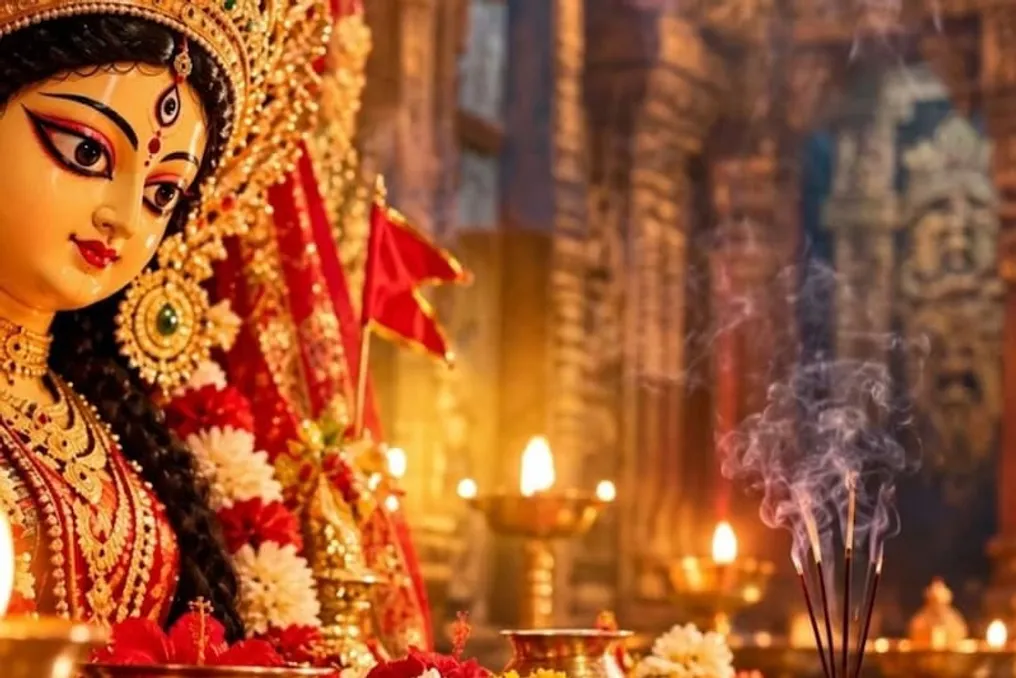
During Sharadiya Navaratri, dedicated to the worship of Goddess Durga, various special rituals are performed, among which is Sandhi Puja. This rite is performed at the moment of the merging of Mahalaya and Mahanavami. According to religious beliefs, this time is considered extremely important for worshipping the form of Goddess Durga, Chamunda Swarana. During this ritual, the tradition of special worship of the goddess, offering flowers, and lighting lamps is observed.

The most significant moment in Sandhi Puja is the 48-minute period of Sandikala. The following details when Sandhi Puja will be held, its religious significance, and the rules that should be followed during its performance.

The date of Sandhi Puja is determined based on the time of the merging of the dates of Mahalaya and Mahanavami. In 2026, during Sharadiya Navaratri, this puja is scheduled for October 19. According to the Panchang, the time for Sandhi Puja is set from 10:27 AM to 11:15 AM, totaling a period of 48 minutes. This segment includes the last 24 minutes of Mahalaya and the first 24 minutes of Mahanavami, and this interval is called Sandikala. Since the timing of the dates can vary depending on the city, it is strongly recommended to check the exact time in the local Panchang before performing the ritual.

In Hindu religious views, Sandhi Puja is regarded as a special time for worshipping divine power. There is a belief that during the merging of Mahalaya and Mahanavami, Goddess Durga took the form of Chamunda to destroy the demons Chanda and Munda. This is why a special worship of this aspect of the goddess is performed at this time. During Sandhi Puja, devotees pray to Goddess Durga for courage, happiness, prosperity, and family well-being. This ritual also symbolizes the victory of good over evil and the end of injustice. Special attention is given to Sandhi Puja in Bengal and Eastern India during the celebration of Durga Puja.

The main feature of Sandhi Puja is its limited time window. This puja is performed in the interval between the end of Mahalaya and the beginning of Mahanavami, symbolizing the merging of the two dates. According to tradition, during Sandikala, worship of Goddess Durga, chanting of mantras, lighting of lamps, and offering of flowers are performed. Therefore, it is advised to prepare all necessary materials in advance so that the ritual can be completed within the stipulated time.

In some places, there is a tradition of lighting 108 lamps during Sandhi Puja. In religious beliefs, the lamp symbolizes light, faith, and positivity. Devotees express their devotion to Goddess Durga by lighting the lamps. Furthermore, in some traditions, there is a custom of offering 108 lotus flowers to the goddess. However, the methods and materials for performing the worship may differ according to regional traditions. Pilgrims can perform the ritual following their family customs and the advice of their priest.

To begin Sandhi Puja, the place of worship must be purified, and an image or statue of Goddess Durga must be installed. Then, a lamp should be lit before the goddess, and offerings should be made according to your tradition, including flowers, akshata, and fruits. It is necessary to focus on Goddess Durga, recalling her Chamunda Swarna form, before starting the ritual. After this, flowers, fruits, and other objects of worship should be placed before the goddess. The next step is to chant mantras and perform Aarti according to your faith and traditions. It is also important to perform Deepdan—lighting the lamp according to the Sandhi Puja tradition. The ritual should conclude with the offering of flowers, praying to Goddess Durga for happiness, peace, and prosperity. It is crucial to monitor the time during the worship. If you wish to participate in Sandhi Puja at any temple or Durga Puja pandal, inquire about the exact time in advance from the organizers.

Since the auspicious moment of Sandhi Puja lasts only 48 minutes, preparation for all rituals must be done in advance. Lamps, flowers, offerings, and other materials should be prepared in a timely manner. During the worship, reverence and concentration must be maintained, and the time specified in your local Panchang must be strictly followed.
Similar stories

Start of Sharadiya Navratri 2026: Kalash Sthapana on October 11, Time for Rituals
Read more
www.aajtak.in

Start of Sharadiya Navratri 2026: Kalash Sthapana on October 11, Time for Rituals

The beginning of the Sharadiya Navratri celebration is associated with the worship of Goddess Durga, which traditionally starts with the installation of a kalash. On this day, special rituals are performed in many homes and temples. Those preparing for Ghatasthapana during Navratri must know the auspicious timings, necessary items for worship, and the correct procedure for conducting the ritual.

In 2026, Sharadiya Navratri will begin on October 11, a Sunday. According to the Panchang, the kalash installation will take place on the first day of Navratri, which is October 11. For New Delhi, the auspicious morning time for Ghatasthapana is set from 6:19 AM to 10:12 AM. An alternative Abhijit Muhurta is also available from 11:44 AM to 12:31 PM.

It is important to remember that the time for Ghatasthapana may vary depending on the city, so it is recommended to check the local Panchang for confirmation of the exact time.

According to the Hindu Panchang, the Pratipada date from the Ashwin lunar month will begin on the evening of October 10, 2026, and last until the evening of October 11. Based on the rising date, the first day of Navratri is considered October 11. It is on this day that the tradition of worshipping Maa Shailputri and installing the kalash is observed.

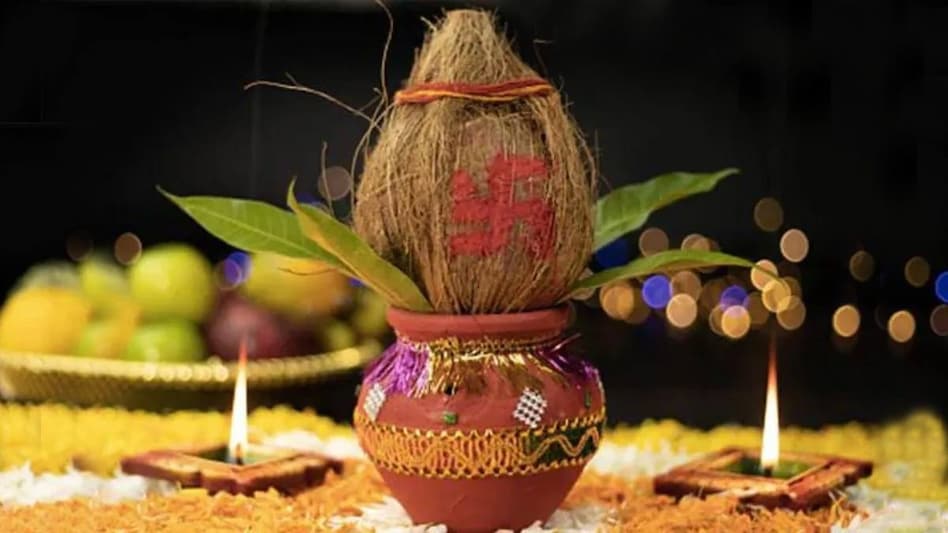
It is advisable to prepare all the items for worship in advance before Ghatasthapana. Among the necessary items are a clay pot, barley, clean soil, a pitcher filled with water, a coconut, mango or ashoka leaves, red cloth, roli, akshat, flowers, a lamp, incense, and fruits. It should be noted that the composition of items may differ depending on the region and the family's worship methods.

First, the place for the ritual must be thoroughly cleaned. Then, an image or statue of Maa Durga should be placed in a clean spot, and the altar should be prepared. According to tradition, soil and barley are sown into the clay pot. After this, water is poured into the pitcher, and supari, akshat, or a coin is added to it. A coconut, wrapped in mango or ashoka leaves, is placed on the mouth of the pitcher. The ritual worship and Aarti are completed by meditating on Maa Durga.

On the first day of Navratri, worship is performed to Maa Shailputri, the first aspect of Goddess Durga. In religious beliefs, she is revered as a symbol of strength, stability, and nature. On this day, followers decide to worship and fast. Subsequently, over nine days, various forms of Maa Durga are worshipped.

Before installing the kalash, ensure the purity of the worship place and gather all necessary materials in advance. During the ritual, maintain cleanliness and follow your traditional rules. If you plan to light a continuous fire (Akhand Jyoti), make sure to arrange its safe placement beforehand.

Dates for Mahaashtami and Mahanavami during Sharadiya Navratri 2026
Read more
www.aajtak.in

Dates for Mahaashtami and Mahanavami during Sharadiya Navratri 2026

Due to some uncertainty among people regarding the dates of Mahaashtami and Mahanavami during Sharadiya Navratri, especially for those observing fasts on Ashtami or performing puja and havan on Navami, experts have clarified the dates for these rituals.

In some families, worship is traditionally performed on Ashtami, while in others, the focus is on Navami. Questions arise about which day to observe the fast and worship on Ashtami, when the Mahanavami puja will take place, when it is auspicious to perform Kanya puja, and what the time for Sandhi puja is.

This year, Sharadiya Navratri will begin on October 11 and conclude on October 20 with the celebration of Vijayadashami. Expert Pandit Pravin Mishra provided information regarding the dates for Mahaashtami and Mahanavami.

Ashtami Tithi this year begins on October 18, 2026, at 8:27 AM and ends on October 19, 2026, at 10:51 AM. According to the waxing date, Ashtami will be considered on October 19. Thus, those whose traditions include special worship, havans, or Kanya puja on Ashtami can perform these rites on October 19.

If you are observing a fast on Ashtami, you should refrain from food on October 19 and worship the eighth form of Mother Durga, Mahagauri, according to all established rituals. People performing puja or feeding Kanyas can also perform this ritual during Ashtami Tithi on October 19. It is recommended to complete all Ashtami-related worship and Kanya puja before 10:51 AM.

For families where tradition dictates performing Mahaashtami at night, especially when worshipping Kuldevi or Mata Chamunda, they can conduct their family rituals on the night of October 18 after Ashtami Tithi commences.

After Ashtami Tithi ends on October 19 at 10:51 AM, Navami Tithi will begin. Consequently, Mahanavami puja, havan, and Kanya puja can be performed on October 19 after 10:51 AM.

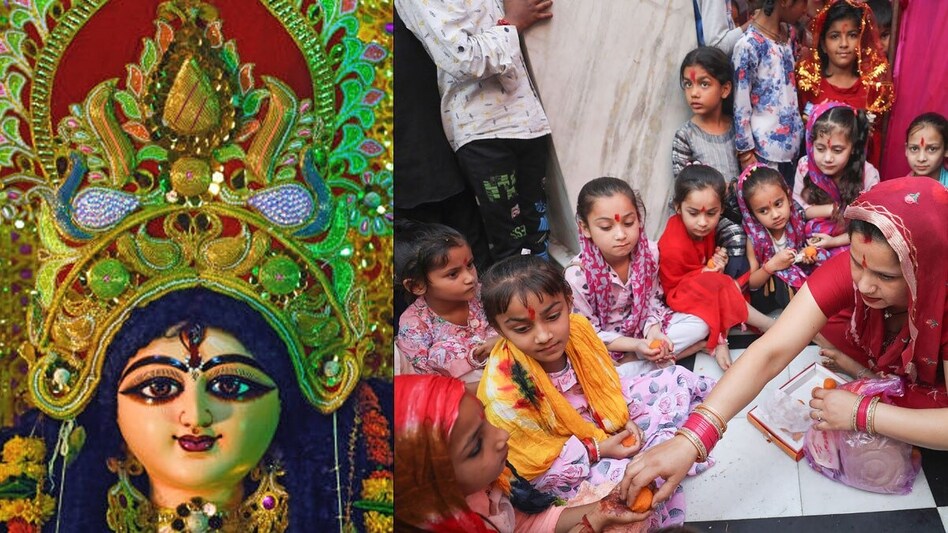
If your family tradition involves performing Kanya puja on Navami, you can do so on October 19 after 10:51 AM. This means that Kanya puja can be performed on both Mahaashtami and Mahanavami on October 19.

Some people attach special importance to the waxing date and may perform Mahanavami puja and Kanya puja on October 20 as well. However, on this day, Navami Tithi lasts only until 12:50 PM. Therefore, devotees performing rituals according to Navami on October 20 must complete them before 12:50 PM.

Those whose traditions require observing a fast on Mahanavami can do so on the day of Navami, which is October 19. On this day, one should worship Mother Durga and observe the fast all day. It is considered appropriate to conclude the fast on the following day, Vijayadashami.

This year, the time for Sandhi puja is scheduled for October 19, 2026, from 10:27 AM to 11:15 AM, totaling only 48 minutes. This period, called Sandhi Kaal, comprises the last 24 minutes of Ashtami and the first 24 minutes of Navami.

In sacred scriptures, Sandhi Kaal is considered extremely important. According to religious beliefs, it was at this time that Mother Durga took the form of Chamunda and destroyed the demons Chanda and Munda. For this reason, the form of Chamunda of Mother Durga is specially revered during Sandhi puja. It is believed that worshipping Mother Chamunda at this special time brings the goddess's grace. Devotees offer the goddess lotus flowers and other items for worship according to their faith.

Popular