
Winter Cleaning Tips: How to Reduce Blanket Volume and Save Space in the Home
Read more
Aaj Tak
www.aajtak.in

Winter Cleaning Tips: How to Reduce Blanket Volume and Save Space in the Home

As the winter season approaches, warm items such as blankets, throws, heaters, and winter boots begin to appear in homes. However, a common problem arises regarding where and how to store these bulky items to maintain space in the house and ensure easy retrieval when needed. In small apartments or closets, lack of space often leads to a cluttered and disorganized appearance of the home.

If you are concerned about managing space in your home this winter, there is no need to worry. Applying several simple, budget-friendly, and smart methods for organizing home space can help you significantly free up room in your dwelling. Below are simple ways to properly store all necessary winter items.

To begin the organization process, you need to prepare certain items: vacuum storage bags (space-saving bags), multi-level clothing hangers, under-bed storage boxes, transparent plastic fabric bags (so items are visible), and wall hooks or closet organizers.

Heavy blankets, throws, and bulky jackets take up a lot of space. Instead of leaving them lying around, they should be placed in vacuum bags, and the air should be removed using a vacuum cleaner or pump. This allows their size to be reduced by 70–80%, and they occupy minimal space in a closet or under-bed drawer.

Heavy sweaters and coats can completely fill an entire wardrobe. In such cases, it is recommended to use multi-level hangers, such as 5-in-1 types, instead of regular hangers. These allow five pieces of clothing to fit where one hanger would normally go, making the closet more spacious.

If there is insufficient space on the floor or in the closet, you can install organizers and hooks for clothing on the walls or behind doors. In these, small items such as socks, hats, gloves, and scarves can be neatly rolled and stored.

Even if you do not have a hydraulic bed, the bottom part of the bed (the space underneath) can be utilized. In this space, you can place wheeled boxes or fabric containers where you can put a heater, fan, or extra winter bedding.

Sweaters and jackets that you wear daily should be kept visible, either in the closet or in a basket. Heavy coats or evening sweaters, which are only needed occasionally, are better packed and stored on the top shelf of the closet.

In a corner of the room, you can place a small open coat rack or a vertical shoe stand. This allows wet or heavy coats, jackets, and boots to be placed immediately, preventing them from being scattered around the room.
Similar stories

Cooler Storage Guide for Winter: Five Steps to Maintain Functionality
Read more
www.aajtak.in

Cooler Storage Guide for Winter: Five Steps to Maintain Functionality

As the season changes and cold weather approaches, many owners stop using coolers. Often, after summer ends, devices are simply covered without proper cleaning. However, this treatment can significantly reduce the cooler's service life. Residual moisture, accumulated dust, dirt, and water lead to unpleasant odors, and upon next activation in the summer, problems with the motor and pump may arise.

If you want your cooler to operate flawlessly next season and look like new, you need to perform several preparatory tasks before packing it away. Furthermore, these tasks do not require significant financial investment. Below are five simple actions that should be taken before storing the cooler.

How to properly store a cooler in winter:

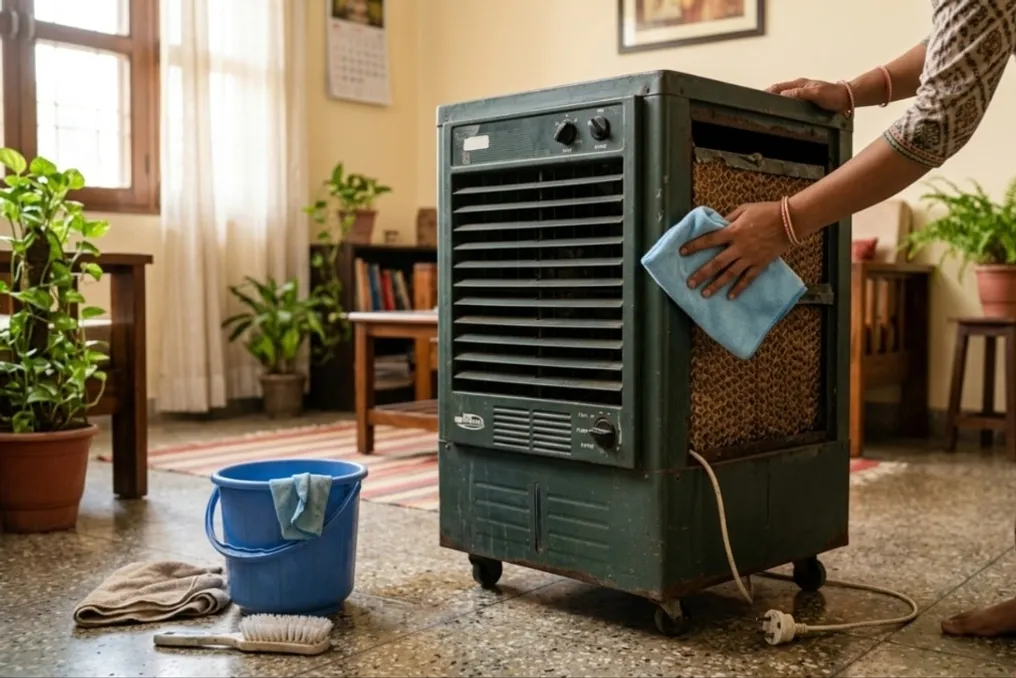
Firstly, it is crucial to completely empty the cooler's reservoir before packaging. Water remaining in the tank can accumulate dirt and a slimy film over time, which also contributes to odor development. You must first disconnect the cooler's power, and then completely remove all water from the reservoir. After this, the tank should be cleaned with a clean cloth or brush. If there are residues, you can use water and mild soap, but you must strictly ensure that water does not reach the electric motor and wires.

Attention must also be paid to cleaning the cooling panels. During operation in warm weather, these panels accumulate a lot of dust, soil, and other dirt. If the cooler is packed without cleaning, a musty smell may appear upon next use. If the panels are removable, they should be carefully removed and washed with a small amount of water, depending on their condition. If the panels are heavily soiled, damaged, or worn out, it is best to replace them. After washing, the panels must be completely dried.

The next step is to remove dust from the fan and external casing elements. If the cooler remains in this state for a long time, subsequent cleaning in the summer will require considerable effort. First, completely disconnect the cooler's electrical connection. Then, clean the outer surface and grilles with a dry cloth or a soft brush. When cleaning the fan blades, avoid excessive pressure so they do not deform. It is important to remember that water or cleaning agents should not be applied directly to electrical parts.

You should also check the motor and water pump. Before putting the cooler into storage, be sure to inspect the motor and pump. If the cooler made unusual noises, water did not rise properly, or the pump frequently shut off during the summer period, these issues cannot be ignored. Visible dirt accumulated while the unit was off should be cleaned, and you should ensure there are no blockages in the pipes.

The most common mistake when packing a cooler is covering it while it is damp. If moisture remains inside, it can trigger mold growth and unpleasant odors. Therefore, after all cleaning procedures, the reservoir, panels, and all other cleaned components must be allowed to dry. Only when the cooler is completely dry can it be covered with a protective cover that prevents dust ingress but does not trap moisture. The device should be stored in a dry and safe place, inaccessible to rain splashes or dampness.

Popular