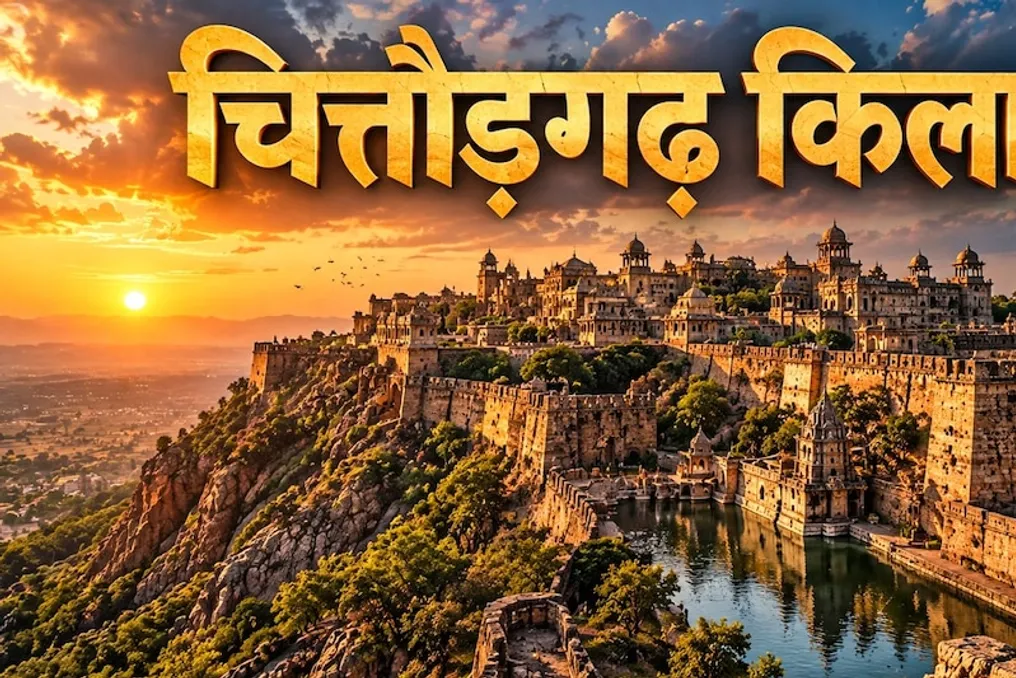
Rajasthan is known for its historical forts, palaces, and tales of valor. Chittorgarh Fort is also famous for its grandeur and rich history. This fort is associated with the stories of Princess Padmavati and King Rawal Ratan Singh. Interest in this fort increased after Sanjay Leela Bhansali's film 'Padmavat'. This massive fort, situated on a hill, encompasses the history of the Rajputs, magnificent architecture, and numerous historical monuments. Those interested in history or planning a trip to Rajasthan should include Chittorgarh Fort in their travel itinerary.
Chittorgarh is among the largest forts in India. It covers an area of about 700 acres and is built on a high hill. It is believed that its construction began around the 7th century during the Maurya rulers. To reach the fort, one must travel along a winding road featuring seven entry gates, which were historically used for security purposes.
In the past, the fort housed numerous water bodies, some of which remain today. These water bodies testify to the significant attention paid in ancient times to the collection and management of water resources within the fort.
The name Chittorgarh is linked to the story of Princess Padmavati or Padmini. According to folk legends, she was the wife of King Chittor Rawal Ratan Singh. It is said that the ruler of the Delhi Sultanate, Alauddin Khilji, attacked Chittor, and the desire to capture Princess Padmini was the cause of this conflict.
Nevertheless, there are disagreements among historians regarding the history of Princess Padmavati. The most well-known literary mention of her is found in Malik Muhammad Jayasi's work 'Padmavat', written around 1540. This work was created a considerable time after the reign of Alauddin Khilji, so many parts of this story are viewed as folklore rather than historical fact.
The Palace of Padmini is one of the main attractions in Chittorgarh Fort. It is a three-story white palace located near the lotus pond. It is believed that the current building is a later reconstruction of the old palace. According to legend, it was here that Alauddin Khilji saw the reflection of Princess Padmini in the water, after which he attacked Chittor to seize her. Although there are disagreements regarding the historical evidence of this story, the Palace of Padmini remains popular among tourists.
The fort features two famous towers: Vijay Stambh and Kirti Stambh. Vijay Stambh was erected by the Mewar Maharana Kumbha in the 15th century to commemorate his victory over the Malwa Sultan Mahmud Khilji. Its carving and structure make it a distinctive feature of the fort. Kirti Stambh, on the other hand, is a historical monument associated with Jain Hinduism. It is believed to have been built in the 12th century, and its delicate carving is worth noting.
During a visit to the fort, visitors can see places such as Rana Kumbha Mahal, the Temple of Peace, Kumbhashyam Temple, Kalika Mata Temple, and Gaumukh Kund. Rana Kumbha Mahal is among the main historical buildings of the fort. The Temple of Peace is associated with the poetess Mirabai and the god Krishna. Locals consider Gaumukh Kund sacred.
While walking through the fort, one can observe ancient temples, stone carvings, and echoes of Rajput-era architecture.
According to history, Chittorgarh Fort was subjected to three major attacks. The first attack was carried out by Alauddin Khilji in 1303. Later, in 1535, the fort was attacked by the Gujarat Sultan Bahadur Shah. The third major attack occurred in 1567–68 during the time of Mughal Emperor Akbar. During these attacks, events of Jauhar and Saka related to the fort are mentioned. During Jauhar, women collectively sacrificed themselves, while Saka meant that men went to war. These events form a tragic part of the fort's history.
How to get there: From Udaipur to Chittorgarh, it takes about two hours by car. Buses are also available from Jaipur, although the journey will take longer. Chittorgarh railway station connects to many cities across the country; before traveling, check train information and schedules on the IRCTC website. By car, the fort can be reached by hiring a taxi or car from Udaipur or surrounding towns.
Best time to visit and important tips: October to March is considered a good time to visit Chittorgarh Fort, as the weather is less hot and walking is easier during this period. In summer, it can be very hot and sunny, so it is recommended to bring water, a hat, and sunscreen. Before visiting the fort, be sure to check the entry times and the light and sound show schedule, as it may change depending on the weather. If you wish to better understand the fort's history and related stories, you can utilize the help of a local guide.