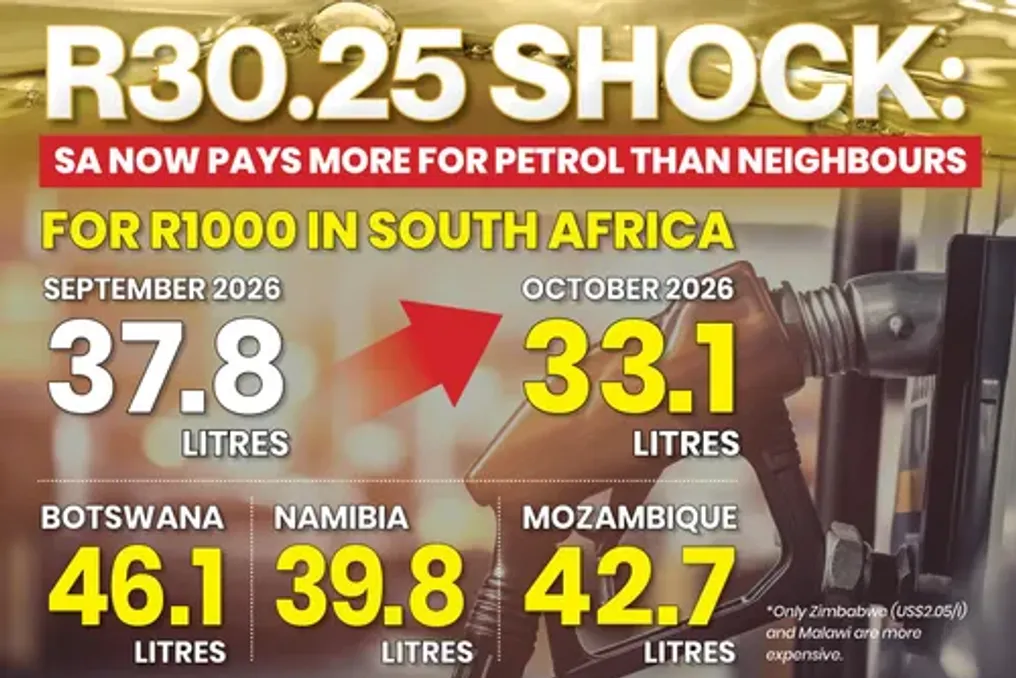
Fuel price hikes in South Africa create serious economic pressure on the population
Read more
IOL
iol.co.za

Fuel price hikes in South Africa create serious economic pressure on the population

Residents of South Africa are facing relentless economic pressure due to unprecedented increases in fuel prices, which affect all aspects of daily life. As pump prices rise monthly, a domino effect spreads to food, transport, and basic utilities, pushing household budgets to a critical state. This forces millions of people to make an impossible choice between survival and financial collapse amid an increasingly harsh economy.

Fuel prices have exceeded all historical records: in October 2026, AI-95 gasoline reached 30 rand per liter for the first time, putting pressure on families already struggling to cover expenses. Drivers are now paying approximately 9 rand per liter more than at the beginning of the year, and preliminary data from the Central Energy Fund (CEF) indicates a potentially even more significant increase in November.

Mamasole Maduna, a scientist driver transporting schoolchildren in Evaton, in the Vaal, spoke about the difficulties associated with rising fuel costs and its impact on her business profitability. Maduna and two colleagues often park near Evaton Mall to save fuel, avoiding unnecessary idling and trips between orders. The 40-year-old reported that her expenses have risen from 1200 rand per week to 1600 rand, and monthly fuel expenditures have increased from 4800 to over 6000 rand, not including groceries.

She also noted the rise in gas prices, which exacerbates her problems. Since electricity is expensive, she uses gas for cooking, and the need to buy it twice a month depletes her funds for groceries. Maduna added that due to the expected further rise in gasoline prices next month, she does not know how her family will survive, as it affects the cost of everything.

Furthermore, she fears increasing transport fares, worried about losing customers among families already facing financial difficulties. Her friend Gladys Mkhlambi said she often wants to go home after morning deliveries, but high fuel prices make this impossible, forcing her to wait until the afternoon school route, i.e., until 5:00 PM.

Mkhlambi also mentioned that she relies on gas for cooking, whose price recently rose from 300 to 330 rand, increasing her financial burden. Personal transport provider Thabang Ramaisa expressed doubt about his ability to cope with another rise in gasoline prices next month, asserting that only the wealthy will survive in this situation. He noted that during busy periods, he earns about 5000 rand per week, while in quiet weeks, income drops to 4000 rand, and current transport costs are around 600 rand, so any future increases will make the situation very tense.

He also suggested that the situation might force many drivers to abandon their vehicles, which is not a solution, as fares could increase at some point.

Maria Tekiso, an 81-year-old woman, stated that the situation has forced her to drive only in emergencies, as she can barely afford to fill up the tank. She relies entirely on her social grant, making life incredibly difficult against the backdrop of rising food prices. The organization United Against Hunger warned that the crisis of hunger and malnutrition will be exacerbated by the combination of the fierce El Niño phenomenon, which will bring very high temperatures and low rainfall, as well as by the rise in oil and fertilizer prices caused by Donald Trump's violent and illegal interference in the Middle East.

The organization also emphasized that there is still a lack of political or corporate will in the country to address hunger and malnutrition issues. Rene Munsami, chairman of the National Debt Counselling Association (NDCA), added that a regular salary is no longer enough for many South Africans, as the explosive growth in the cost of essential goods such as electricity, transport, and food outpaces the average wage growth of 4.1%.

Although the National Treasury transferred 10 billion rand as a reserve fund in accordance with the Public Finance Management Act, these funds remain unused because the government has not yet finalized the design or operational details of consumer intervention measures. Despite South Africa being a regional fuel supplier to countries like Lesotho and Botswana, local taxes and government regulation result in higher pump prices compared to neighbors.

As of October 2026, retail gasoline prices vary significantly across South Africa: Angola has prices ranging from 5.50 to 6.23 rand per liter, thanks to large domestic oil production and significant state subsidies; Botswana (18.76–21.17 rand per liter) is lower than in South Africa due to a different structure of road accident and fuel levies; Lesotho (18.55–21.50 rand per liter); Namibia (18.27–22.15 rand per liter).

When asked why the Basic Fuel Price (BFP) model allows fuel to be sold to SADC neighbors at a lower price than at South African pumps, Lerato Ntsoko from the Department of Mineral Resources and Energy acknowledged the questions, adding that the department would provide an answer in due course, but the department did not respond at the time of publication.

Regarding how a 10 billion rand intervention will directly lower pump prices, the National Treasury stated that the period is currently closed and it cannot comment on this issue. Energy expert David Walwein noted that the BFP formula has long been used because it fully links domestic fuel costs to the international price of refined oil imported from the Mediterranean or Singapore, ignoring the actual cost of local production. He added that Sasol benefits from high global oil prices but suffers when they are low, as its production costs are tied to stable local coal, while fuel is sold at international prices. Walwein also noted that the National Treasury benefits from strong Sasol performance through tax revenue and an indirect share through the Industrial Development Corporation (IDC).

Economist George Glynnos stated that instead of discussing the progressive nature of fiscal levies, which heavily burden both rich and poor, focus should be placed on the government's inability to control corruption, wasteful spending, and social expenditure.

Similar stories

South Africa's gas transition strategy for power generation faces price and currency risk challenges
Read more
iol.co.za

South Africa's gas transition strategy for power generation faces price and currency risk challenges

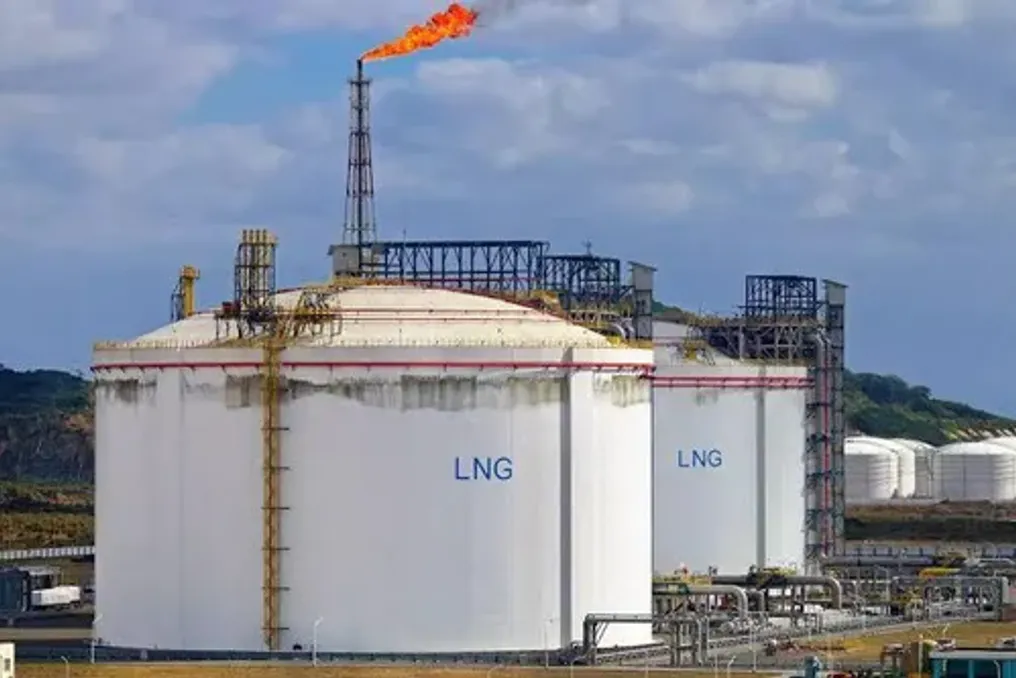
An integrated energy solution for South Africa, incorporating solar collectors, wind turbines, water desalination, green hydrogen, and liquefied natural gas (LNG) within the power generation cycle, was presented in an engineering study published by Fuel.

However, the analysis notes that the price of imported LNG, set in the study at approximately $7.37 per million British thermal units (BTU), was derived from an unrelated system analysis and has never been verified. The sensitivity analysis varies methane and electricity prices but does not account for the gas price or mention the South African Rand.

The author emphasizes that the problem is that in any model concerning South Africa's gas-to-power strategy, the final price of LNG in Rand terms is a variable determined by someone else.

On October 7, Minister of Electricity and Energy Kgosiyenso Ramokgopa announced the first determination of procurement under IRP 2025: plans include procuring 4,600 MW of energy storage systems and 5,000 MW of gas generation capacity, with no provision for building new wind or solar facilities. The IRP document mandates the use of 6,000 MW of gas by 2030.

Operating this fleet at a capacity factor of 51% will require approximately 3.4 million tonnes of LNG annually, which will be fully imported and priced in US dollars relative to Asian benchmarks. The planned target is set at $10 per million BTU. Furthermore, NERSA's MYPD6 determination approved a primary energy budget of 120.9 billion Rands for 2026, but it contains no provision regarding LNG.

Industry analysis in the gas sector raises valid questions about the quantity, delivery points, and cost of gas for buyers. However, it is critically important to consider how price spikes affect tariffs, inflation, and the Rand exchange rate. Currently, peer-reviewed engineering literature models South African LNG using borrowed prices and excludes it from stress tests.

The author presents calculations based on their own working paper, which covers the full 6,000 MW capacity under the IRP, using market prices. At a base level of $10 and an exchange rate of 17.50 Rands per dollar, fuel costs amount to about 31 billion Rands annually. To cover these costs through tariffs, an increase of approximately 6.6% would be required, and this is before accounting for any price spike and with a budget that lacks a corresponding expense item.

At a price of $20, corresponding to late 2021 European prices, and a Rand exchange rate of 18.50, the fuel bill rises to 65.8 billion Rands, requiring a tariff increase of approximately 14%. At a price of $40, as in the first half of 2022, and a Rand exchange rate of 21, the fuel bill reaches 149 billion Rands, exceeding the entire approved NERSA primary energy budget. This implies a tariff increase of nearly 32%, approaching the scale of the 2009 interim determination and subsequent shocks.

These figures represent not forecasts, but prices already set by the market. Most of the 5,000 MW currently determined forms the basis of this exposure. The situation is exacerbated by the Rand exchange rate: LNG is paid for in Rands but priced in dollars, and there are no guarantees of maintaining the exchange rate amid rising gas prices. Since electricity is fundamental to most processes, a tariff shock translates into an inflationary shock, and subsequently into a Reserve Bank problem.

Moreover, the contracts themselves create long-term obligations. Gas plants of this scale become anchor customers necessary for LNG import terminals to attract financing. Contracts sufficient to finance a terminal typically run for 15–20 years. A contract signed during the construction period from 2026 to 2030 will remain binding in 2031 when the Electricity Regulation Amendment Act begins transitioning pricing to market conditions. Thus, exposure to dollar-indexed fuel costs is fixed, surviving the current regulatory mechanism intended to absorb it.

The Department of Electricity and Energy acknowledges this weakness, citing 'uncertain path of gas generation development' among institutional shortcomings in its Strategic Plan for 2025–2030. The plan mentions 'contract-for-difference' mechanisms that could 'protect consumers from fuel/currency price spikes,' but the approval of these mechanisms remains a stated next step rather than an implemented safeguard.

The author argues that this is not against gas, as grids will require flexible capacity as coal power stations are phased out. The issue lies in committing to gas obligations without possessing the data that determines its availability. To bridge this gap, three steps are proposed: firstly, no project under this determination should finalize financial closure without publishing an LNG price and exchange rate stress test based on actual market prices; secondly, consumer protection must extend beyond existing programs for low-income households, as LNG price spikes affect all households and businesses; and thirdly, NERSA must require that any applications reflect the impact of LNG costs on tariffs so that the Reserve Bank is not the last to know.

Financial problems negatively affect the health, work, and personal lives of South Africans
Read more
iol.co.za

Financial problems negatively affect the health, work, and personal lives of South Africans

Financial pressure affects not only the ability to cover bills; for many residents of South Africa, worry about debt, job stability, investments, and pensions also worsens their mental state and complicates solving financial difficulties.

Kim Potgiter, Managing Director of Chartered Wealth Solutions, notes that uncertainty regarding money can quickly prompt people to envision the worst-case scenarios, constantly replaying the same fears without approaching a solution. According to her, without receiving new information or taking action, the situation does not change, and anxiety persists.

The scale of financial stress is reflected in the DebtBusters Money-Stress Tracker report for 2026, which surveyed nearly 18,000 subscribers who had not received debt counseling. The results showed that 72% of respondents experienced financial stress, an increase compared to the previous year. Among those affected, 75% reported that it affects their health, 76%—their work life, and 92%—their family life.

The pressure related to debt repayment has also intensified. More than half of those surveyed, specifically 53%, now spend more than 40% of their net income on debt payments, compared to 48% last year. Particular tension is observed among individuals aged 35–44, where three out of four spend more than 30% of their after-tax income on debt—a level described as unsustainable.

When worry becomes difficult to manage

Psychologist Dr. Andrea Kellerman, who analyzed the psychological consequences of the DebtBusters findings, states that prolonged financial pressure can weaken people's ability to make decisions and find ways to improve their situation. She notes that accumulated stress over the past five years has depleted the capacity to make more balanced decisions and think outside the box.

The proportion of DebtBusters respondents who felt stuck increased from 29% to 34%. Kellerman believes that constant stress can cause people to feel hopeless and helpless, potentially leading them to withdraw or avoid solving their problems. This can manifest as postponing decisions, unopened statements, delaying difficult conversations, or refusing opportunities that could help them.

Financial strain does not always mean a person misses payments or falls into arrears. Brett Kaminski, Director of Atlas Finance, says that people can make all payments on time while still spending a lot of time worrying about the next bill or how unexpected expenses will affect the household budget. He adds that financial stress can accumulate unnoticed, and even a small financial setback can seem overwhelming when there is virtually no financial cushion.

Where does the worry come from

Potgiter explains that people's attitudes toward money are often shaped by experiences and beliefs formed long before they started managing their own finances. In childhood, people absorb messages about whether money is abundance or scarcity, whether it causes tension, whether it is discussed openly or avoided, and how family members and those around them save, spend, and feel about it.

When these experiences are rooted in fear, scarcity, or guilt, they can influence financial decisions and a person's sense of security and well-being. Potgiter emphasizes that understanding the sources of this financial anxiety helps separate what is real in the current financial situation from what a person might be carrying from the past. She sees this particularly among people approaching retirement, who may worry for years about having enough funds without defining their actual financial standing.

In some cases, the numbers indicate the need for changes, while in others, people discover they are in a stronger financial position than they assumed. Potgiter concludes that 'knowing is better than guessing.' Although a financial plan cannot completely eliminate uncertainty, it can replace some assumptions and worst-case scenarios with facts, providing people with a concrete basis for action.

Regaining control

Kaminski argues that fighting financial stress does not mean immediately solving all problems. An important first step is early recognition of warning signs. He advises starting with a simple analysis of how much money comes in, how much goes out, and what payments are due before the next paycheck. Furthermore, budgeting can ease the mental burden of constantly calculating what is affordable. Reminders about debits, repayments, and other financial deadlines can reduce administrative pressure on people.

He also recommends that consumers who are finding it increasingly difficult to manage their budget seek advice from a creditor or request appropriate financial consultation before they fall into arrears. Potgiter also advises taking small, practical steps when financial problems seem insurmountable. Such steps may include opening a long-ignored statement, analyzing expenses, increasing investment contributions, or asking for help.

Cost of living crisis forces South African shoppers to rethink spending
Read more
iol.co.za

Cost of living crisis forces South African shoppers to rethink spending

Amid the cost of living crisis, residents of South Africa are becoming more meticulous about every purchase in grocery stores, as rising food prices, debt repayments, and other household expenses place significant pressure on already strained budgets.

Consumers in South Africa are exercising greater caution in spending, forced to analyze everything from food prices to debt repayment. For many shoppers, the familiar brand on the supermarket shelf is no longer an automatic choice. The popularity of private label goods is growing, as consumers compare prices, question the justification for premium brand prices, and seek ways to stretch limited family income.

Neil Ruets, CEO of Debt Rescue, noted that this reflects a broader shift in household financial management. He stated: 'At Debt Rescue, we see this as part of a wider change in how households manage money: buyers are paying much closer attention to what they are buying, what they truly need, and whether the price they are paying can be justified within their monthly budget.'

The increasing demand for private label goods is one sign of this shift. According to NielsenIQ data cited in a recent industry analysis, private label sales in South Africa reached 53.5 billion rand in the first half of 2026. Ruets added that from a consumer finance perspective, this trend indicates that purchasing decisions are becoming less automatic.

He emphasized: 'Loyalty to established brands can still matter, but when household finances are constrained, consumers have a stronger financial incentive to compare alternatives and decide if the cost of a particular product remains affordable.'

Households under growing pressure

This shift occurs against a backdrop of a difficult economic situation characterized by inflationary pressure, high interest rates, weak economic growth, and persistently high unemployment, which continues to negatively affect household finances. The latest PMBEJD Household Affordability Index revealed the pressure consumers are facing. In September, the average cost of a food basket was 5488.06 rand, which is 108.64 rand, or 2% year-on-year, higher.

Of the 44 main products tracked, 21 increased their price during the month. For families already incurring costs for housing, transport, electricity, insurance, debt repayment, and food on the same income level, even small savings can become substantial over a month. Thus, choosing the retailer's own product instead of the familiar branded alternative is one way consumers are trying to control daily spending.

However, Ruets cautioned against interpreting this shift as merely evidence of increased consumer financial discipline. He warned: 'It is important to understand that this does not mean consumers will automatically choose the cheapest item in their entire shopping basket.' Households often save in areas where they are comfortable, continuing to spend on items they deem important. Ruets concluded: 'The level of consideration put into these choices has changed.'

Private label gains ground

Tony Man Gavin, Managing Director of Encore, a wholly-owned private label business of SPAR South Africa, reported that shoppers are increasingly focusing on value rather than just price. Man Gavin stated: 'South African shoppers are not just becoming more price-sensitive. They are becoming more value-sensitive.'

NielsenIQ data showed that private label sales grew by 1.9% year-on-year in the first half of 2026, highlighting the growing role of retailer brands in food baskets. Ruets noted that this trend is important because it demonstrates that consumers are actively re-evaluating established purchasing habits. He added: 'There is something encouraging about consumers actively comparing prices and looking for ways to cut unnecessary expenses. However, we must also be careful not to interpret all this behavior solely as improved purchasing discipline.'

For many households, the heightened focus on spending is due to necessity. Ruets noted that Debt Rescue's concern was particularly focused on families who had already significantly cut their spending. He explained: 'There comes a point where switching brands, buying on sale, and cutting non-essential expenses can no longer compensate for the constant gap between household income and monthly financial obligations.'

'When a consumer has already significantly reduced spending and still cannot comfortably cover basic necessities and debt repayment, the problem goes beyond finding extra savings in the supermarket. It may indicate deeper financial difficulties,' Ruets continued. For such households, the rise in private label sales offers only limited relief from broader financial pressure. Nevertheless, Ruets believes this trend provides valuable insight into the decisions being made by South African households striving to stay within increasingly tight budgets.

He concluded by saying: 'Consumers are becoming more selective and more willing to reconsider established purchasing habits while trying to keep essential expenses within increasingly limited budgets.' The problem for households is that there is a finite amount of expenses that can be cut. Thus, as consumers become more strategic in their purchases, the growing reliance on cheaper alternatives is not just a story of changing consumer preferences, but also a reflection of the financial pressure faced by millions of South African households.

Popular