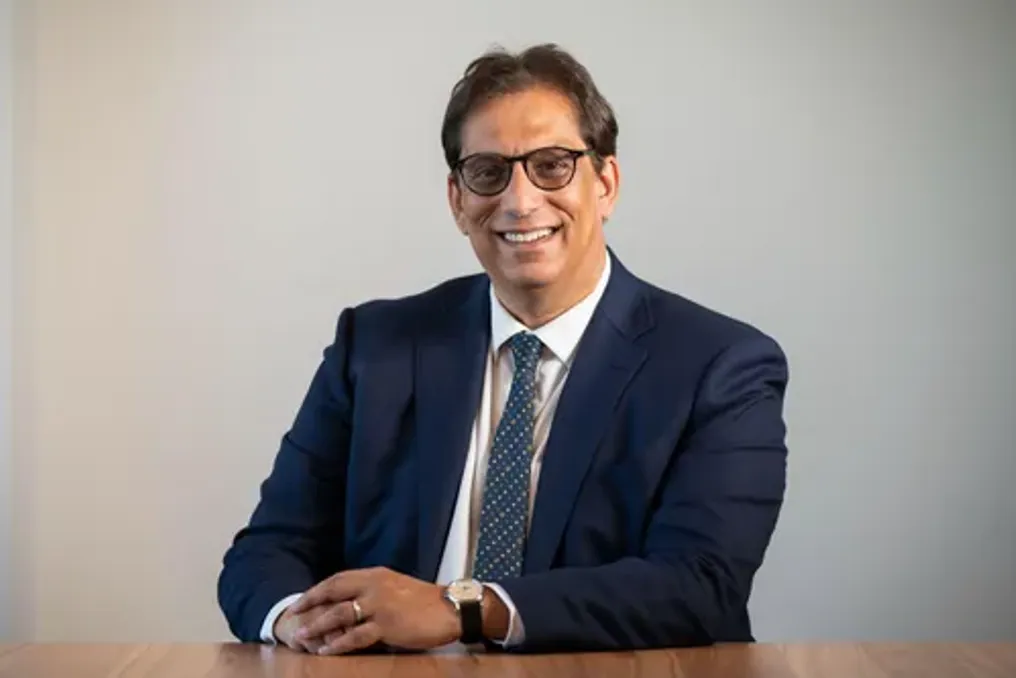
Dr. Iqbal Surve delivered the keynote speech at the PR Worx 25th Anniversary event. He congratulated PR Worx on its quarter-century achievement in helping organizations build relationships and protect reputations. Surve noted that during the transformation of platforms and the acceleration of development pace, artificial intelligence is fundamentally changing the foundations of all market participants' activities.
Despite technological changes, the fundamental question remains unchanged: how to establish the truth, share it responsibly, and earn the audience's trust? This question unites the fields of public relations, business, and journalism. Surve formulated his answer in three theses: technology is a tool, AI is a tool, and journalism is an art.
He emphasized that journalism is about storytelling, not entertainment; it is a disciplined presentation of facts: when, by whom, and in what context an event occurred. The absence of any of these elements turns a story into a rumor. Stories have always been told through new technologies—from cinema to radio, television, and the internet.
Radio and television brought news into homes, but the audience's trust was directed not at the technology itself, but at the people behind it—the editors who determined the credibility of the material. Technology acted as a disruptor to the status quo, but journalism adapted without disappearing. However, today the accessibility of knowledge is unprecedented, and accessibility itself does not equal wisdom.
When people needed to know the truth, they sought a reliable name—a publisher, broadcaster, or author. Nobel laureate J. M. Kozci discusses the need to strive for 'the truth, the whole truth, and nothing but the truth.' The responsibility of journalists today is not just to report isolated facts, but to establish the truth, provide context, and resist the temptation to omit plot complexities, which is critically important in the age of AI.
Artificial intelligence has significant advantages: it can transcribe interviews, translate languages, analyze thousands of documents, and find patterns inaccessible to humans. These capabilities free reporters to perform tasks unique to them.
Nevertheless, AI can also fabricate images, invent quotes, and give confident but erroneous answers. It can detect a pattern without understanding its cause and report 'what,' never asking whether it should be published. A shift has occurred on the internet where much of the content is generated not by humans, but by other AIs and bots, placing us dependent on algorithms based on the most probable or frequently occurring words.
Jensen Huang, CEO of NVIDIA, stated that we need to reach a point where the answer received is 'substantially reliable,' noting that this is still several years away. He himself asks AI, 'Are you sure this is the best answer you can provide?'—which is a journalist's question.
Katrina Weiner, editor-in-chief of The Guardian, argues that 'AI cannot hold people accountable' and cannot conduct on-the-ground reporting. Arthur Gregg Sulzberger, publisher of The New York Times, warned global news outlets that AI developers 'are not providing the public access to trustworthy news and information.'
Technology specialists call for questioning the machine, while editors insist that the machine will not replace their work. Surve believes they are describing the same reality: the tool amplifies, and the art determines what is worth amplifying. The tool executes commands, whereas the art brings perspective. A good journalist knows what question to ask, what silence is meaningful, and whose voice is missing from the discussion. AI can offer its perspective based on everything written, but it has never stood in the water studying a flood.
The situation is not about a confrontation between AI and journalism and PR; it is a scenario where all three elements interact. AI fundamentally changes processes and expands reporting capabilities at both a deeper and a faster level.
Trust in journalism does not mean the absence of errors. It implies fact-checking, separating opinion from fact, fair treatment of people, and open correction of mistakes. A difficult question must be asked: can we trust journalists today? In some audiences, the machine's answer is received more readily than the author's signature. It is important to understand the reason: sometimes it is related to uncorrected errors, presenting opinion as fact, or the distance of editorial offices from the communities they serve.
The machine has no editor and no byline, but a journalist can explain the process of story formation, and the publication can be held accountable. These elements are not relics of the past, but the foundation of the possibility of trust.
Trust is not created; it is earned through actions. Therefore, a foundation must be laid: ethics and values must be aligned before technology enters the newsroom, not after damage is done.
In November 2023, Reporters Without Borders and sixteen partners published the Paris Charter on AI and Journalism—the first global ethical standard. It requires that ethics guide the choice of technologies, that human will remains central to editorial decisions, that media be transparent in their use of AI, and that journalism participate in AI governance. Maria Ressa warns that innovations themselves do not mean progress; they must be guided by an ethical approach. UNESCO's recommendations on AI ethics are similar, emphasizing human rights, transparency, and human oversight.
Work is being done within their own media companies to adhere to these principles: a specific person is responsible for any published material, regardless of AI involvement. Verification is conducted before publication, and the audience is informed about AI's influence on the content. Sources, personal data, and unpublished works are protected, and algorithms are not allowed the role of an invisible editor narrowing topics, languages, and voices.
A charter sitting in a drawer is useless. It must manifest in daily decisions: in editing, headline selection, and error correction.
However, every charter implies the existence of resources—both technological and journalistic. Original journalistic work is expensive: reporters spend months verifying documents in courts and communities. An AI system can summarize this work in seconds. If the publication that funded the investigation is not recognized or paid, who will fund the next investigation?
The International News Media Association (INMA) raises this issue. Pradip Ghairola from The Hindu noted at the INMA webinar that without a constant flow of new, original, human content, AI models will degrade, meaning AI needs journalism for its existence. This gives publishers leverage that was previously absent, and they must use it to ensure fair compensation.
True reportage and investigative journalism will be the most valuable asset for any company in the future. The difference between what stands out and what is lost in the age of AI 'information junk' will lie in intention and thought.
For Africa, the stakes are higher. If local newsrooms cannot afford to cover African stories, societies will be described by outsiders, in other languages, and based on different priorities. African journalism is a public infrastructure that must be funded according to its importance.
Africa occupies a unique position: it lacks the constraints inherent in the US and Europe due to ecosystem saturation and established distributors. In Africa, no one shapes the narrative, and therefore African history is lost. It is necessary to ensure that the next generation has voices advocating for the African narrative and to achieve continental cooperation to create a single source of truth about a population of over a billion people.
This brings us back to the current situation: clients, investors, and future employees increasingly ask AI systems if they can trust your organization. There is a temptation to optimize answers to receive a positive rating. Visibility can be bought, but trust must be earned. The system's response will be built on a public record: on what journalists reported, what regulators submitted, what you said, and what you did.
If someone is dishonest, technology will not save them; it will only spread dishonesty faster and further. AI can help create a digital footprint, form a profile, and ensure information consistency. However, there will always be a human leading the narrative. Now more than ever, it is important to build a real connection through brand authority, whether through social media or writing sincere articles on LinkedIn.
An African idiom says: 'the best player gets more hits.' This reminds us that those who achieve the highest results face the greatest pressure and criticism. In journalism, PR, and business, success entails responsibility and the expectation of maintaining the highest standards. The task is not to avoid hits, but to maintain discipline, integrity, and commitment to the cause, even under maximum pressure.
Nelson Mandela understood what was at stake. He said: 'A critical, independent, and investigative press is the lifeblood of any democracy.' He also insisted that the press must have economic power to resist official flattery and sufficient independence from vested interests to be bold and curious without fear or favoritism. He demanded independence, resources, and courage.