The History of Worshiping Maa Mahagauri: How Parvati Received the Name Mahagauri During Sharadiya Navaratri
Read more
Aaj Tak
www.aajtak.in

The History of Worshiping Maa Mahagauri: How Parvati Received the Name Mahagauri During Sharadiya Navaratri

During the eighth day of Sharadiya Navaratri, worship is performed to the eighth form of Goddess Durga, Maa Mahagauri. This day is also known as Durga Ashtami or Mahashtami. This year, because the Saptami falls on two days, Durga Ashtami will be celebrated on October 19th on Monday. According to beliefs, worshipping Maa Mahagauri helps rid one of suffering and brings happiness and prosperity to the home. Furthermore, reading this story is considered a highly auspicious act.

The History of Worshipping Maa Mahagauri

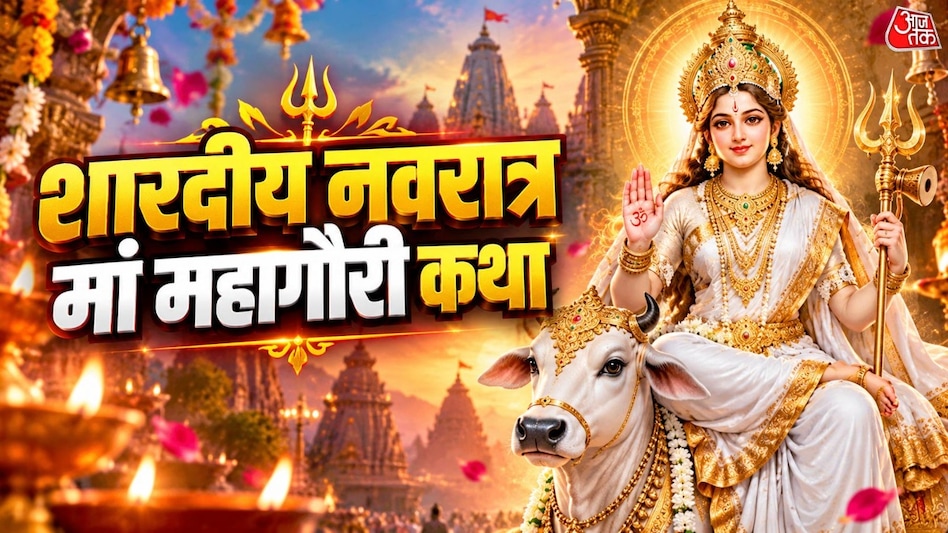
Maa Mahagauri is revered as a deity with an exceptionally calm, gentle, and divine appearance. Her attire and ornaments are predominantly white, which is why she is also called Shwetambardhara. The goddess has four arms; her vehicle is the bull, so she is also known as Vrisharuda. In one right hand, she holds the Abhaya mudra, and in the other, the Trishula. In her left hands, she displays the Damaru and the Vara mudra.

According to ancient legends, Maa Mahagauri performed severe ascetic worship for a long time to attain Lord Shiva as her husband. Due to this asceticism, her body took on a dark hue. When Lord Shiva was moved by her devotion, he cleansed her body with water from the Ganges, after which her color became extremely radiant. Since then, she has been known as Mahagauri.

The First Story of Worshipping Maa Mahagauri

According to mythological history, Goddess Parvati undertook severe austerities striving to make Lord Shiva her husband. She remained in meditation for a long time. Her austerity was so strict that the color of her body changed. After a significant period, Lord Shiva searched for Goddess Parvati and found her. There, he saw her wonderful and radiant appearance. Her color shone like moonlight and the white flower Kund. Seeing this appearance, Lord Shiva rejoiced. According to religious beliefs, it was after this that Parvati came to be known as Mahagauri.

The Second Story of Worshipping Maa Mahagauri

Another common story states that Parvati practiced austerities for many years to attain Lord Shiva. Due to prolonged meditation under the sun, rain, and difficult circumstances, her body darkened. After completing the austerities, Lord Shiva accepted her and washed her body with water from the Ganges. After this, her color became light again. Following this incident, the goddess's name became Gauri, and her divine appearance was named Mahagauri.
Similar stories

Day 7 of Sharadiya Navratri 2026: How to Worship Goddess Kalratri, What Offerings and Mantras to Use
Read more
www.aajtak.in

Day 7 of Sharadiya Navratri 2026: How to Worship Goddess Kalratri, What Offerings and Mantras to Use

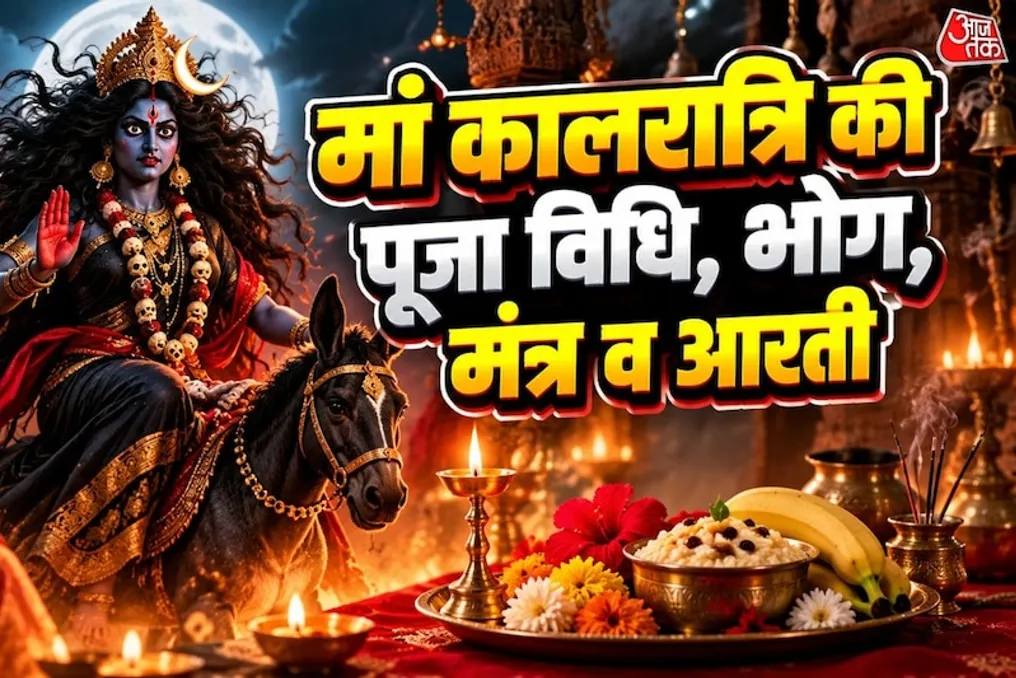
Today is the seventh day of Sharadiya Navratri 2026, dedicated to worshipping the seventh aspect of Goddess Durga—Goddess Kalratri. According to religious beliefs, Kalratri destroys evil forces and frees her devotees from fear. Despite her fearsome appearance, she brings prosperity to her followers. Kalratri's vehicle is a donkey. It is believed that observing rituals in her worship helps rid one of life's adversities. This article presents information on methods of worshipping Kalratri, her favorite offerings, auspicious colors, mantras, and Aarti.

On the seventh day of Navratri, to worship Kalratri, one should take a bath early in the morning and thoroughly cleanse the ritual area. A lamp must be lit before the image or statue of the goddess, and then roli, akshat, flowers, and water should be offered to her. During the worship, one should meditate on the goddess and repeat her mantra. After this, an offering of palm sugar (gurd) should be made, and her Aarti should be sincerely performed. Upon completion of the ritual, the offered prasad should be shared among family members.

On the seventh day of Navratri, it is considered auspicious to wear grey or ash-colored clothing. This shade symbolizes patience and balance. It is believed that it inspires maintaining composure even in difficult times, so devotees may wear grey clothes while worshipping Kalratri.

When worshipping Kalratri, it is favorable to offer palm sugar. On this day, sweets made from palm sugar can also be offered as prasad. Religious beliefs state that sincere devotion to the goddess brings blessings to her devotees.

Om Devi Kalratrye Namah.

Kalratri Jai-Jai-Mahakali.

Savior from the jaws of time,
Your destructive name.
Your incarnation Mahachandi.
All earth and sky are your domain.
You are Mahakali.
She who holds the sword and the bowl.
She who tastes the blood of villains.
Your place is Kolkata.
I see your form everywhere.
All gods and people
sing praises to you.
Krovast and Annapurna.
If you are merciful, no sorrow will afflict.
No anxiety, illness, or heavy calamity.
Misfortune will never fall upon you.
Mahakali, the savior.
Say this with love, O devotee.
Kalratri Ma, glory to you.

Goddess Katyayani will be worshipped during Sharadiya Navratri 2026; rituals, mantras, and aarti described
Read more
www.aajtak.in

Goddess Katyayani will be worshipped during Sharadiya Navratri 2026; rituals, mantras, and aarti described

During the Sharadiya Navratri 2026 period, a ritual is established for worshipping the sixth aspect of Goddess Durga, known as Maa Katyayani. The name Goddess Katyayani was received because she is the daughter of Maharshi Katyayana. There is a belief that by sincerely observing the rituals and rules of worshiping Maa Katyayani on this day, all misfortunes of the devotees disappear, and they are granted happiness, peace, and prosperity.

Who is Maa Katyayani?

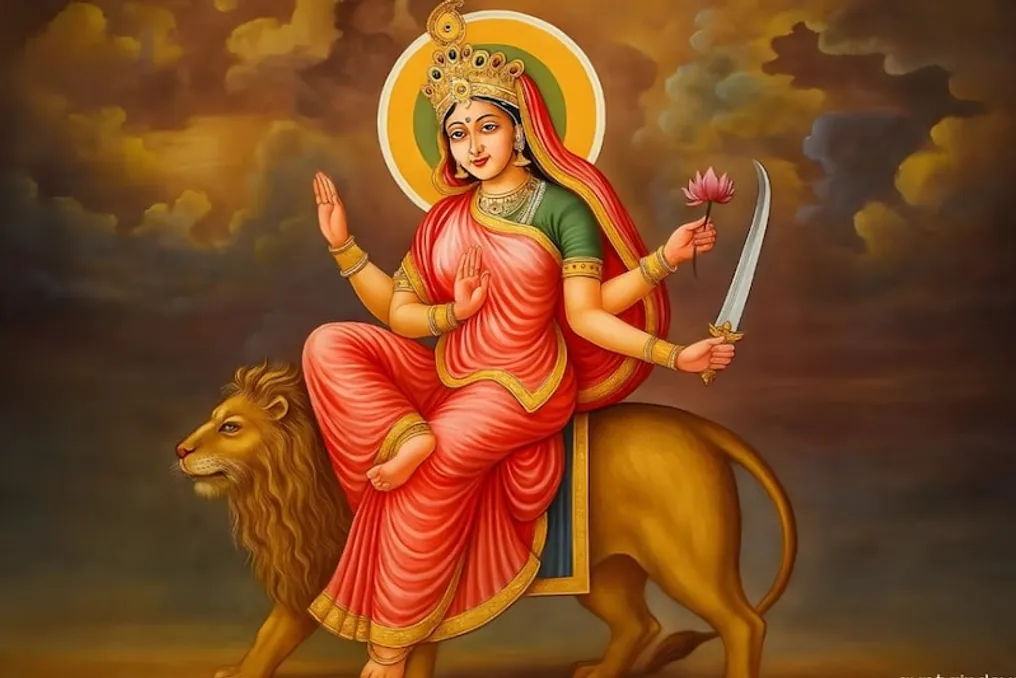
Maa Katyayani has four arms, adorned with weapons and lotuses. Her vehicle is a lion. She is considered the patroness of the Brahmadal region. According to legends, shepherds from Braad used the worship of Maa Katyayani in the hope of finding Lord Krishna as a spouse. This is why the worship of Maa Katyayani is especially valued for fulfilling wishes related to marriage.

Devotees believe that through her grace, obstacles in marriage can be overcome, and the desire to meet a desired life partner can be fulfilled. In astrological representations, Maa Katyayani is also associated with the planet Jupiter.

Ritual of Worshipping Maa Katyayani

First, one should meditate on the goddess while holding flowers. Then, worship is performed using the Panchopachara method, offering red flowers, akshat, kumkum, and sindoor to the goddess. During the worship of Maa Katyayani, great importance is given to yellow items; therefore, yellow fruits and sweet dishes should be offered to her. To conclude the ritual, a lamp made of ghee or sandalwood is lit before the goddess, after which aarti is recited. After this, the mantras of Maa Katyayani should be repeated with reverence.

Mantra of Maa Katyayani

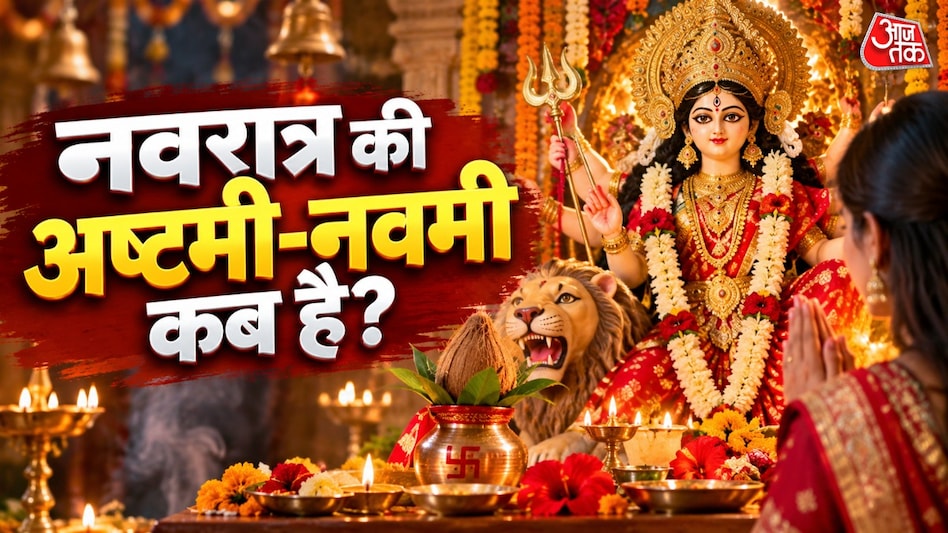
Navaratri Calendar 2026: Dates of Ashtami and Navami, and the Nine Days of the Festival
Read more
www.aajtak.in

Navaratri Calendar 2026: Dates of Ashtami and Navami, and the Nine Days of the Festival

The nine days of Navaratri are considered the best time for worship, spiritual practice, and self-improvement, as any wish can be fulfilled during this period. Each day of Navaratri is dedicated to different powers; understanding these powers and making corresponding wishes guarantees their fulfillment. Furthermore, during these days, problems related to the nine planets (Navagraha) can be eliminated.

This year, Navaratri will begin on October 11 and end on October 19.

The first form of Navadurga is associated with the power of health. On this day, the image of Shailputri is revered, and worship of the Mother should be performed with red colors. It is also recommended to offer her pure ghee from cow's milk.

Worship of the first form will take place on October 11.

The second form of Navadurga embodies the flow of knowledge and detachment. On this day, the image of Brahmacharini is worshipped, and worship of the Mother should be conducted with white flowers, offering her sugar sweets.

Worship of the second form is scheduled for October 12.

The third day of Navaratri brings the strength of courage and self-confidence. On this day, the image of Chandraghanta is revered, and worship of the Mother should be carried out with red colors, offering her milk or milk-based sweets.

Worship of the third form will take place on October 13.

The fourth form of Navaratri grants the power of intellect, speech, and wit. On this day, the image of Kushmanda is worshipped, and worship of the Mother should be done with green items, offering her Malpua.

Worship of the fourth form will take place on October 14.

The fifth form of Navadurga helps resolve issues related to progeny. On this day, the image of Skandamata is revered, and worship of the Mother should be conducted with yellow colors, offering her bananas.

Worship of the fifth form will take place on October 15.

The sixth form of Navadurga brings the blessing of a speedy marriage. On this day, the image of Katyayani is worshipped, and worship of the Mother should also be performed with yellow colors, offering her honey.

Worship of the sixth form will take place on October 16.

The seventh form of Navadurga destroys diseases, sorrow, and obstacles, and also removes negative energy and tantra. On this day, the image of Kalaratri is revered, and worship of the Mother should be performed with aromas and incense, offering her ginger.

Worship of the seventh form will take place on October 17.

The eighth form of Navadurga grants the blessing of a desired marriage and a happy married life. On this day, the image of Mahagauri is revered, and worship of the Mother should be conducted with white flowers, offering her a coconut.

Worship of the eighth form will take place on October 18, on which day the worship of girls (Kanya Pujan) will also be held.

The ninth form of Navadurga can bring liberation, moksha, and all kinds of achievements. On this day, the image of Siddhidatri is revered, and worship of the Mother should be performed with flowers of various colors, offering her black sesame seeds.

Worship of the ninth form will take place on October 19, on which day the worship of girls (Mahanavmi) will also be held.

Popular