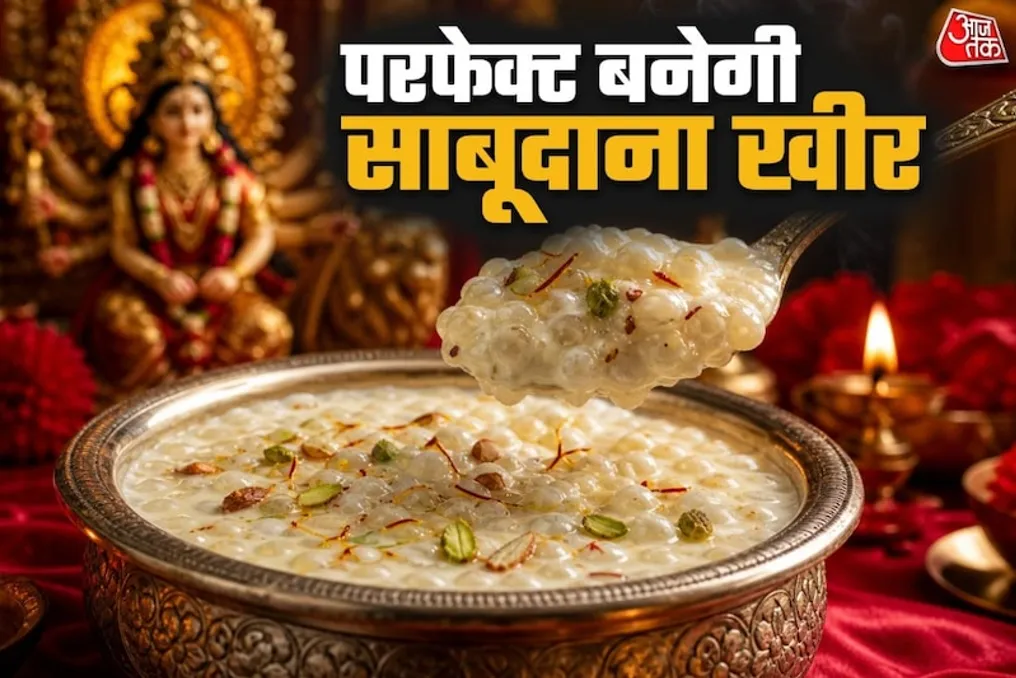
How to make perfect Sabudana Kheer for Ashtami fast
Read more
Aaj Tak
www.aajtak.in

How to make perfect Sabudana Kheer for Ashtami fast

During the eighth day of Navratri, worship of Mother Mahagauri and performing Kunja Puja holds special significance. Various offerings are prepared for the goddess during this sacred time. If you wish to prepare a pure, sattvic, and delicious offering at home instead of store-bought mixed sweets, Sabudana Kheer is the best choice.

People often complain that Sabudana Kheer sticks to the bottom of the pan, the milk curdles, or it turns out too thick and lumpy. However, by using the correct sequence for soaking the sabudana and boiling it in milk, along with a special technique, your kheer will turn out creamy, thick, and with pearls-like, granular grains. The simplest recipe is presented below.

You will need:

  • 1/2 cup of sabudana (medium size)
  • 1 liter of whole milk
  • 1/2 cup of sugar or mishri (to taste)
  • 2 tablespoons of pure ghee
  • 1/2 teaspoon of green cardamom powder
  • 10-12 cashews, almonds, and makhana (finely chopped)
  • 1 tablespoon of chirunji and makhana
  • 8-10 strands of saffron (soaked in 2 tablespoons of warm milk)

Quick preparation method:

Secret trick for soaking sabudana (so it doesn't stick)

First, thoroughly wash the sabudana with water 2-3 times to remove all starch. Then, soak the sabudana only in enough water to cover it for 2-3 hours. After soaking, the grains will become soft and loose.

Maintaining milk boiling

In a heavy-bottomed pot (or non-stick pan), pour 1 liter of whole milk and add 1 teaspoon of water to bring it to a boil. (Adding water prevents the milk from burning at the bottom).

Roasting nuts (the main technique)

In another pan, heat 1 tablespoon of ghee. Roast the chopped cashews, almonds, and makhana until lightly golden, then remove them.

Technique to prevent milk from curdling

When the milk boils well, reduce the heat and add the soaked sabudana. Keep the heat on low-medium and stir constantly for 6-8 minutes. (As the sabudana cooks, its grains will become lighter and start floating on the surface, taking on a translucent appearance).

Adding saffron and sugar

When the sabudana becomes translucent and the milk starts to thicken, add the saffron milk, roasted nuts, and cardamom powder. Then add the sugar or mishri. (Sugar should always be added after the sabudana is cooked; adding it earlier slows down the cooking process of the sabudana).

Serving

After the sugar dissolves, cook for another 2 minutes on low heat, then turn off the gas. Your perfectly granular, creamy, and juicy Sabudana Kheer is ready! Offer it to Mata Rani as an offering and consume it during the Ashtami fast.

Similar stories

MADO Restaurant Opens on Florida Road in Durban, Offering Turkish Flavors
Read more
iol.co.za

MADO Restaurant Opens on Florida Road in Durban, Offering Turkish Flavors

Restaurant MADO has brought the taste of Turkey to the residents of Durban, offering dishes ranging from traditional Turkish ice cream and warm kunefe to seafood and leisurely breakfasts, while prioritizing family-style hospitality.

Florida Road has long been established as a well-known spot for dining and recreation in Durban, and the arrival of a restaurant representing Turkish heritage adds a new dimension to the local culinary palette.

MADO, an internationally recognized Turkish brand known for its traditional desserts and ice cream, has opened its doors at 101 Florida Road, offering a gastronomic experience that goes far beyond the sweets for which it is famous.

The restaurant's menu is extensive, including options for breakfast, main courses, seafood, signature coffee, and desserts, allowing visitors to stop by just for coffee, enjoy a long breakfast, or spend the evening with a full dinner.

However, for the family behind the restaurant in Durban, MADO is not just about bringing an international brand to the South African market; it is a desire to bring a piece of their hometown to the city they consider home.

The story of MADO began in 1850 in Kahramanmaraş, Turkey, a region renowned for its traditional Turkish ice cream. The brand name combines Maraş, the region associated with its origin, and the word dondurma, which means ice cream in Turkish.

Over the years, the business has evolved into an internationally recognized name while maintaining its connection to Turkish culinary traditions and craftsmanship.

The opportunity to present MADO in South Africa arose for the Durban family during a family trip to China, where they saw established international restaurant brands and began contemplating what similar concept could bring to the local market.

Speaking to IOL, Leila Nur Mohamed stated that her father saw the opportunity to introduce a brand with a rich history and unique identity to South Africa. He was also convinced that Durban, the city where he was born and raised, would be the first place this would be available.

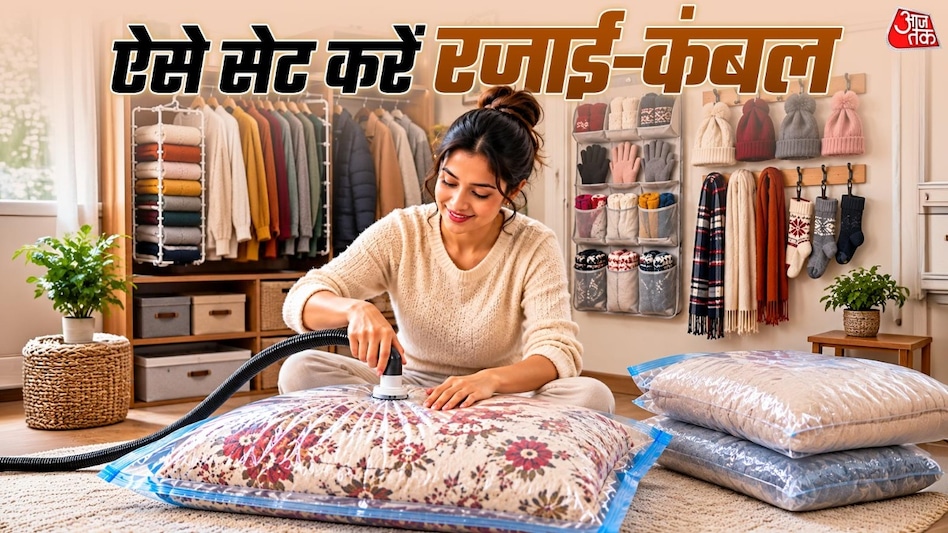
Winter Cleaning Tips: How to Reduce Blanket Volume and Save Space in the Home
Read more
www.aajtak.in

Winter Cleaning Tips: How to Reduce Blanket Volume and Save Space in the Home

As the winter season approaches, warm items such as blankets, throws, heaters, and winter boots begin to appear in homes. However, a common problem arises regarding where and how to store these bulky items to maintain space in the house and ensure easy retrieval when needed. In small apartments or closets, lack of space often leads to a cluttered and disorganized appearance of the home.

If you are concerned about managing space in your home this winter, there is no need to worry. Applying several simple, budget-friendly, and smart methods for organizing home space can help you significantly free up room in your dwelling. Below are simple ways to properly store all necessary winter items.

To begin the organization process, you need to prepare certain items: vacuum storage bags (space-saving bags), multi-level clothing hangers, under-bed storage boxes, transparent plastic fabric bags (so items are visible), and wall hooks or closet organizers.

Heavy blankets, throws, and bulky jackets take up a lot of space. Instead of leaving them lying around, they should be placed in vacuum bags, and the air should be removed using a vacuum cleaner or pump. This allows their size to be reduced by 70–80%, and they occupy minimal space in a closet or under-bed drawer.

Heavy sweaters and coats can completely fill an entire wardrobe. In such cases, it is recommended to use multi-level hangers, such as 5-in-1 types, instead of regular hangers. These allow five pieces of clothing to fit where one hanger would normally go, making the closet more spacious.

If there is insufficient space on the floor or in the closet, you can install organizers and hooks for clothing on the walls or behind doors. In these, small items such as socks, hats, gloves, and scarves can be neatly rolled and stored.

Even if you do not have a hydraulic bed, the bottom part of the bed (the space underneath) can be utilized. In this space, you can place wheeled boxes or fabric containers where you can put a heater, fan, or extra winter bedding.

Sweaters and jackets that you wear daily should be kept visible, either in the closet or in a basket. Heavy coats or evening sweaters, which are only needed occasionally, are better packed and stored on the top shelf of the closet.

In a corner of the room, you can place a small open coat rack or a vertical shoe stand. This allows wet or heavy coats, jackets, and boots to be placed immediately, preventing them from being scattered around the room.

Locals discuss earnings of organizers of balloon shooting at fairs
Read more
www.aajtak.in

Locals discuss earnings of organizers of balloon shooting at fairs

Currently, fairs are being held in many places in connection with the festivals of Durga Puja and Ramlila. When visiting such events, stalls with target shooting are often found, where children, youth, and elderly people come to test their shooting skills.

For example, at the Ramlila fair at Noida Stadium, such stalls were observed where numerous small balloons were hanging on the wall, and visitors shot at them using air guns. Some hit the target, while others missed. Those who missed would pay again to load the air gun and hope for success.

The main source of income for these vendors is the desire of people to hit the target accurately. As long as visitors continue to realize their fantasy by popping balloons with air guns, the pockets of these traders fill up with money. The question arises about what income such shooters can earn in one day at the fair.

The author visited one such stall. The vendor introduced himself as Sandeep, who came from Shamli, and stated that his stall was set up on October 1st and would operate until October 25th. When asked how much shooting at a balloon costs, he replied that 20 shots could be made for 100 rupees.

Sandeep also talked about the number of visitors. He noted that a crowd gathers at the stall after evening sets in. Some visitors are willing to spend between 1000 and 1000 rupees because they keep shooting until they pop enough balloons. Regarding daily earnings, Sandeep reported that with average fair traffic, the income can reach 10-15 thousand rupees per day.

The author then asked about the daily fee for setting up the stall. Sandeep explained that all agreements are made with the contractor who provides them with the space. This contractor takes half of the daily earnings. Questions about payments to the fair administration remain the concern of the contractor. Thus, if the earnings amounted to 10 thousand rupees, the contractor takes 5000 rupees.

Nevertheless, an earning of 5000–7000 rupees daily just from balloon shooting is considered significant. These expenses only include the cost of balloons and cartridges for air guns, as the weapon itself is bought once. The total cost for balloons and cartridges is about 500 rupees. Recently, instead of balloons, other items are sometimes placed, which are given as prizes upon falling, reducing the number of shots, and these items are used as rewards instead of balloons.

Popular