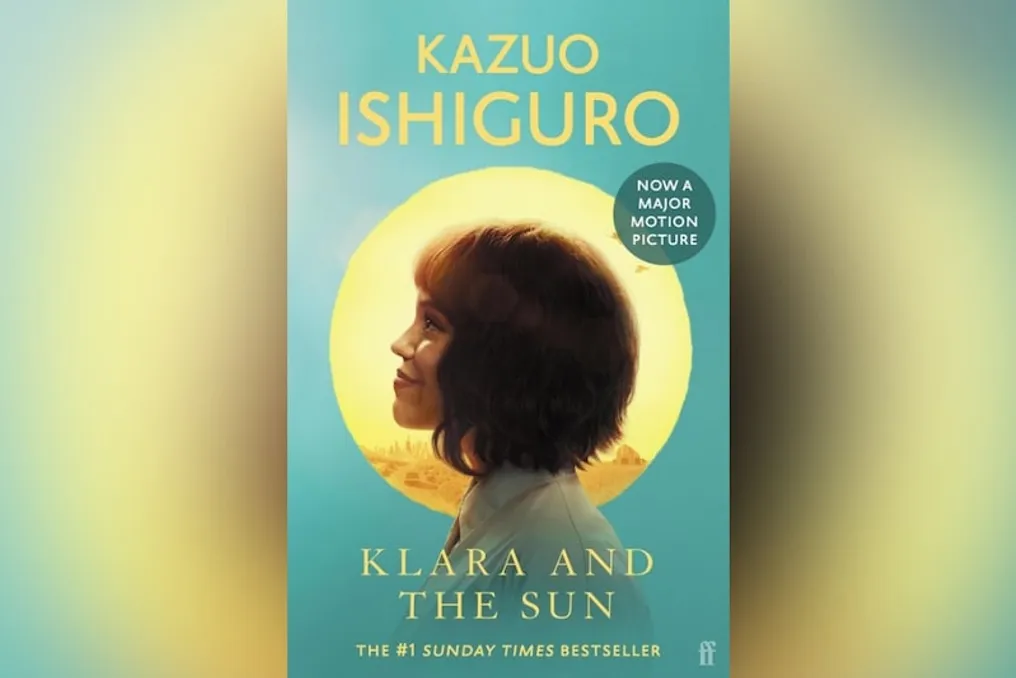
Humans created machines to simplify life, and then began developing devices capable of answering questions, assisting with work, and providing companionship during moments of loneliness. Imagine a machine that understands your behavior better than you do, reads the feelings of your loved ones, and is ready to do everything you would expect from a family member, out of fear of losing you. Will it remain just a machine? Kazuo Ishiguro's novel 'Clare and the Sun' explores precisely this question, immersing the reader in a world where artificial friends (AF) are acquired by children struggling with loneliness. However, this narrative goes beyond the story of a robot and a girl; it analyzes human feelings, relationships, aspirations, and the complex question of the essence of human existence.
The story begins at a shop window, where Clare observes the outside world intently. Her gaze is directed at everything: passersby, the changing light, the surrounding activity, and above all, the sun. Clare is an artificial friend created to interact with children. Her world is limited; she studies things closely and tries to find connections between them, but she cannot always grasp the hidden reasons behind events. It is this limited perception that makes her interesting. She exists in the human world but lacks the experience of seeing and understanding it as humans do.
Ishiguro presents human history not through a human's eyes, but through the prism of a machine. By observing the world through Clare's eyes, we begin to examine the behavior and emotions of people that are often ignored as self-evident. The book does not feature a gripping plot about a great technological revolution or the brilliance of the future. The world seems ordinary at first glance, but as Clare grows closer to people, hidden anxieties and contradictions in their relationships begin to surface.
Clare's life changes when a fourteen-year-old girl named Josie chooses her. Josie's mother, Crispin, buys Clare and brings her home. Now, Clare's task is not to observe the world from a shop window but to become part of Josie's life. She must understand Josie's habits, preferences, and feelings, supporting her and alleviating her sense of loneliness. However, Josie's life is not as simple as it appears on the surface. She is seriously ill, and tension is present in her family's behavior, which gradually unfolds.
Josie's friend, Rick, also plays an important role in the plot. They are close to each other, but their social standings are different. Rick's presence forces the book to focus on the system where inequality in children's opportunities and futures initially exists. Through the relationship between Josie and Rick, Clare gradually begins to comprehend a world where love intertwines with fear, closeness with uncertainty, and hope with anxiety for the future.
For Clare, supporting Josie eventually turns into something more than just a duty. Josie's life becomes the center of her own world. She strives to understand Josie's illness and find a way to help her. Despite lacking human experience or understanding, she continues to try and do something for Josie. This raises a question for the reader: is Clare's behavior a result of her programming, or does it hold the potential for feelings such as love?
The sun also holds a special place in Clare's world. The word 'The Sun' in the book's title is not just a source of light or energy for her. Clare depends on solar energy and views the sun as a trustworthy force. She has a conviction that the sun can hear her pleas and help Josie. As Clare's anxiety about Josie's illness grows, her trust in the sun becomes linked to the hope of Josie's salvation.
How real is this belief of Clare, and what are its limits? This is one of the most intriguing aspects of the book. Her thinking cannot be fully explained by human logic, but the desire to do something for Josie that underlies her belief is evident. From here, the story begins to explore the difference between love and the fear of loss. Crispin, Josie's mother, also loves her daughter, but her concern includes the fear of losing her. Amidst this fear arises a plan. This plan poses one of the most uncomfortable questions to the reader: can a person be recreated based on their behavior, habits, and relationships with others?
Both Clare and Crispin feel affection for Josie, but their paths diverge. On one hand, there is Clare's devotion, and on the other, Crispin's attempt, where the desire to save her daughter clashes with questions of her identity. Ishiguro does not label any character unequivocally right or wrong. He presents the reader with a situation where it is difficult to separate love, fear, and ambition. How far can the desire to save someone go? Is it enough to replace one's presence with another being to maintain their place?