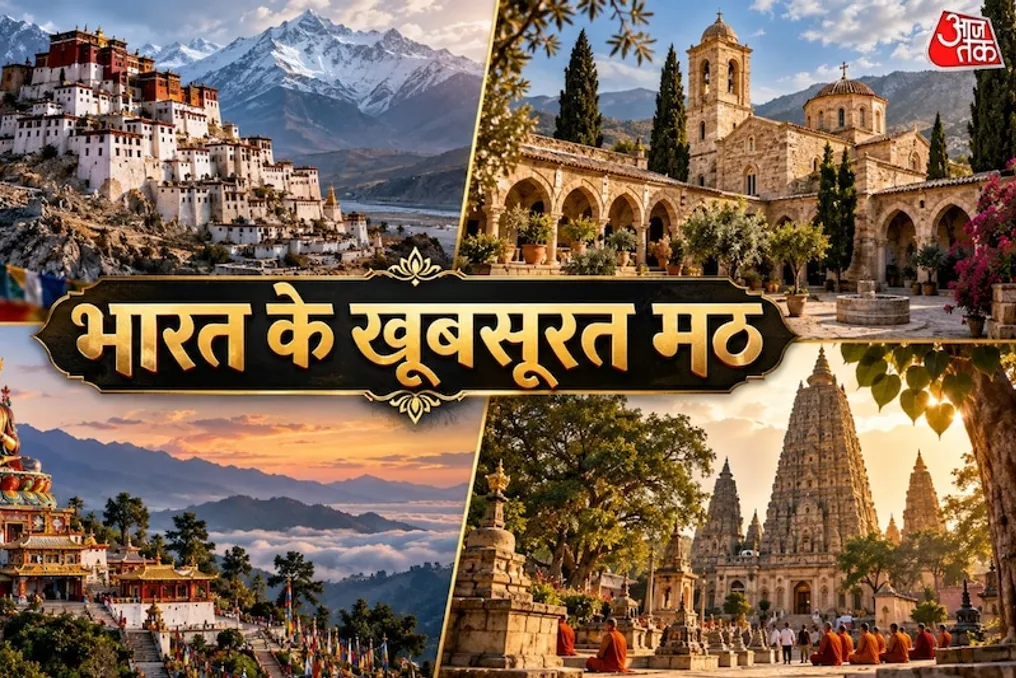
Nine Mountain Destinations in India with Beautiful Buddhist Monasteries from Tawang to Spiti
Read more
Aaj Tak
www.aajtak.in

Nine Mountain Destinations in India with Beautiful Buddhist Monasteries from Tawang to Spiti

India has numerous picturesque locations where one can combine the enjoyment of natural landscapes with spiritual tranquility. Buddhist monasteries situated amidst high mountains, green valleys, and quiet gorges are a defining feature of local culture and history. In these monasteries, one can see reflections of centuries-old traditions, ancient artifacts, and Buddhist beliefs. Some monasteries rise atop mountain peaks, offering breathtaking views of the valleys, while others attract attention with their unique architecture, being nestled among rocks.

Visiting these places is not just a trip, but an opportunity to deeply familiarize oneself with the local culture and spend peaceful moments away from the hustle and bustle of daily life. Therefore, if you are looking for a quiet and beautiful place, you can include these nine monasteries and the cities near them in your travel list.

Buddhist Monasteries in India:

Tawang, Arunachal Pradesh, is known for its natural beauty and Buddhist culture. The Tawang Monastery located here is one of the largest Buddhist monasteries in India and attracts tourists due to its location among snow-capped mountains and magnificent valleys. By visiting this place, one can get closer to Buddhist traditions and spend time in the serene atmosphere of the mountains.

Leh, Ladakh, is famous for its high mountains, beautiful valleys, and ancient Buddhist monasteries. Famous monasteries such as Hemis, Thiksey, and Diskit are located here. These monasteries, built on the slopes of the mountains, offer stunning views of the surroundings. Visitors can observe monks praying and feel the spirit of Buddhist culture. Leh is suitable for those who want to be closer to nature and find a moment of peace.

Rumtek, Sikkim, is located near Gangtok and is known for its Buddhist culture and tranquil environment. The Rumtek Monastery showcases elements of Tibetan art and tradition. The monastery's architecture and surrounding greenery make this place special. If you want to spend time in silence, away from crowds, you can plan a trip to Rumtek.

Dharmashala and McLeod Ganj, Himachal Pradesh, are renowned for their scenic mountains and Tibetan culture. This region is also associated with the Dalai Lama. Numerous monasteries and meditation centers are located here, where people come for spiritual experience and peace. Namgyal Monastery is one of the main attractions, and the beautiful mountain scenery and quiet atmosphere make this place ideal for visiting.

Spiti Valley, Himachal Pradesh, is known as the cold desert. Its high mountains, arid mountain landscapes, and ancient Buddhist monasteries distinguish it from other places. Among the main monasteries are Ki, Dhankar, and Tabo, some of which have a history of over a thousand years. Spiti Valley can be included in your travel list if you enjoy exploring quiet and unusual places among the mountains.

Zanskar, Ladakh, is characterized by inaccessible mountains and a tranquil atmosphere. Phugtal Monastery is one of the main attractions of this area. It is built in the middle of a mountain rock, which amazes tourists. Due to its remote location, one can experience relative solitude. However, before traveling, it is necessary to obtain information about routes, weather, and travel organization.

Kaza, located in the Spiti Valley, Himachal Pradesh, is an important center for viewing ancient Buddhist monasteries. From here, one can reach Ki Monastery and other ancient gompas. The specialty of Kaza is that one can learn about the local culture and Buddhist traditions against the backdrop of mountain beauty. This region is also suitable for adventure lovers.

Tawang Valley, Arunachal Pradesh, is known for its mountain villages and quiet atmosphere. Here, one can see small monasteries and sites related to local Buddhist traditions. Compared to Tawang, this area is less known, so a trip here offers a chance to experience mountain life and local culture. Before visiting, it is recommended to clarify information about local routes and accommodation conditions.

Namchi, Sikkim, is known for its greenery and religious sites. The main attraction here is the huge statue of Guru Padmasambhava on Mount Samdruptse. This place offers tourists a unique experience against the backdrop of surrounding mountains and natural scenery. If you are planning a trip to Sikkim, it is worth including Namchi in your itinerary.

Why plan a trip to these places? These monasteries and cities in India not only hold religious significance but also provide an opportunity to witness history, art, culture, and nature up close. If you are looking for a calm atmosphere and beautiful mountain landscapes in your next trip, you can add these places to your list.

Similar stories

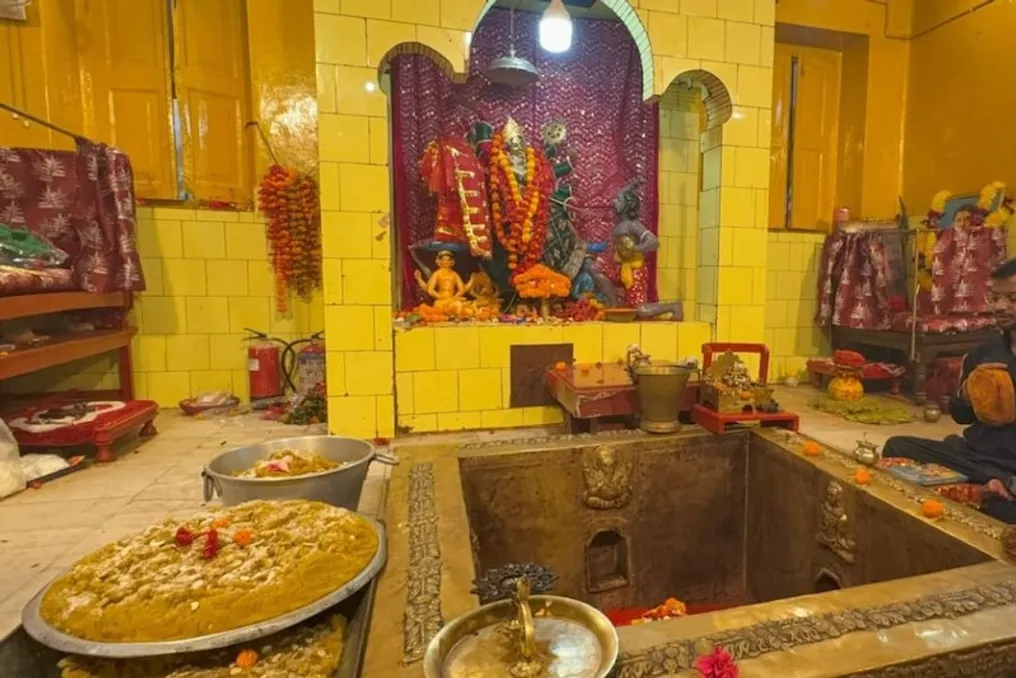
Maa Bagalamahi Temple in Muzaffarpur Houses Thousand-Petaled Mahayantra Under Shrine, With 250-Year History
Read more
www.aajtak.in

Maa Bagalamahi Temple in Muzaffarpur Houses Thousand-Petaled Mahayantra Under Shrine, With 250-Year History

The ancient abode of Maa Bagalamahi Pitambari Siddhipith in Muzaffarpur, Bihar, is estimated to be approximately 250 years old. This shrine is notable for having a Sahastradala Mahayantra installed beneath the main sanctum. Furthermore, the temple houses an eight-armed statue of Maa Bagalamahi made of Ashtadhatu (eight metals). Two worship traditions are mentioned in the temple: Vama Marg and Dakun Marg. According to the priests, devotees travel here from West Bengal and Varanasi.

The reason for the uniqueness of this mahayantra, why Maa Bagalamahi is called Pitambari, and how the temple in Muzaffarpur is connected to Tantric traditions are subjects of interest. According to people associated with the temple, its history spans about two hundred and fifty years. This implies that religious rituals were conducted here even before the advent of electricity and mobile communication.

The foundation of the temple was laid by the ancestor of Mahant Ajita Kumar Prasad, Rupal Prasad. The goddess's statue was created by artisans from Calcutta. Later renovations to give the temple a modern appearance began in 1993–1994. Mahant Deva Raj states that his family has revered the goddess for generations; his grandmother was known for her practice of Tantric meditation, and people traveled from Calcutta to learn from her. Nevertheless, analyzing old documents is necessary for independent confirmation of the temple's two-hundred-and-fifty-year history.

The most unique element of the temple is the Sahastradala Mahayantra under the main sanctum. In Indian religious traditions, a yantra is considered a special symbolic image associated with worship and spiritual practices. The word Sahastradala refers to the concept of a lotus with a thousand petals. According to the chief priest Bacha Baba, the mahayantra installed here holds special significance in the tradition of spiritual practices. However, detailed information regarding the construction of this mahayantra, the time of its installation, and related rituals is not yet provided.

The name Pitambari is explained by the fact that the color yellow is highly valued in the worship of Maa Bagalamahi. Devotees bring turmeric, yogurt, and Dub grass to the temple. People also visit the temple on Thursdays. During Navratri, the atmosphere in the temple becomes more vibrant as devotees gather for prayers and rituals. In religious beliefs, Maa Bagalamahi is counted among the ten Mahavidyas, and her worship is associated with overcoming crises, defeating enemies, and controlling speech.

Chief priest Bacha Baba emphasizes that worship here is conducted through both methods—Vama Marg and Dakun Marg. When Tantrism is mentioned, images of mysterious miracles often arise, but the Tantric tradition is much more diverse. It includes various sects, scriptures, symbols, and methods of practice. Vama Marg and Dakun Marg are viewed as separate branches of this tradition, and their rituals and religious interpretations are not identical.

Despite the fact that rituals are performed in the Muzaffarpur temple within these methods, complete information on exactly which rites are performed is lacking. Nevertheless, the priests link the identification of the temple to ancient traditions of Tantric practice.

Mahant Deva Raj explains why people travel to this temple in Muzaffarpur from other states: pilgrims arrive from West Bengal and Varanasi, as well as from other places. He notes that his family members also traveled here for spiritual practices in the past. For the temple, it is not just the history of an old building; it is a combination of family tradition, continuity of worship, and the trust of pilgrims.

In conclusion, the identity of the temple is determined not only by its age but also by the stories passed down through generations. The history of Maa Bagalamahi Temple in Muzaffarpur demonstrates three aspects: a tradition claimed to be around two hundred and fifty years old; the Sahastradala Mahayantra installed under the sanctum; and beliefs associated with Tantric practice. The answer to how ancient these beliefs are and what the true history of the mahayantra is can only be found by studying old documents and consulting experts.

Ancestral remembrance ceremonies held in Haridwar on Pitru Visharjani Amavasya day
Read more
www.aajtak.in

Ancestral remembrance ceremonies held in Haridwar on Pitru Visharjani Amavasya day

Haridwar, known as the 'Gateway to Har', is a pilgrimage site where people come to take holy dips in the Ganges for merit. They also come here to ensure the liberation of their ancestors. While Haridwar is considered a sacred place for earning merit and achieving liberation, it also serves as a place for ancestral release.

People bid farewell to their ancestors with deep reverence on this day. It is believed that if a person does not know the date of their ancestors' death, they can take a dip in the Ganges or perform a worship ritual at the Shri Narayan Shila temple on the last day of Pitr Paksha, which is Pitru Visharjani Amavasya. This brings liberation and moksha to the ancestors.

The period from the full moon of Bhadrapada to the new moon of Ashvina is called the 'Two Weeks of Ancestors'. Performing pindadana and Sharaddha Tarpana for ancestors during these days brings them liberation. When ancestors are pleased, happiness, peace, and prosperity reign in the home. Scriptures state that anyone who could not perform Sharaddha for any reason during the Sharaddha period can perform pindadana and Sharaddha on the last day of this period—Pitru Visharjani Amavasya, which brings supreme well-being to the ancestors.

A large number of devotees gathered at the Shri Narayan Shila temple in Haridwar on Pitru Visharjani Amavasya. People started arriving early in the morning, and in the temple, they stood in long queues to bid farewell to their ancestors. Given the large gathering of pilgrims, the police organized extensive measures, allocating a significant number of police personnel.

Jyotishacharya Pandit Manoj Tripathi notes that Pitru Visharjani Amavasya is a time of farewell to ancestors who have been in homes for 16 days. He says that if there was a mistake, an oversight, or if a person forgot about Sharaddha or could not perform it for any reason, they can seek forgiveness and perform the 16-day Sharaddha on this day. Those who do not know the date can also perform Tarpana.

This place, which is located from the throat to the navel of Lord Narayana, where performing Sharaddha brings moksha to the ancestor. If a person performs Sharaddha here with devotion, or simply visits this place today, or just offers water, the ancestor is granted eternal sustenance. Pleased ancestors bestow blessings.

On Pitru Visharjani Amavasya, one should perform Sharaddha and feed a cow. The ancestors should be bid farewell in the evening. The farewell can be performed by offering 16 types of sweets, 16 portions of sweets with offerings, and lighting 16 lamps made of pure ghee from dough. Many make a round lamp from dough, which is also somewhat acceptable.

Sio City Haridwar Shishupal Singh Negi stated that today is Pitru Amavasya. All people are coming for worship and viewing. As seen since the morning, there are long queues. A sufficient number of police forces are present. Crowd pressure is very high, but the police are smoothly managing the movement of people. Adequate organization has been provided for crowd control. Entry of any four-wheeled vehicles is prohibited from Tulsi Chowk to Devapura, and enough duty staff has been assigned to this purpose.

Popular