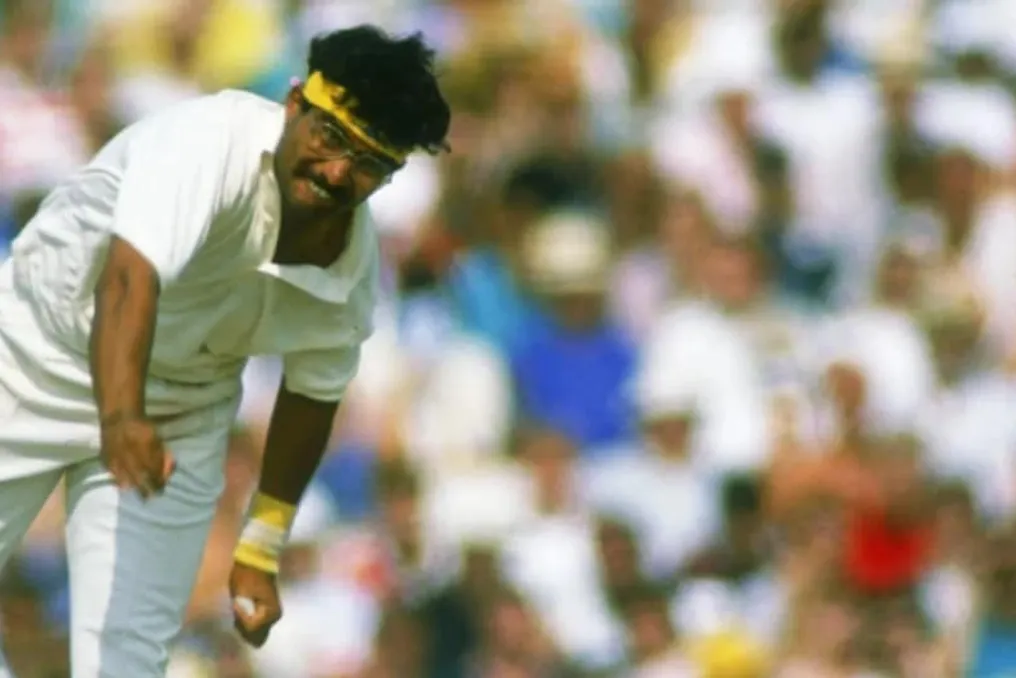
Narendra Hirwani set a world record by taking 16 wickets in his debut match at the age of 19
Read more
Aaj Tak
www.aajtak.in

Narendra Hirwani set a world record by taking 16 wickets in his debut match at the age of 19

There are achievements in cricket history that time cannot erase. Narendra Hirwani's debut in Test matches is precisely such an example. This former Indian left-arm spinner, born on October 18, 1968, created a sensation worldwide by taking 16 wickets in his first match against the West Indies, while being only 19 years old.

Despite such a historic start, Hirwani's international career did not meet expectations, failing to be as long and successful.

Narendra Hirwani debuted in Test cricket against the West Indies in January 1988 in Madras (now Chennai). This player, who wore glasses, demonstrated mastery of his spin bowling: in the first half of the match, he took 8 wickets, conceding 61 runs. His magic continued in the second half of the game, where he dismissed another 8 batsmen, conceding 75 runs. Thus, Hirwani collected 16 wickets, conceding only 136 runs, and played a key role in India's victory. It is worth noting that in the second half of the match, wicketkeeper Kiran More took five wickets off his deliveries, which in itself is an exceptional achievement in a single Test match.

This phenomenal performance instantly put Hirwani in the spotlight.

Narendra Hirwani still ranks first in the list of players who have taken the most wickets in a Test debut match. Second in this list is Bob Massie from Australia. He took 16 wickets, conceding 137 runs, in a match against England at Lord's in 1972. Third place is held by Frederick Martin from England, who took 12 wickets, conceding 102 runs, in Oval against Australia in 1890.

Hirwani's achievement is particularly significant because he accomplished it in his very first match against the strong West Indies team of that time. His play instilled new hope in Indian cricket, but subsequently, he could not consistently replicate his initial success.

Furthermore, Narendra Hirwani set another unique record in Test cricket. In 1990, in a match against England at The Oval, he bowled for 59 consecutive overs without a break. During this period, he bowled 18 maiden overs and took one wicket, conceding 137 runs. This record of continuous play remains unbroken and demonstrates Hirwani's stamina and ability to stay in the game for a long time. This achievement holds a special place among the most discussed in his career.

In his first four Test matches, Narendra Hirwani took 36 wickets, leading to expectations that he would play an important role for the Indian team for a long time. However, he had to face difficulties in conditions outside the Indian subcontinent. In the next nine matches played abroad, he managed to take only 21 wickets, with an average of 59.

Although Hirwani's deliveries posed a serious problem for batsmen on spin-friendly pitches in India, maintaining the same effect in foreign conditions proved difficult. At the same time, with the rise in popularity of Anil Kumble, Hirwani received fewer regular opportunities in the Indian team.

Narendra Hirwani's international career spanned from 1988 to 1996. During this period, he played 17 Tests and 18 One Day Internationals for India. In Tests, he took 66 wickets with an average of 30.10, and in ODIs, 23 wickets with an average of 31.26.

Despite limited opportunities on the international stage, Hirwani's club performances were impressive. He took 723 wickets in 167 first-class matches, over 400 of which were taken for the Madhya Pradesh team. In the 1996-97 season, playing for Bengal, he also took 29 wickets. Hirwani concluded his 23-year first-class career in 2006. After this, in 2008, he was included in the National Selection Committee and took on a new position in sports administration.
Similar stories

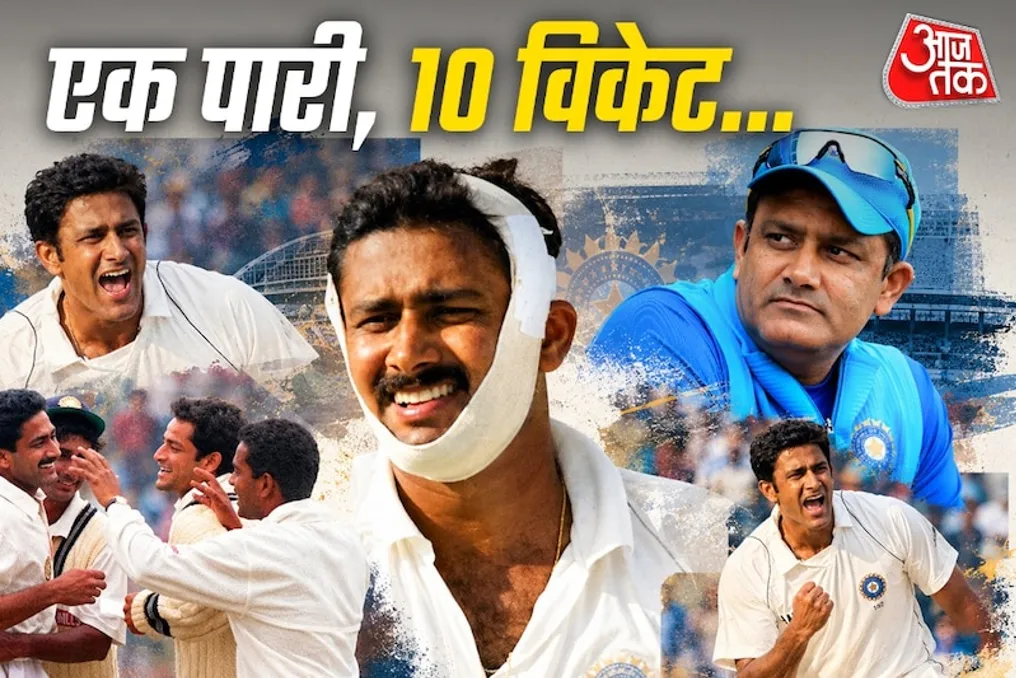
Anil Kumble's Birthday: The Journey of the Legendary Spinner Who Took 10 Wickets in an Innings and Scored 619 in Tests
Read more
www.aajtak.in

Anil Kumble's Birthday: The Journey of the Legendary Spinner Who Took 10 Wickets in an Innings and Scored 619 in Tests

In the world of cricket, the name of the former outstanding Indian leg-spinner, Anil Kumble, is always mentioned with great respect among the great spinners. Kumble celebrated his birthday on Saturday, October 17th, at the age of 56.

Born on October 17, 1970, Kumble was known for his precise length of delivery and his ability to take wickets. During his Test career, he took 619 wickets, leaving an indelible mark on the history of Indian cricket.

A key characteristic of Kumble was that he induced very sharp turn from the ball, similar to other leg-spinners. His pace, bounce, and accurate bowling presented a serious problem for batsmen, allowing him to leave his mark on international cricket for a long time.

The most memorable moment in Kumble's career occurred on February 7, 1999, in Delhi, when he took all 10 wickets against Pakistan. He achieved these 10 wickets by conceding 74 runs in 26.3 overs. Thanks to this historic performance, he became the second bowler in the world to take all 10 wickets in a Test match, trailing only Jim Laker of England, who did it in 1956.

In 1999, the legend of the Indian team's spin, @anilkumble1074, became the first Indian bowler and the second overall to take all 10 wickets in a Test match.

Kumble demonstrated his competence on foreign soil. In the Leeds Test in 2002, he played a crucial role in India's victory by taking 7 wickets. Later, in the Adelaide Test in 2003-2004, his 6 wickets were the main reason for India's historic win. Furthermore, his performance against Australia in home Tests between 1996 and 1998 was impressive: he took 32 wickets in 4 matches.

Throughout his career, Kumble reached many significant milestones. In the first match of the series against Australia in Bengaluru in 2004-2005, he crossed the mark of 400 Test wickets. In January 2008, in a match in Perth against Australia, he became the third bowler in the world to reach 600 Test wickets. Also, in August 2007, he scored his only international Test century at 'The Oval' against England, achieving this feat in his 117th Test match.

In the Test in Antigua in 2002, Kumble decided to bowl against the West Indies team despite having a jaw fracture. He bowled 14 consecutive overs with a fractured jaw and dismissed Brian Lara. During that match, he was batting at number seven when Mervyn Dillon's ball hit his jaw. Despite the bleeding, he continued to play for another 20 minutes.

In November 2007, Kumble was appointed captain of the Indian Test team. Under his leadership, India achieved a memorable victory in Perth during the tour of Australia in 2007-2008. Kumble led the team for 14 Test matches from 2007 to 2008. In these 14 matches, the team won 3, lost 5, and 6 ended in a draw. In 2007-2008, he was appointed captain for the home series against Pakistan, which they won, marking India's first home victory over Pakistan in 27 years.

He concluded his brilliant international career by playing his last Test against Australia in Delhi in October 2008, after which he retired from international cricket. Later, he contributed to administrative work and became the chairman of the ICC Cricket Committee in 2012. The Board of Control for Cricket in India (BCCI) appointed Anil Kumble as the head coach of the Indian team on June 23, 2016, and he served as the coach of the Indian team for about a year.

Australian cricketer Nick Maddinson returns to Test match after cancer, but fails to score any runs
Read more
www.aajtak.in

Australian cricketer Nick Maddinson returns to Test match after cancer, but fails to score any runs

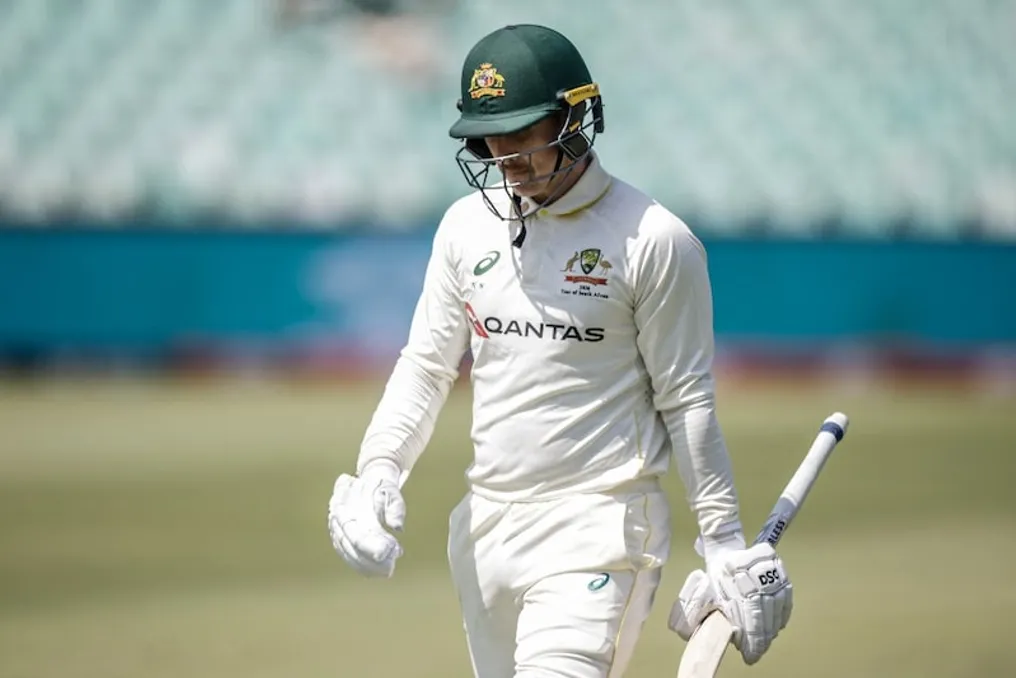
Australian cricketer Nick Maddinson made an impressive return to the field after overcoming one of life's toughest battles. Maddinson, who had been absent from cricket for a long time due to cancer treatment, was included in the starting lineup for the match in Durban against South Africa on Friday, October 9th. He played for Australia in Test cricket after approximately ten years (3580 days).

However, Maddinson's debut did not bring him significant success. The 34-year-old athlete faced Australia's first innings, playing 33 balls, but failed to score any runs. He was dismissed by South African fast bowler Marco Jansen with a strong delivery. This marked the first time in history that an Australian opening batsman left the field after a Test without scoring any runs while playing such a number of balls.

This instance entered the list of record achievements: Derryn Morris (New Zealand) scored 39 balls against Sri Lanka in Dunedin in 1995; Trevor Griper (Zimbabwe) scored 36 balls against West Indies in Kingston in 2000; Nick Maddinson (Australia) scored 33 balls against South Africa in Durban in 2026; Mark Decker (Zimbabwe) scored 30 balls against Sri Lanka in Bulawayo in 1994; Brian Laxerth (England) scored 29 balls against Australia in Sydney in 1971.

Last year, Maddinson was diagnosed with a disease that threatened not only his career but also his life. In April 2025, it was discovered that he had testicular cancer that had spread to his lungs and lymph nodes. Following this, he had to take a break from cricket to undergo treatment. He completed chemotherapy in July 2025 and recovered under medical supervision. After receiving medical clearance, approximately eight weeks after completing treatment, he began preparing to resume sports.

Nick Maddinson returned to the field in September 2025, but could not participate in the first matches of the 2025-26 Australian domestic season. He then played five matches for Sydney Thunder in the Big Bash League (BBL), gradually regaining his position in professional cricket. His performance in domestic cricket played a vital role in Maddinson's return. Recently, he scored 126 runs for New South Wales against Victoria in the domestic ODI tournament in Australia and was appointed captain of New South Wales for the 2026-27 Sheffield Shield season.

Nick Maddinson debuted for Australia in 2016. After an unsuccessful performance in the first three matches against South Africa and Pakistan, he was dropped from the team. This time, his inclusion in the squad for the tour of South Africa was not guaranteed. He was invited to the team as a replacement for injured Cameron Green. Later, when Josh Inglis sustained a finger injury and was excluded from the first Test, Maddinson was given a spot in the squad.

In the Durban Test, Maddinson and Travis Head came out to bat as openers for Australia, while Michael Renshaw was selected at number five instead of Cameron Green. Australian captain Pat Cummins decided that they would bat first. Maddinson was given the opportunity to bat before all-rounder Cooper Cronley. The captain of the Kangaroos team, Pat Cummins, stated that Nick Maddinson felt comfortable in the game. For his part, South Africa included Enric Nortje, who has played first-class cricket for about four years. Kagiso Rabada, recovering from a hamstring injury, rested for this match.

Former New Zealand player Jeth Raval announces retirement at age 38
Read more
www.aajtak.in

Former New Zealand player Jeth Raval announces retirement at age 38

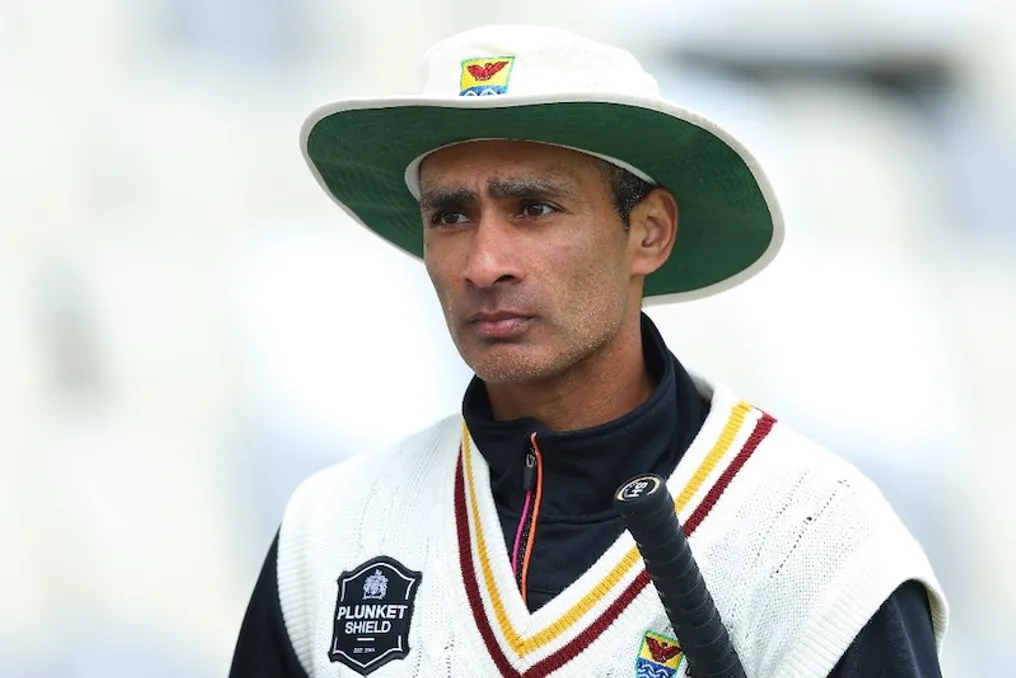
Jeth Raval, a former opening batsman for the New Zealand national team, has officially announced his departure from professional cricket. Raval concluded his sporting career at the age of 38. Between 2016 and 2020, he played 24 Test matches for the New Zealand national team, and his first-class statistics include over 10,000 runs scored.

After saying goodbye to cricket, Raval plans to focus on his career as a qualified accountant. Raval was born on September 22, 1988, in the state of Gujarat. In his youth, his family moved to Auckland, New Zealand. His first-class debut took place in December 2008 against the Western Indians team during a visit to Auckland. Thus, his sporting career lasted about eighteen years.

Jeth Raval had a special connection with Indian cricket: he studied at Vidyanagar School in Ahmedabad alongside Indian bowler and batsman Paritav Patel. After moving to New Zealand, Raval progressed from the U-19 youth team to the senior national squad.

Initially playing in the middle order for the Auckland team, Raval later became one of the successful opening batsmen in New Zealand's domestic cricket. He opened in 285 out of 292 first-class matches, scoring 10,127 runs. As an opener, his average was 37.36, and he registered 23 centuries.

In December 2025, leading the Northern Districts team, he became the thirtieth New Zealander to reach 10,000 first-class runs. His last competitive match was in March against Central Districts in the Plunket Shield tournament.

Raval debuted in Tests in 2016 against Pakistan in Christchurch. In 24 matches for New Zealand, he scored 1,143 runs, including one century and seven half-centuries.

It took him 28 matches to score his first Test century. He was part of the team that won the inaugural World Test Championship (WTC) in June 2021. After winning the championship, he participated in a week-long tour across various regions of New Zealand with the Test ball.

Raval previously shared that early in his career, despite not having centuries, he was supported by experienced players such as Ken Williamson and Ross Taylor, as well as other team veterans. This support gave him the confidence to contribute to the team even under pressure.

Nevertheless, his form declined during the series against England and the tour of Australia. After failing to perform at the expected level in some matches, the team management opted for another option. Raval expressed disappointment with this decision but noted that he was glad another player could meet the team's needs.

In New Zealand domestic cricket, Raval represented the Auckland, Central Districts, and Northern Districts teams. In the Plunket Shield tournament, he scored a total of 8,662 runs. In the history of this tournament, Michael Pappas (11,463), Matthew Sinclair (8,842), and Peter Fulton (8,719) have scored more runs.

With the Northern Districts team, he played a key role in winning the first Plunket Shield title after more than ten years in the 2024-25 season. He also contributed as a part-time leg spinner, taking 14 wickets at an average of 11.14 that season. During this period, he took five wickets in his first-class career for the first time.

In List A format, Raval scored 2,714 runs in 96 matches and took 44 wickets. In T20 cricket, he has 1,484 runs in 76 matches, with an average of 21.50 and a strike rate of 121.44. Besides cricket, Raval works as a qualified accountant in an auditing firm. In recent years of his career, he also engaged in coaching, working as an assistant coach to Tarun Netule of the Samoa team, alongside his accounting work.

Popular