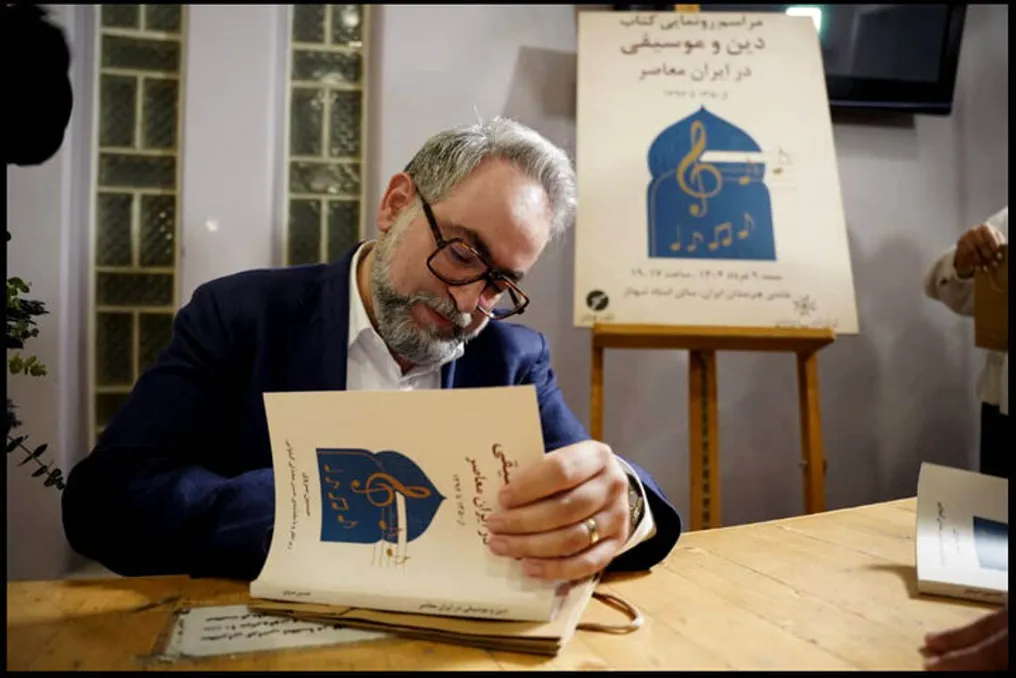
Cultural sociologist Hossein Sarvi argues that a deeper understanding of the link between religious institutions and art is crucial for resolving long-standing issues related to music in Iran. He emphasizes the need for conscious dialogue and a review of institutional relations.
In an interview with Mehr News Agency, Sarvi, author of the book 'Religion and Music in Modern Iran,' which analyzes the historical and social aspects of this topic, noted that some contradictions between religion and music arise not from fundamental conflicts, but from insufficient understanding of the nature, functions, and sensitivity of these two fields.
The main goal of his research was to improve what he calls 'mutual institutional literacy' between religious structures and the sphere of art. This concept implies the ability of each organization to better understand the internal logic, objectives, requirements, and concerns of the other, which opens possibilities for more informed and realistic interaction.
Sarvi believes that the relationship between religion and music in Iran remains an important topic for cultural and social discussions. He added that issues concerning the ties between religious and artistic institutions, cultural policy regarding music, as well as the scope and methods of official intervention, continue to require reflection and scientific discussion.
In the researcher's opinion, examining these issues solely through a historical lens overlooks their relevance to contemporary Iranian society. He believes that a more comprehensive understanding of these spheres can help move discussions beyond simplistic interpretations and stimulate more constructive participation.
Sarvi also stressed that academic works should not be judged solely by publishing market standards. He noted that highly specialized scientific works are usually aimed at a more limited audience than popular literature. For him, a more significant indicator of a study's impact is its ability to enter academic debates, attract the attention of scholars, and contribute to ongoing intellectual discourse.
He expressed hope that his book will reach a wider readership, especially university students, researchers, cultural policymakers, and anyone interested in interdisciplinary studies. Sarvi added that further discussion of the topics raised in the research can contribute to a deeper understanding of the relationship between religion and music in Iran.
Furthermore, Sarvi highlighted the role of institutions responsible for presenting and promoting scholarly publications, stating that creating and issuing research is only part of the process of knowledge generation and dissemination. He believes that efforts to ensure the accessibility of such works to the wider public are no less important for strengthening their position in academic and cultural life.