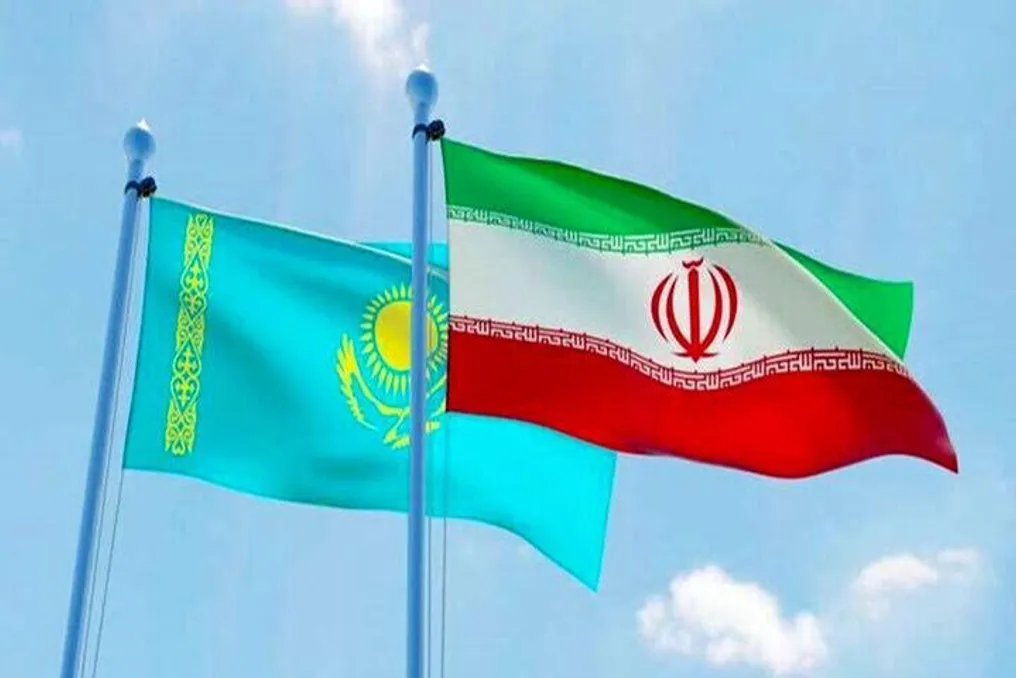
The ministers of transport of Iran and Kazakhstan held a meeting where they emphasized the importance of developing transport routes and utilizing the capacities of the Caspian Sea. The parties also focused on the need to expand trade exchange and develop a comprehensive document on logistical and infrastructural cooperation between the two states.
In Kazakhstan, a meeting took place between Farzaneh Sadeghi, a representative of Iran, and Nurlan Sauranbayev, the Minister of Transport of Kazakhstan. Expressing gratitude for holding regional transport events in Astana, Sadeghi mentioned the eastern roadmap of the North-South Corridor, which was developed with the participation of Iran, Kazakhstan, Russia, and Turkmenistan. She noted that the priorities of cooperation are the further implementation of agreements and the elimination of existing obstacles.
The Iranian Minister of Transport and Urban Development proposed several measures to expand transit interaction, including activating the eastern branch of the North-South Corridor, increasing capacity, connecting the Chabahar port to the railway network, and developing the China-Kazakhstan-Iran-Europe corridor.
Sadeghi stated that the bilateral cooperation roadmap, focusing on Iranian proposals, has been compiled and sent to Kazakhstan, and expressed hope for the speedy creation of conditions for its signing to accelerate its implementation.
The Minister of Transport and Urban Development also reported that land and rail transport are of great importance under current conditions, and called for the execution of the revised protocol on international carriage of goods and passengers. She recalled that at the Trans-Afghan meeting, she spoke about the imminent launch of the Chabahar-Zakhidan railway and invited her counterpart to the inauguration of this facility, calling it a new logistical and transit advantage for the region, providing access to Afghanistan and the northern countries of the Caspian.
Emphasizing the advantages of the Iranian route for Kazakhstan's access to world markets, she characterized the transport interaction between the two countries as the basis of common economic interests.
According to the report, both sides agreed on the need to strengthen cooperation in all modes of transport and to prepare a comprehensive document on transport interaction, which was approved by the Kazakh Minister of Transport.
Nurlan Sauranbayev, the Minister of Transport of Kazakhstan, welcomed the constructive proposals of the Iranian Minister of Roads and Urban Development, confirming his country's determination to develop transport links with Iran. He noted that the 'cooperation roadmap proposed by Iran is in the final stages.'
The Kazakh Minister also accepted the invitation from his Iranian counterpart to attend the opening ceremony of the Chabahar-Zakhidan railway. He stressed the importance of developing trade routes and diversifying railway and road networks, as well as the need to increase trade turnover and hold bilateral and multilateral meetings with the participation of regional countries to enhance logistical connectivity on routes to Central Asia, the Caucasus, and Europe.
Last December, representatives of the private sectors of Iran and Kazakhstan signed nine cooperation agreements during the visit of a trade delegation from the Iranian Chamber of Commerce to Astana. The delegation, headed by Samad Hassanzadeh, head of ICCIMA, included chamber officials and business representatives from engineering, agriculture, food industry, mining, and mineral sectors. Participants held B2B meetings with their Kazakh counterparts to study joint projects.
The Iranian delegation accompanied President Masoud Pezeshkian during his visit to Kazakhstan, during which a meeting of the Joint Economic Committee of the two countries also took place. The Iranian Chamber of Commerce signed three memoranda of cooperation, including two with KazTrade and the Council for the Development of Trade of Kazakhstan, and one with the National Chamber of Entrepreneurs 'Atameken', concerning the exchange of trade data, business missions, logistics, and green freight transport. Six other agreements were concluded between Iranian and Kazakh companies in sectors such as agriculture, mining, copper production, and food processing. One deal is valued at over one billion dollars.
On Thursday in the capital of Kazakhstan, Astana, an Iran-Kazakhstan business conference was held, attended by the presidents of both countries, high-ranking ministers, private sector representatives, and business delegations. The goal of the event was to deepen commercial ties.
Speaking at the conference, Iranian President Masoud Pezeshkian stated Iran's desire to create a stable network of cooperation and mutual investment between the private sectors of the two countries, naming the Central Asian nation a strategic partner.
In turn, ICCIMA head Samad Hassanzadeh identified four key obstacles to trade between Iran and Kazakhstan and called for joint planning and more active participation of the private sector to overcome them. He emphasized that completing the infrastructure of the North-South Corridor should be the main priority. Hassanzadeh noted that the current bilateral trade turnover of about three hundred fifty million dollars could significantly increase in the short term due to existing potential and political support. He added that the presence of high-ranking officials at the forum demonstrates a general commitment to expanding economic ties, noting Kazakhstan's importance as a major Central Asian economy and strategic partner. He concluded that proximity, stable political relations, and opportunities in energy, agriculture, mining, Caspian transport, petrochemicals, metals, food industry, engineering, and pharmaceuticals create a solid foundation for deeper cooperation.