Uzbekistan proposes raising the basic electricity consumption norm for areas without gas supply
Read more
UzDaily
uzdaily.uz

Uzbekistan proposes raising the basic electricity consumption norm for areas without gas supply

Uzbekistan has put forward a proposal to increase the basic monthly electricity consumption norm from 200 to 350 kWh for residents in areas lacking gas connection or where natural gas supply is unstable.

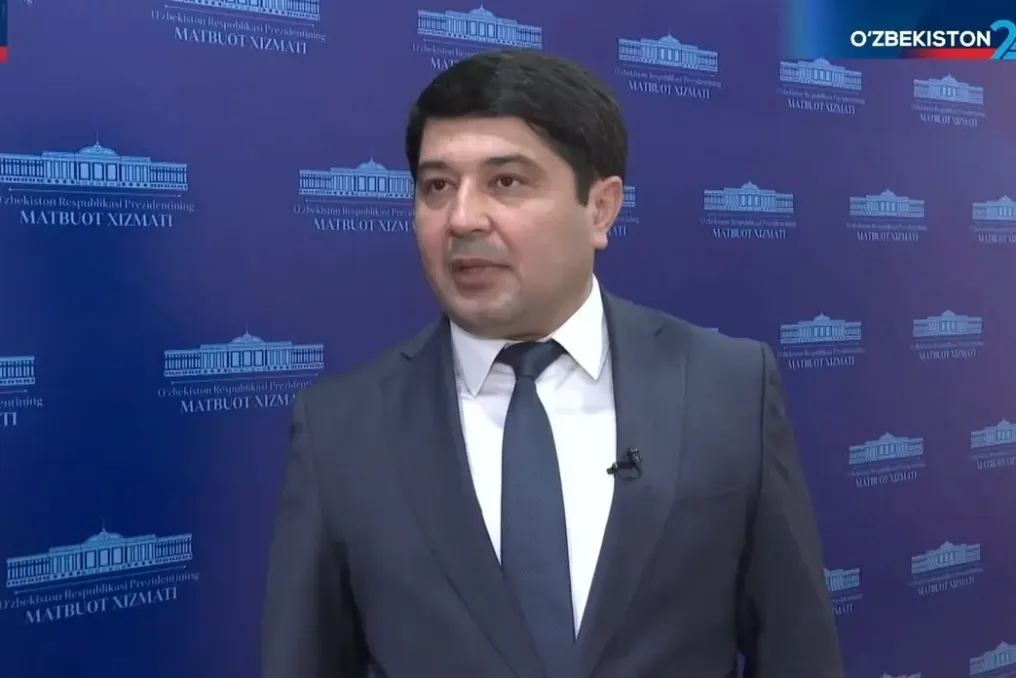
This proposal is based on an analysis of actual electricity consumption during the winter period, as well as existing social support measures. Deputy Minister of Economy and Finance Khurshid Mustafayev presented this initiative at a press conference on October 14 dedicated to planned tariff changes and household support during the autumn-winter period.

Mustafayev noted that two main aspects were taken into account when preparing the proposal. Firstly, the existing mechanism for assisting low-income families was considered. Under this scheme, the Social Protection Agency compensates eligible households for the difference between the basic and increased tariffs for an additional 150 kWh above the current norm of 200 kWh, allowing these families to pay the basic tariff for this extra volume.

Secondly, an analysis of winter electricity consumption in areas without gas connections was conducted. The data presented showed that about 60% of households in such zones consume up to 300 kWh per month in winter. Based on this analysis, the authorities proposed setting the basic norm at 350 kWh.

The Ministry of Economy and Finance reports that approximately 4 million households in Uzbekistan are not connected to gas networks and use alternative sources, including liquefied petroleum gas cylinders. In some other places, centralized gas supply is unreliable due to pressure drops or temporary supply interruptions observed during the heating season.

To identify such zones, the authorities analyzed gas supply data for households from December 2, 2025, to March 13, 2026. The proposed increased norm will apply not only in areas without gas connection but also where there are disruptions in natural gas supply.

A previous option of setting the norm at 500 kWh was discussed, but no separate estimates of potential budgetary expenditures for this level were provided at the press conference.

President Shavkat Mirziyoyev approved this proposal on October 6. The draft government resolution was published for public discussion on October 13. An analysis prepared by the authorities, covering the period from September 2025 to August 2026, showed that during the heating season, the share of consumers without gas supply using more than 200 kWh of electricity per month increases from approximately 25% to 39%. Meanwhile, the share of households consuming up to 200 kWh decreases from 74% to 61%; the share of those consuming from 201 to 350 kWh increases from 17% to 19%, and the share of consumers in the 351–500 kWh range grows from 5% to 9%, while the share of those consuming over 500 kWh increases from 3% to 10%.

The number of households connected to gas networks but experiencing difficulties in receiving gas also varies greatly depending on supply conditions. According to official data, during the period from December 2, 2025, to March 17, 2026, this number fluctuated from about 5,000 on some days to 607,000 on others.

The proposed increase will lead to a reduction in the tariff for monthly consumption in the range of 201 to 350 kWh from 900 soms to 650 soms per kWh, which is a decrease of almost 28%. The authorities predict that the new norm will cover about 80% of consumers in areas without gas connection. Over 1.5 million consumers could save a total of about 171 billion soms during the heating season, with the average savings estimated at approximately 27,500 soms per household per month.

For households consuming 250 kWh per month, bills will decrease by 12,500 soms; for consumption of 300 kWh, savings will reach 25,000 soms; and for consumption of 350 kWh, it will be 37,500 soms.

It is proposed that the increased norm comes into effect on November 1, 2026, for the heating season. In Karakalpakstan and Khorezm region, it will be valid from October to February, and in other regions—from November to February. Regional administrations will approve lists of households facing gas supply problems based on proposals from the Uzenergoinspection, Khududgazt'aminot, and Regional Electric Grids.

Furthermore, the authorities had previously proposed one-time payments of 1 million soms in November to over 1 million needy families. It is also planned to expand the criteria for receiving compensation covering electricity, gas, and coal expenses, as well as extend these payments.
Similar stories

Uzbekistan plans 30% increase in heating tariffs and expansion of social assistance
Read more
uzdaily.uz

Uzbekistan plans 30% increase in heating tariffs and expansion of social assistance

Uzbekistan is considering raising heating and hot water tariffs for households by 30% starting November 1, 2026. Concurrently, there are plans to expand financial support for vulnerable families and increase the electricity consumption norm for residents in areas without access to natural gas during the heating season.

These measures were discussed at a press conference attended by representatives from the Ministry of Energy, the National Agency for Social Protection, the Ministry of Economy and Finance, the Ministry of Construction, as well as the companies Issiqlikta’minoti JSC and Hududgazta’minot JSC. The main focus was on energy tariff reforms, the reliability of utility supplies, and compensation mechanisms for families struggling to pay bills.

The proposed changes aim to bring tariffs closer to the actual costs of producing and delivering energy resources, as well as maintaining and modernizing infrastructure. At the same time, the authorities intend to strengthen targeted assistance to households facing difficulties with utility payments.

Increase in Heating and Hot Water Tariffs

Tariffs for centralized heating in many regions of Uzbekistan have not been revised for several years; rates remained virtually unchanged between 2020 and 2023, although the latest tariffs for the regions of Bukhara, Jizzakh, Namangan, Samarkand, and Khorezm were approved in 2024.

According to data presented at the press conference, current tariffs are approximately five times lower than the cost of providing these services. The government allocated 3.5 trillion soms to cover this gap in 2025 and plans to allocate 3.8 trillion soms in 2026. Losses incurred by enterprises in the Issiqlik ta’minoti system amounted to 70 billion soms in 2025 and 120 billion soms in the first half of 2026.

Centralized heating provides service to about 5% of the population of Uzbekistan. Out of 46,200 residential buildings in the country, 16,700, or 36%, can connect to this system. Of these, 9,000 are in Tashkent, 2,500 in the Tashkent region, and 1,500 in Navoi.

The planned nationwide increase will lead to a 30% rise in heating and hot water tariffs for households starting November 1. Even after adjustment, tariffs are expected to remain almost four times lower than the real cost of services. For enterprises and other legal entities, tariffs will be set based on the cost of services; depending on calculations, rates may increase in some regions, decrease in certain cities, or remain unchanged in Tashkent, Fergana, and Khorezm regions.

Increasing Electricity Consumption Norm in Gas-Free Areas

Electricity consumption increases in winter in areas where gas supply is absent or interrupted. An analysis covering the period from September 2025 to August 2026 identified about four million electricity subscribers in such zones during the heating season.

In this regard, the authorities propose increasing the monthly basic electricity consumption norm from 200 kWh to 350 kWh during the heating season, starting November 1, 2026. For consumption in the range of 201 to 350 kWh, the proposed tariff is 650 soms per kWh, compared to the current rate of 900 soms.

According to the presented calculations, the revised norm will allow coverage for approximately 80% of subscribers in areas without natural gas. Over 1.5 million consumers can collectively save about 171 billion soms during the heating season. A household consuming 350 kWh per month can save 37,500 soms, and a consumer using 300 kWh can save 25,000 soms.

The heating season will run from October to February in Karakalpakstan and the Khorezm region, and from November to February in other regions. Regional administrations will compile lists of households experiencing difficulties obtaining natural gas, based on proposals from Uzenergoinspektsiya, Hududgazta’minot, and Hududiy Elektr Tarmoqlari.

Liquefied Gas and Private Sector Participation

The total volume of liquefied gas reserves in Uzbekistan is projected to grow from 906,000 tons in 2023 to an expected 1.52 million tons in 2026, representing an increase of nearly 68%. Domestic production is forecast to decrease from 883,000 tons to 803,000 tons, while imports are expected to rise from 19,000 tons to 713,000 tons.

The country imported 539,000 tons of liquefied gas in January-September 2026. Demand is also stimulated by the transport sector. As of September 1, the number of vehicles using propane cylinders reached 716,000, which is 35% more than on November 1, 2024. New recreational facilities in areas without natural gas are also increasing demand.

Approximately four million people use liquefied gas. Delivery is usually made every 30–35 days, although waiting times can be longer in some regions.

The authorities propose a compensation of 3,000 soms per kilogram of liquefied gas for families included in the Social Register, covering monthly consumption up to 20 kg. Under this proposal, the actual cost for these families will remain at 2,000 soms per kilogram within the established norm. It is planned that a total amount of 158 billion soms will be directed to support 220,000 subscribers.

The government also intends to expand the participation of the private sector in fuel distribution. A pilot project allowing private enterprises to deliver imported liquefied gas directly to household cylinders is operating in the Andijan region starting October 1, 2026. Depending on the results, this model may be expanded to other regions. Authorities expect private suppliers to offer consumers greater choice and allow households to order home delivery.

One-time Payments and Expanded Family Assistance

During the 2026/2027 heating season, eligible families will receive a one-time payment of one million soms. Assistance will be provided to households listed in the Social Register, as well as other families meeting established income criteria. Special attention will be paid to elderly individuals needing care, orphans, and children deprived of parental custody.

For families not in the Social Register, the income threshold is set at no more than twice the minimum consumer expenditure per person, which increases to three times the level in Tashkent. Preliminary estimates show that over 1.017 million households may receive this payment.

Families already included in the Social Register are not required to resubmit their information. Other potential beneficiaries will be identified at the mahalla level, and their data will be verified through electronic systems.

Authorities also propose expanding the criteria for receiving compensation for electricity and natural gas expenses by raising the per capita income threshold from 1.5 to twice the minimum consumer expenditure. This change could include approximately 166,000 additional families in the program. The mechanism for compensating electricity and natural gas expenses above basic norms is planned to remain until April 1, 2028. It is expected that an additional 470,000 families will receive support, for which 150 billion soms is planned to be allocated.

Through the Sakhovat va Kumak fund, additional assistance is provided for utility bills of up to one basic calculation unit (BCU), repayment of utility arrears up to five BCUs, and the purchase of coal and other fuel up to two BCUs, or three BCUs in areas without natural gas.

Energy Efficiency and Infrastructure Modernization

Authorities also plan to reduce long-term household expenses by improving housing energy efficiency. In mahallas in difficult conditions, the program includes insulating 3,000 homes belonging to families receiving state support, installing energy-efficient windows and doors, and providing solar panels and solar thermal collectors. A total of 240 billion soms has been allocated to this program.

An example cited at the press conference was a house in the Obod Yurt mahalla in Guliston, where a 10 kW solar panel and a solar thermal collector were installed in 2025. According to the data presented, the installation generates additional income from electricity of up to two million soms per month on average, and gas consumption was halved.

It is expected that a program to reduce the cost of thermal energy by 15% will be launched in the heating sector, along with the implementation of billing systems, digitization of settlements, and technical audits of infrastructure. With the participation of international consultants, the development of a sector development strategy until 2030 is planned by April 1, 2027.

Additional measures include improving corporate governance and beginning the preparation of financial statements in accordance with international standards. These reforms are designed to enhance the reliability of energy supply, gradually bring tariffs closer to actual costs, and reduce the burden on the state budget. Targeted assistance to households is a key element of the plans, especially for families who may face significant financial pressure due to heating, electricity, and other fuel costs.

Heating and hot water tariffs are planned to increase in Tashkent starting November 1st
Read more
podrobno.uz

Heating and hot water tariffs are planned to increase in Tashkent starting November 1st

The Ministry of Construction and Housing and Communal Services has submitted a draft for public discussion that introduces new rates for centralized heat supply services for citizens.

It is proposed to approve new tariffs for Tashkent residents starting from November 1st of this year. According to the draft, the fee for central heating will be 314 soms per square meter per day, including VAT. The cost of hot water by meter will reach 11,607 soms per cubic meter with VAT, and 45,330 soms per person monthly if there is no metering device.

The document also specifies a tariff for thermal energy at 206,636 soms per Gcal. For dormitory residents, a hot water supply tariff is planned to be set at 33,720 soms per person per month.

Current indicators are as follows: one cubic meter of hot water costs 8,928.7 soms with VAT, and without a meter, it costs 34,868.9 soms per person per month. Heating is calculated using a tariff of 241.4 soms per square meter of heated area per heating period day.

If this project is adopted, the thermal energy tariff is expected to increase by almost 48%, and the total cost of heating and hot water for the capital's residents will increase by approximately 30%. The public can review the document and participate in the discussion until October 28th.

Popular