NASA Rover Breaks Record on Mars; SpaceX Starship Returns to USA; Moon Moves Away from Earth
Read more
Olhar Digital
olhardigital.com.br

NASA Rover Breaks Record on Mars; SpaceX Starship Returns to USA; Moon Moves Away from Earth

This week, the highlights in Science and Space on Olhar Digital included the NASA rover that set a new distance record on Mars, the SpaceX Starship rocket returning to the ground base after navigating the ocean, and the Moon moving away from Earth.

The Perseverance rover, belonging to NASA, registered a new milestone in distance traveled on Mars, exceeding 45.2 km since its arrival on the planet in February 2021. This achievement was reached on the 11th in the Jezero crater area and was communicated by the Jet Propulsion Laboratory (JPL) on Monday, the 12th, which is the agency responsible for managing the vehicle.

With this performance, the robot surpassed the total mileage recorded by Opportunity, another NASA rover that explored Mars between 2004 and 2018. However, the progress of Perseverance did not occur as initially planned, as the team had to change course to investigate light rocks, which may be some of the oldest studied on the planet, resulting in a delay of about two months in achieving the record.

Meanwhile, SpaceX transported the Ship 40 back to Texas, in the United States. This was the first Starship to survive an ocean landing after a space journey. The vehicle arrived at the company's base almost three months after its launch and will undergo a detailed analysis by engineers.

This inspection aims to evaluate the components subjected to the severe conditions of atmospheric reentry. The collected data may assist the company in developing a Starship capable of returning to base and conducting new flights.

Ship 40 was launched on July 24, coupled with the Super Heavy Booster 20, during the 13th test flight of Starship. The mission culminated in a controlled landing in the Indian Ocean. In previous tests, other ships had exploded after falling into the water, but Ship 40 remained practically intact and buoyant, leading SpaceX to decide to rescue it despite the complexities of an open-sea operation.

Two issues related to the Moon were highlighted this week. One concerns a study suggesting that it is undergoing a process of 'shrinking,' a phenomenon that is intensifying 'lunamotes' (moonquakes) and affecting the surface of the natural satellite. According to the research, this process occurs slowly: over the last 400 to 800 million years, the lunar radius has decreased by approximately 45 meters.

Additionally, the Moon reached its apogee this Friday, the 16th. This means it reached the farthest point from Earth in its current orbital trajectory. It is observed that this distance tends to increase progressively, and one possible consequence of this increase is the disappearance of total solar eclipses.
Similar stories

NASA's Perseverance Rover Sets New Distance Record on Mars
Read more
super.abril.com.br

NASA's Perseverance Rover Sets New Distance Record on Mars

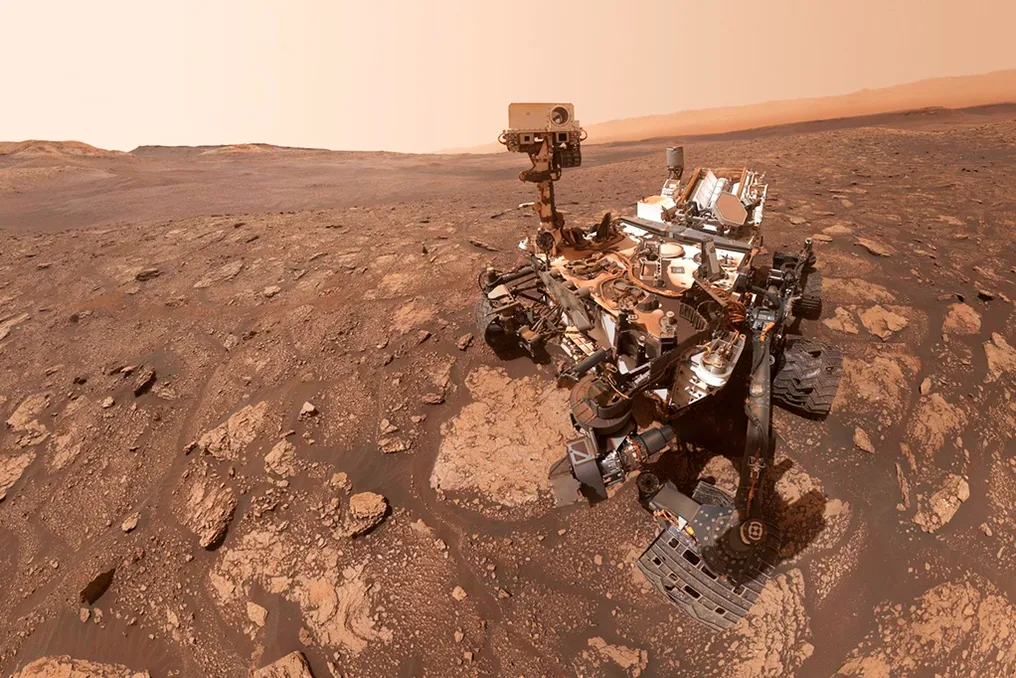
The NASA Perseverance rover has achieved the status of the vehicle that has traveled the greatest distance on the surface of a planet outside Earth. According to the American space agency, last Sunday (11th), it accumulated 45.2 km on Mars since its landing in February 2021, surpassing the previous record held by Opportunity, which was active between 2004 and 2018.

These robotic vehicles, known as rovers and compared to Pixar's character Wall-E, are designed to explore and collect scientific data on other celestial bodies. NASA has sent five of these rovers to Mars since 1997, each contributing significant discoveries to Earth.

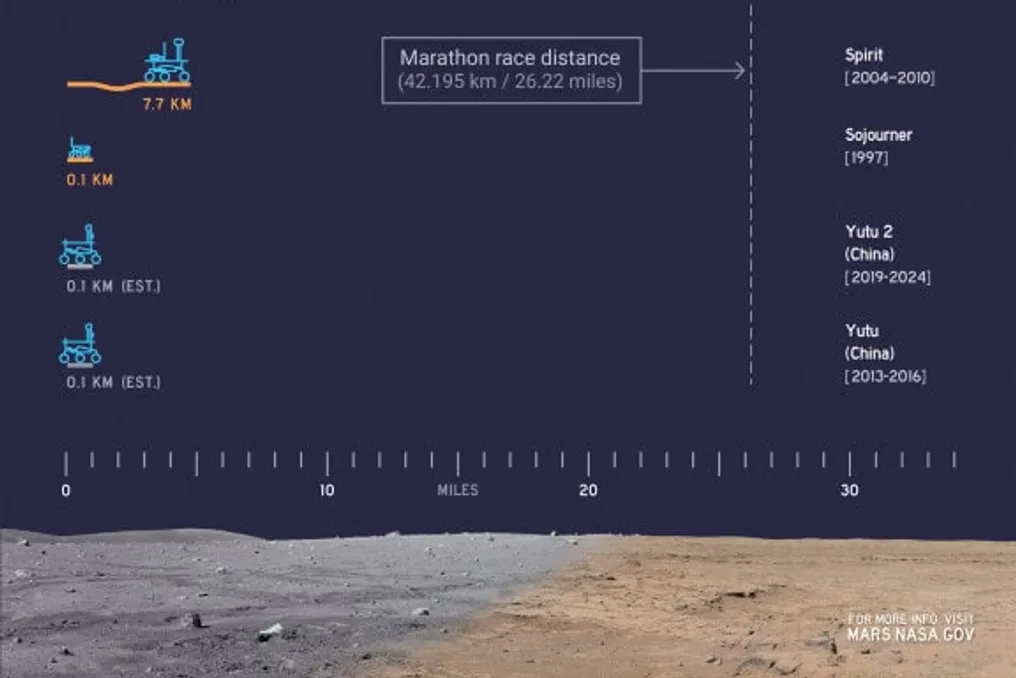
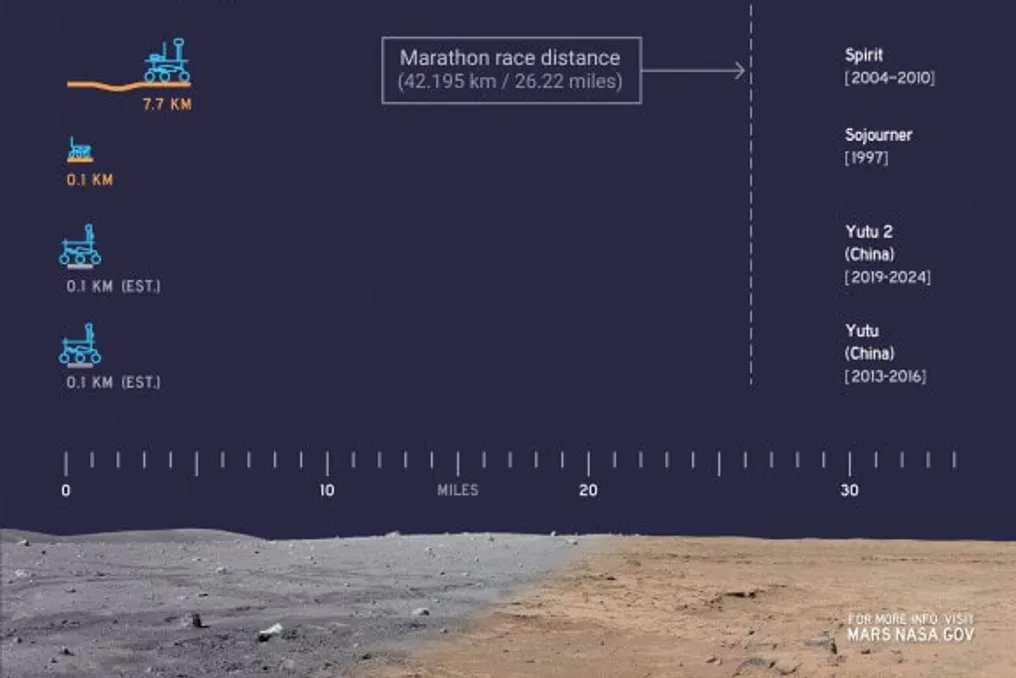
In terms of distance comparison, Perseverance surpassed all previous ones. The first recorded rover traveled only 103 meters. Its successors showed much better results: Spirit, which operated from 2004 to 2010, traveled 7.73 km; Curiosity, active for over 14 years, reached 38 km; and Opportunity, which held the record, had reached 45.16 km.

NASA engineers predicted that Perseverance would break Opportunity's record as early as August. However, during its journey, the rover found light-colored rocks that may be some of the oldest studied on Mars. This led to a mission interruption for investigation, postponing the record recognition by approximately two months.

Despite the delay, the milestone is notable, as Perseverance covered this distance in just over five years, while Opportunity took almost fifteen years to cover it.

This achievement was made possible by nearly thirty years of technological progress. While early rovers required continuous commands from Earth, the current model uses autonomous navigation, making it more agile and robust than its predecessors. Currently, 90% of its journeys are conducted without any human intervention.

This system, called AutoNav, allows Perseverance to capture terrain images while moving forward, build a three-dimensional map of obstacles, and plot its route between reference points defined by planners on Earth. NASA describes this capability as the ability to 'think while driving.'

It is important to note that a rover is not controlled in real time by a joystick, but rather planned, programmed, and executed through instructions sent from Earth. Immediate manual control would be impractical due to radio signals taking minutes to travel between Earth and Mars (the journey can take from 4 to 22 minutes, depending on orbital positions).

In addition to mileage, Perseverance has generated other crucial scientific discoveries. Since its landing in Jezero Crater, an area of great importance on Mars, it has identified several traces suggesting the possibility of life on the red planet.

Initially, the rover detected a high concentration of organic matter and carbon molecules in rocks from Jezero Crater, in addition to confirming that the region went through at least three distinct geological epochs with the presence of water.

Subsequently, in September 2025, the existence of a probable biosignature was recorded, meaning a potential indicator of ancient microbial life. It is estimated that the reddish rock found formed between 3.2 and 3.8 billion years ago, representing the most promising clue about ancient life on Mars.

Currently, Perseverance will continue its exploration mission on the red planet, heading south towards Rainbow Falls, an ancient crust block one hundred meters wide.

NASA's Perseverance Rover Sets New Distance Record on Mars
Read more
olhardigital.com.br

NASA's Perseverance Rover Sets New Distance Record on Mars

NASA's Perseverance rover has set a new distance record on Mars, covering over 28.06 miles (approximately 45.2 kilometers) since its arrival on the planet in February 2021. This record was achieved on Sunday (the 11th) in the Jezero Crater area and was announced on Tuesday (the 12th) by the Jet Propulsion Laboratory (JPL), which is responsible for operating the spacecraft.

Thanks to this achievement, the robot surpassed the distance covered by Opportunity, another NASA rover that explored Mars between 2004 and 2018. However, Perseverance's progress did not happen as early as the team expected. The mission had to change its route to study light rocks, which may be some of the oldest studied on the planet, delaying the record achievement by about two months.

One of Perseverance's features is its ability to autonomously plan part of its movements. Similar to some modern cars on Earth, the spacecraft can find paths between two points without requiring detailed instructions for each segment from ground control.

Furthermore, the rover is equipped with a faster computer chip compared to its predecessor Curiosity, which arrived on Mars more than eight years ago and covered less distance. This technology represents an improvement over Sojourner, NASA's first robotic rover, which traveled only 341 feet (about 104 meters) over 12 weeks in 1997 and relied on specific commands sent from Earth.

In the initial months of its mission, Perseverance explored the terrain of Jezero Crater. This area is about 30 miles wide and once held a lake when Mars was warmer and wetter. The location was chosen for the mission due to the potential for preserving organic traces that could help in studying the existence of life on the planet.

The mission also included Ingenuity, a small helicopter delivered in the belly of Perseverance. After being deployed onto the Martian surface, the equipment conducted the first controlled and motorized flights on another planet. The initially planned series of tests saw the helicopter accompany the rover's exploration and complete 72 flights before one of its blades broke in January 2024.

In April 2022, Perseverance reached the old river delta in Jezero Crater. It recently left this area and began exploring rocks dating back about four billion years in Lac de Charmes. This area is named after a reservoir in France.

Among the discovered materials are light rocks called gabbro, which are similar in composition to basalt but likely formed at greater depths where magma cooled longer and formed larger crystals. Scientists have found signs of intense melting and impacts in these rocks, which could have resulted from three different meteorite events.

The team attempted to drill one of these formations to collect a sample, but the rock proved too hard. Nevertheless, research continues, as these materials could provide information about the first 500 million years of the Solar System.

Before launch, NASA certified Perseverance to travel 20 kilometers. Since the spacecraft has already exceeded this distance, the agency is working to expand the certification to 100 kilometers, which is slightly more than 62 miles.

Currently, there is no long-term plan defined for the rover after completing the survey of the current area. NASA must also decide the fate of the samples stored on the equipment.

The Mars Sample Return project, which involved bringing this material back to Earth in collaboration with the European Space Agency, was canceled due to excessive cost. NASA could potentially resume the initiative through a commercial mission but has not announced plans in this direction.

Popular