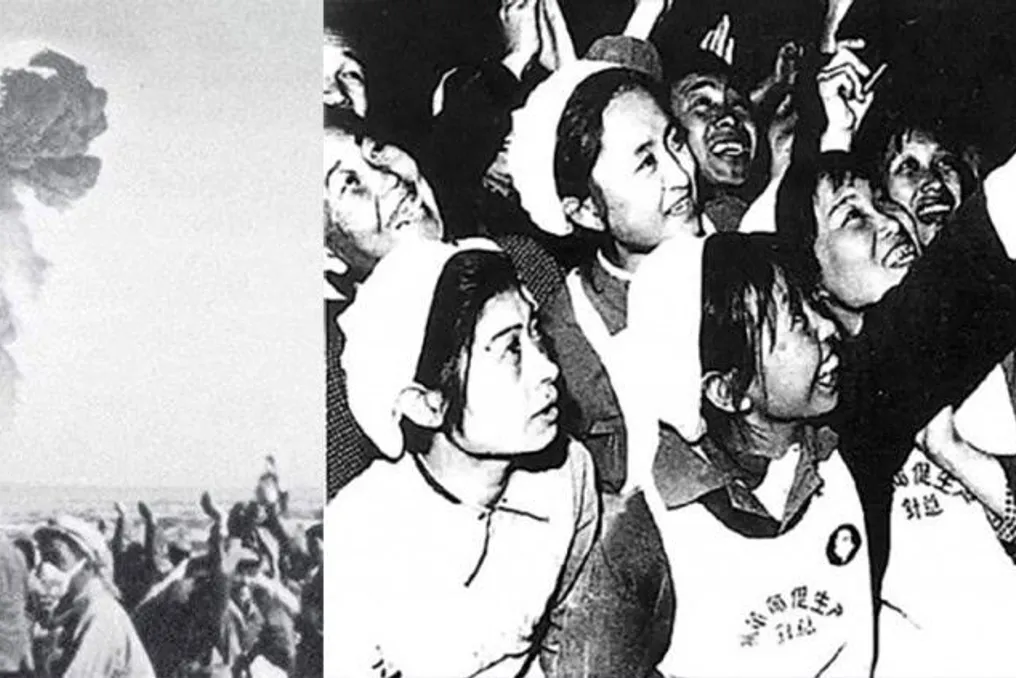
The Chinese space program has demonstrated accelerated progress, transforming from a modest start in 1970 with the launch of the Dong Fang Hong 1 satellite into a global aerospace power. Currently, China possesses its own permanent space station, conducts rover landings on Mars, and achieved the feat of collecting samples from the far side of the Moon.
Funded by vast state budgets and isolated from the Western system due to US sanctions, Chinese space exploration serves as a demonstration of its industrial sovereignty. By contesting NASA's historical leadership and developing an autonomous space infrastructure, Beijing has established a parallel and independent path for human presence in the cosmos.
The trajectory of Chinese space exploration has roots in a notable figure: Qian Xuesen. This mathematician and aerodynamics specialist, born in Hangzhou, had lived in the US and contributed to the founding of NASA's Jet Propulsion Laboratory (JPL). However, during the anti-communist climate of McCarthyism in the 1950s, Qian was accused of 'subversive sympathies,' placed under house arrest, and had his security clearance revoked by the US government.
In 1955, after intense diplomatic negotiations, he was exchanged for American pilots captured in the Korean War and returned to China. Upon arriving in Beijing, Qian found a country still fragile from the civil war and with little industrial infrastructure. When Mao Zedong questioned China's capacity to build missiles and rockets, Qian emphatically replied: 'Whatever the West can do, Asians can also do.'
Known as the 'Father of Chinese Astronautics,' Qian organized Group 581, which became the cradle of the missile and high-atmosphere exploration industry. In the 1960s, the separation between Beijing and Moscow forced the country to adopt a policy of complete self-sufficiency. While Washington and Moscow competed for space dominance, China discreetly developed the necessary technology for intercontinental ballistic missiles and, subsequently, space launchers.
The success of Dong Fang Hong 1 in 1970 proved the functionality of the three-stage technology of the Long March 1 rocket, signaling that China did not intend to be merely an observer in the conquest of the universe.
To understand the strength of the Chinese Space Program, it is crucial to analyze its structure. Unlike the modern Western model, which involves decentralization of projects through various private companies and governmental budget fluctuations, the Chinese structure operates with centralized coordination and absolute focus.
The China National Space Administration (CNSA) leads the decision-making chain, acting as the diplomatic face of the program internationally. However, the technical and operational execution is carried out by large state conglomerates, notably the China Aerospace Science and Technology Corporation (CASC), which employs hundreds of thousands of scientists, engineers, and technicians across the nation.
This state machine relies on four essential technological pillars. The Long March (Changzheng) rocket family began its journey on April 24, 1970, with the launch of Dong Fang Hong 1, using the Long March 1 version. Since this initial flight, the program has experienced massive acceleration: if it took almost four decades to reach 100 launches in 2007, the current fleet exceeds 665 missions, maintaining one of the highest success rates in the global aerospace industry over four generations and with more than two dozen variants.
A significant qualitative leap occurred in 2016 with the activation of the Long March 5 (also known as 'Pang Wu' or 'Fatty 5'). This heavy-lift launcher, with a diameter of 5 meters and the capacity to place over 25 tons into low Earth orbit, enabled Beijing's most ambitious projects, such as sending the core modules of the Tiangong space station, the Tianwen-1 Mars probe, and the Chang'e series lunar sample collection missions.
Currently, the fleet combines rapid response solid-fuel vehicles, such as the Long March 11, with a new generation of medium-lift launchers powered by clean propellants, including the Long March 6, 7, 8, and the Long March 12, the first model with a 3.8-meter diameter, optimized for large satellite constellations.
This infrastructure continues to expand to support the next cycle of exploration: the Long March 10 is under development to carry astronauts to the Moon by the end of this decade, while the super-heavy Long March 9 aims to compete with the greatest payload capacities in history, destined for the construction of the International Lunar Research Station (ILRS) and deep space missions.
Beyond sending astronauts, ground operational control requires digital sovereignty. For decades, global navigation depended on the US military GPS. In 2020, China completed its own global navigation satellite network, BeiDou (the Chinese name for the constellation Ursa Major). With numerous satellites in orbit, BeiDou provides centimeter-level accuracy for civilian purposes, such as transport and precision agriculture, in addition to strategic military operations.
China maintains four strategic space centers. In Jiuquan, located in the Gobi Desert, is the historic center for launching all manned missions. The bases in Taiyuan and Xichang specialize in meteorological, commercial, and communication satellites in geostationary orbits. Meanwhile, the facility in Wenchang, located on the tropical island of Hainan, is the most modern; its coastal position and proximity to the Equator facilitate the maritime transport of gigantic rockets (such as the Long March 5) and leverage Earth's rotation to maximize payload capacity.
While NASA decommissioned the Space Shuttle and Russia maintained its reliable Soyuz craft, China was quietly planning a bold three-phase plan for human spaceflight.
Project 921 was approved in September 1992 and had three main goals. The first stage was realized on October 15, 2003, when fighter pilot Yang Liwei launched aboard the Shenzhou 5 spacecraft, propelled by a Long March 2F rocket. During 21 hours and 14 orbits, Yang became the first taikonaut, a term derived from taikong (space) used to designate Chinese astronauts. Upon landing in the Mongolian steppes, China became the third nation to send a human into space independently.
Subsequent advancements were rapid and constant. In 2008, on the Shenzhou 7 mission, taikonaut Zhai Zhigang performed the country's first extravehicular activity (spacewalk), floating outside the spacecraft wearing the national Feitian spacesuit. A few years later, in 2012, Liu Yang became the first Chinese woman in space aboard Shenzhou 9, in a historic mission that included a manual docking with the experimental Tiangong-1 module.
More recently, the Shenzhou 12 mission in 2021 marked the arrival of the first crew to inhabit the permanent station. Although the Shenzhou spacecraft is conceptually similar to the Russian Soyuz due to its division into three modules (orbital, reentry, and service), it was designed with larger dimensions, greater electrical capacity, and much more modern avionics. Project 921 rigorously fulfilled every promise made in the previous decade.
China's geopolitical exclusion from the International Space Station (ISS), imposed mainly by US laws prohibiting bilateral cooperation between NASA and Chinese entities, served as a strong incentive for Beijing to build its own outpost in low Earth orbit.
The path began with test prototypes. Tiangong-1 (launched in 2011) functioned as a single-module orbital laboratory to test automatic docking and short visits. Subsequently, Tiangong-2 (launched in 2016) allowed crews to stay in space for up to 30 days, conducting studies in space medicine and testing fuel refueling in microgravity.
Based on these experiences, the assembly of the large third-generation space station, Tiangong ('Celestial Palace'), began. Between 2021 and 2022, China conducted a series of heavy-lift launches to erect the base structure, organizing the first three modules in a 'T' shape.
The process started in April 2021 with the deployment of the Tianhe Central Module, a 22-ton structure containing the control center, crew accommodations, and vital life support systems. In July 2022, the Wentian Laboratory Module, dedicated to biological research in microgravity and equipped with a decompression chamber optimized for spacewalks, was docked. The initial configuration was completed in October of the same year with the arrival of the Mengtian Laboratory Module, designed for experiments in fundamental physics, materials science, and ultra-precise atomic clocks.
This first phase is only the beginning of the project. China already plans to expand Tiangong with new multifunctional modules, including an extension to Tianhe with new docking ports. This expansion will double the station's habitable volume, change its geometry to a cross (X) shape, and allow for prolonged stays of international astronauts and space tourism missions.
Human presence on Tiangong began in June 2021 with the Shenzhou 12 crew, on the first mission to occupy the Tianhe Central Module for 90 days. By the end of 2021, Shenzhou 13 set the standard for stays of approximately six months on the station. The transition to continuous occupation occurred in November 2022, during Shenzhou 15. This event marked the first command handover conducted directly in space, where the new crew received the veterans of Shenzhou 14, keeping six taikonauts aboard simultaneously and operating the complex at maximum capacity during the handover.
Since then, the semi-annual rotation has become the norm, with the continuous sequencing of Shenzhou missions ensuring uninterrupted occupation of the complex. In each crew change, the station reaches its maximum occupancy peak with six members aboard. To date, 27 taikonauts have passed through Tiangong, including veterans on repeated missions and civilian astronauts, such as flight engineers and payload specialists.